

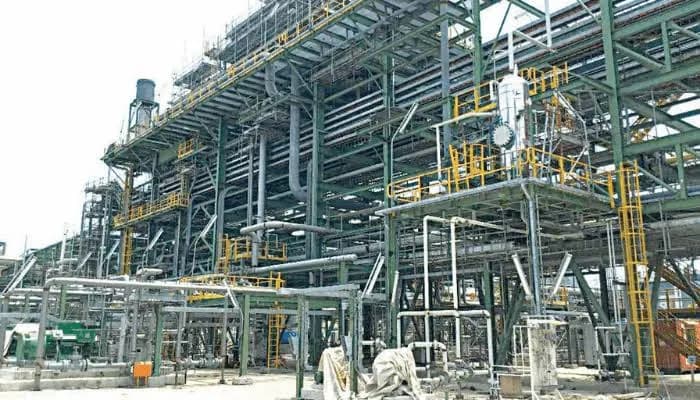
Despite being Africa’s largest crude oil producer, Nigeria has long struggled to fully benefit from its vast reserves due to the inability to refine most of its petroleum products domestically. As a result, the nation has relied heavily on imports for essential fuel products like petrol, diesel, and aviation kerosene, creating a paradox where oil-rich Nigeria pays a premium for fuel.
Nigeria’s limited refining capacity has resulted in a significant underutilisation of the diverse products that can be derived from its crude oil. The Nigerian oil industry primarily focuses on the export of crude oil, but the lack of functioning local refineries means that products such as lubricants, asphalt, and petrochemicals which could boost industrial growth are not adequately produced or used in the country. Instead, Nigeria imports most of these products, often at high costs.
The country’s four state-owned refineries, located in Port Harcourt, Warri, and Kaduna, have operated far below capacity for decades, with frequent breakdowns and poor maintenance. The consequence is that Nigeria remains dependent on refined fuel imports, using a large portion of its foreign exchange earnings to buy back refined products from international markets.

However, there is renewed optimism that this longstanding issue will soon be addressed with the anticipated full operation of the Dangote Refinery, one of the world’s largest single-train refineries. Located in Lagos, the 650,000 barrels-per-day refinery is expected to change the narrative for Nigeria’s petroleum sector.
“The Dangote Refinery promises to significantly boost Nigeria’s refining capacity, allowing the country to process its own crude oil and produce a wide range of petroleum products domestically,” said energy analyst Musa Adamu.
“This would not only reduce the need for imports but also ensure that Nigerians benefit from lower fuel prices and better availability of products like aviation fuel, cooking gas, and other critical derivatives.”
The refinery is expected to produce not only Premium Motor Spirit (PMS), commonly known as petrol, but also Automotive Gas Oil (AGO) (diesel), Dual-Purpose Kerosene (DPK), Liquefied Petroleum Gas (LPG), and even petrochemical products. These products are essential for various sectors of the economy, including transportation, aviation, manufacturing, and households.
More importantly, experts believe that the Dangote Refinery will help Nigeria diversify the use of its crude oil. Beyond petrol and diesel, which dominate the domestic market, Nigeria will have the capacity to produce high-value petrochemical products, such as lubricants, solvents, and plastics, which can fuel the country’s industrial growth.
“This refinery will enable Nigeria to fully harness the vast potential of its crude oil, converting it into a wide range of products that are currently imported,” added Adamu. “It’s a game changer for the country’s industrial and economic future.”
In addition to addressing the supply of petroleum products, the Dangote Refinery could help ease the pressure on Nigeria’s foreign exchange reserves by reducing the import bill for refined fuels. This development could also provide an opportunity to export refined products to neighboring West African countries, increasing Nigeria’s influence in the regional energy market.
The refinery’s operation is also expected to create thousands of jobs in refining, distribution, and retail, further benefiting the Nigerian economy. Industry stakeholders are optimistic that with the refinery’s potential, Nigeria will no longer be caught in the paradox of being an oil-rich nation that imports fuel.
While challenges remain, such as ensuring that the refinery operates efficiently and policies are implemented to support its growth, there is hope that Nigeria will soon take its place as a fully integrated oil producer, refining its own crude and utilising its products across sectors to drive economic growth.
As the refinery gears up to commence full operations, the spotlight is now on how this new capacity will help Nigeria harness the full value of its oil wealth, reduce its dependence on imports, and steer the country towards energy independence.