

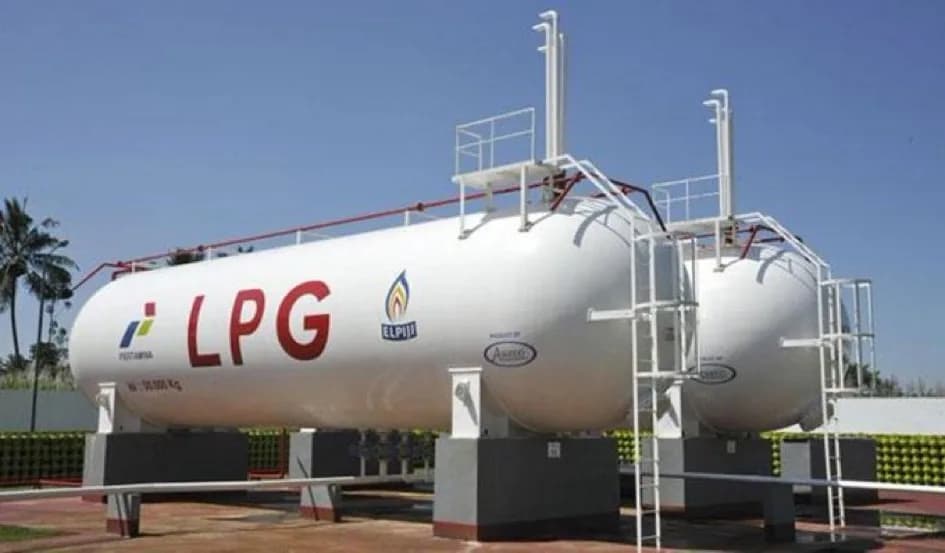
Nigeria’s supply of Liquefied Petroleum Gas (LPG), commonly known as cooking gas, declined by 8.5 percent to an average of 4.7 metric tonnes per day in February 2026, reflecting tightening market conditions and weaker demand.
Data from the Nigerian Midstream and Downstream Petroleum Regulatory Authority shows that the drop represents a decrease from 5.1 metric tonnes per day recorded in December 2025, highlighting a contraction in supply over the period.
The report also indicates a sharper decline in consumption. Average daily LPG usage fell by about 20 percent to 4,194 metric tonnes per day in February, compared to 5,050 metric tonnes per day in January 2026, suggesting reduced offtake amid changing market dynamics.
Industry checks link the development to recent disruptions in the global energy market, driven by tensions in the Middle East, particularly involving Iran. The crisis contributed to higher crude oil prices, which in turn increased the cost of petroleum products, including cooking gas, across international and domestic markets.
Retail prices have responded to these pressures. Checks by Vanguard across parts of Lagos show LPG selling between ₦1,050 and ₦1,300 per kilogram, with some outlets quoting as high as ₦1,400 to ₦1,500 per kilogram. Official data indicates that the national retail price range for February stood between ₦980 and ₦1,500 per kilogram, compared to ₦950 to ₦1,550 per kilogram in January.
Further details from the regulator show that total wholesale gas supply averaged 4.771 billion standard cubic feet per day (BSCF/d) in February, slightly down from 4.837 BSCF/d recorded in January. Similarly, gas supplied to the domestic market declined to 1.763 BSCF/d, compared to 1.906 BSCF/d in the previous month.
The combined drop in supply and consumption underscores the sensitivity of Nigeria’s gas market to global price movements and supply disruptions, with domestic pricing and availability closely tied to developments in the international energy landscape.