

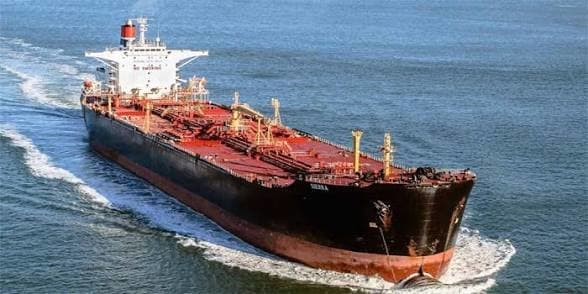
Nigeria’s reliance on imported petrol dropped significantly in February, reaching the lowest level recorded in at least nine years. The sharp decline signals a major shift in the country’s fuel supply dynamics, driven by rising domestic production from the 650,000 barrels-per-day Dangote Refinery and tighter restrictions on petrol import permits.
According to shipping data from energy intelligence firm Kpler, petrol imports into Nigeria fell by more than half in February to around 50,000 barrels per day (bpd). The figure represents a steep drop compared with previous months and is nearly two-thirds lower on a year-on-year basis.
For decades, Nigeria has remained the largest petrol importer in West Africa due to limited refining capacity. However, the gradual ramp-up of operations at the Dangote Refinery is beginning to alter that long-standing dependence on foreign supply.
Europe Remains Nigeria’s Main Supply Source
Despite the overall decline in volumes, Europe retained its position as Nigeria’s largest petrol supply region, accounting for approximately 38,000 bpd of shipments in February.
However, Nigeria’s share of European gasoline exports fell significantly.
Data shows the country accounted for just 4 per cent of Europe’s total gasoline exports during the month, compared with 12 per cent recorded a year earlier.
European petrol arrivals into Nigeria were also only slightly higher than volumes shipped to Ghana, where about 34,000 bpd of gasoline arrived from Europe during the same period.
Dangote Refinery Boosts Domestic Production
Nigeria’s domestic petrol production likely rebounded in February as the Dangote Refinery gradually restored operations following maintenance work earlier in the year.
The refinery completed a two-week maintenance programme on its crude distillation unit (CDU) early in February. Some supporting units including the naphtha hydrotreater, isomerisation unit and catalytic reformer continued operating at reduced capacity after earlier maintenance activities in January.
Meanwhile, the refinery’s 218,000 bpd Residual Fluid Catalytic Cracker (RFCC) a key petrol-producing unit has ramped up operations to around 90 per cent capacity following scheduled test runs carried out in mid-February. The unit had been offline since December.
The improvement in refining operations has increased local fuel availability and reduced the need for imported petrol cargoes.
Import Permits Tighten as Local Supply Expands
Limited issuance of petrol import permits also contributed to the sharp drop in fuel arrivals during the month.
Industry sources indicate that regulators slowed down approvals, allowing marketers to draw from existing domestic stock levels, which reached about 1.27 million tonnes in January.
By late January, only one petrol import permit covering 300,000 tonnes had reportedly been issued to downstream company MRS.
The Nigerian Midstream and Downstream Petroleum Regulatory Authority (NMDPRA) is believed to be holding back additional approvals as part of efforts to prioritise supply from domestic refiners.
Meanwhile, the Dangote Refinery has strengthened its presence in the domestic market. The data indicates the refinery accounted for about 70 per cent of petrol arrivals into Nigeria in February, equivalent to roughly 35,000 bpd.
In a further move to strengthen local fuel distribution, Dangote recently signed a petrol supply agreement with 12 petroleum product marketers, under which the refinery will supply between 60 million and 65 million litres of petrol daily to the Nigerian market.
The decline in imports suggests Nigeria’s fuel supply structure may be entering a new phase, as domestic refining capacity led by the Dangote Refinery continues to reshape the downstream petroleum sector.