

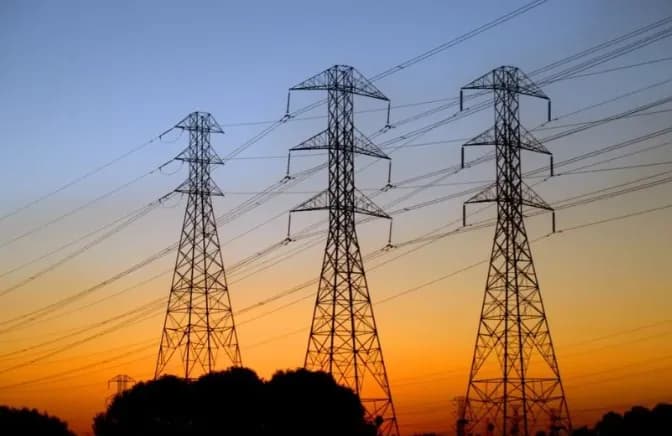
Nigeria’s electricity crisis continues to be a significant source of frustration for citizens in 2025. Despite being one of Africa’s largest economy, the country remains plagued by frequent power outages, leaving millions of households and businesses reliant on expensive generators.
The State of the National Grid
The national grid’s unreliability has been a longstanding issue. In 2024, the grid experienced multiple collapses, including a partial collapse in November, marking the ninth incident that year. These frequent failures have led to prolonged blackouts, disrupting daily life and economic activities.
The aging infrastructure, some of which is over 40 years old, coupled with under-investment and vandalism, has rendered the grid susceptible to frequent failures. Consequently, households and businesses are compelled to spend a significant portion of their income on diesel and petrol to power generators, further straining already tight budgets.
The High Cost of Alternative Energy
The rising cost of diesel and petrol has exacerbated the electricity crisis. In 2025, diesel prices hover around ₦1,200 per liter, making it unaffordable for many small businesses. This has led to reduced productivity, job losses, and increased operational costs across various sectors.
While the government has promoted renewable energy solutions like solar power, the high upfront costs of solar panels and batteries remain a barrier for most Nigerians. Initiatives like the Solar Power Naija Programme have made some headway in rural areas, but scaling up these efforts to meet the country’s energy needs remains a challenge.
Public Outcry and Calls for Reform
Nigerians are increasingly frustrated with the lack of progress in addressing the electricity crisis. Many blame the government for failing to invest adequately in power infrastructure and hold distribution companies accountable for poor service delivery.
Calls for reform are growing louder, with demands for:
- Increased Investment in Gas-to-Power Projects: Enhancing electricity generation capacity to meet the nation’s demand.
- Improved Maintenance and Expansion of the National Grid: Upgrading aging infrastructure to reduce the frequency of collapses.
- Subsidies or Financing Options for Renewable Energy: Making alternative energy sources more accessible to low-income households.
A Glimmer of Hope
Despite the challenges, there are signs of progress. The Ajaokuta–Kaduna–Kano (AKK) Gas Pipeline, a 614km-long project being developed by the Nigerian National Petroleum Corporation (NNPC), is expected to significantly improve gas supply to power plants. Additionally, private sector investments in renewable energy are gradually increasing, offering hope for a more sustainable energy future.
For now, however, Nigerians continue to endure the hardships of unreliable electricity and high energy costs, underscoring the urgent need for comprehensive reforms in the power sector.