

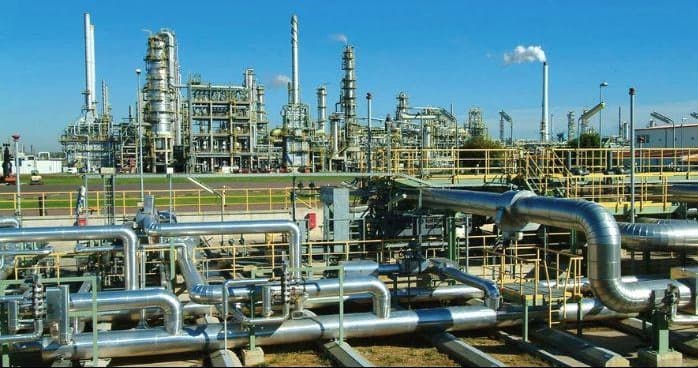
Nigeria's domestic refining capacity could rise to 2.64 million barrels per day (bpd) by the end of 2030 as 24 new refinery projects progress through various stages of development, reinforcing the country's ambition to become a leading refining hub in Africa.
A new report by Industrial Info Resources (IIR) projects that the planned refineries, alongside capacity expansions at existing plants, will significantly boost local refining, reduce dependence on imported petroleum products and strengthen Nigeria's position as a net exporter of refined fuels to regional markets.
According to the report, $10.74 billion worth of investments in modular refinery projects are expected to be completed between 2026 and 2030, making Nigeria the global leader in new refinery developments. The report identifies 24 grassroots refinery projects in Nigeria scheduled for completion before 2031, surpassing the United States and Iran, which each have 11 projects in the pipeline. Iraq follows with eight projects, while China has five.
Industrial Info Resources noted that although Nigeria remains one of Africa's largest crude oil producers, the country has historically relied on exporting crude while importing refined petroleum products to satisfy domestic demand. The current wave of refinery investments is expected to reverse that trend by increasing local processing capacity and enhancing energy security.
The report estimates that Nigeria's current operational refining capacity of 732,000 bpd could increase to approximately 2.64 million bpd by 2030 if the planned projects are completed on schedule. Such an expansion would represent one of the largest refining capacity growth programmes globally.
Vice President of Energy Intelligence at Industrial Info Resources, Hillary Stevenson, said modular refinery developments would account for the bulk of the projected increase in refining capacity, highlighting the growing role of private-sector investment in Nigeria's downstream petroleum industry.
The projected growth comes as the country continues to expand domestic refining through the Dangote Petroleum Refinery, the rehabilitation of state-owned refineries and the emergence of modular refining projects across different parts of the country. Industry stakeholders believe these investments will reduce fuel imports, improve product availability, create jobs and generate additional foreign exchange through refined product exports.
If fully realised, the planned refinery projects could fundamentally reshape Nigeria's petroleum industry, transforming the country from a long-standing exporter of crude oil and importer of refined fuels into one of Africa's largest producers and suppliers of petroleum products.