

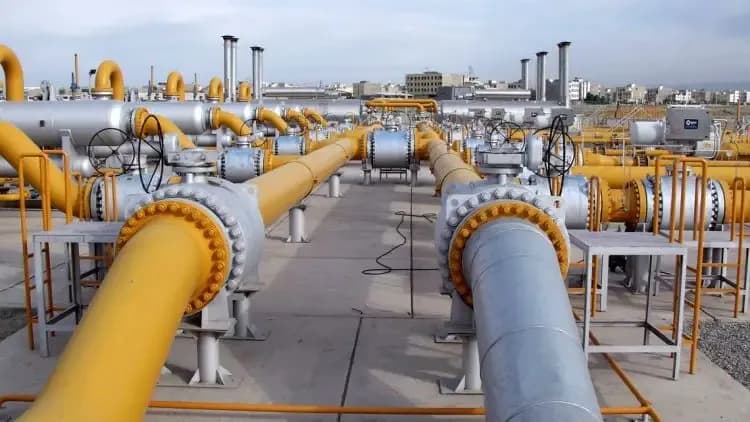
For years, Nigeria’s story in the energy world revolved around crude oil endless debates about production quotas, subsidies, and pipeline vandalism. Gas was often treated as an afterthought, even wasted through routine flaring. Today, the narrative has shifted dramatically. With 210 trillion cubic feet of proven reserves and Train 7 nearing completion, Nigeria is no longer just talking about potential; it is actively reshaping global supply chains through Nigeria LNG (NLNG).
From Milan to the World Stage
At the 2025 Gastech Exhibition and Conference in Milan, Nigeria made its presence felt. More than 50,000 participants from 150 countries gathered, and our delegation led by NLNG and NNPC Ltd. presented bold reforms and investment plans.
It wasn’t just about showing up. It was about telling the world that Nigeria has moved from being a gas-rich but underperforming country to a serious net exporter with global ambitions.
AI Is Changing the Game
Inside NLNG, the real revolution is not just about pipes and ships it’s about technology. Deputy Managing Director Olakunle Osobu revealed how Artificial Intelligence has become a core tool across operations.
Training new operators once took almost a year; now, with AI-driven tools, it takes just two to three months. That’s not just efficiency that’s a leap. AI is now predicting equipment failure, optimising machine run-time, and making the company more agile in responding to global demand shifts.
In industry terms, this is “smart operations over heavy capital expansion” squeezing more value from every molecule of gas processed.
Tackling Methane: Responsibility Meets Profit
Gas flaring used to define Nigeria’s energy waste. But things are changing. NLNG’s Managing Director Dr Philip Mshelbila explained that the company has cut flaring by over 40% since inception. Methane, which is 80 times more potent than carbon dioxide, is no longer just escaping into the air it is being reintegrated into the system through new compressors.
Here lies the balance: tackling climate change while also capturing more saleable gas. This is Nigeria saying, we can be climate-conscious and still profitable.
Securing Supply Amid IOC Divestments
A major question today is: with International Oil Companies selling off upstream assets, can Nigeria sustain LNG feedstock? The answer, according to NLNG’s GM Production, Nnamdi Anowi, is yes.
Currently, 75% of feed gas comes from third-party suppliers, and new deals are locked in through 2027. This flexibility has made NLNG one of the few African LNG exporters still able to guarantee medium-term supply, while others struggle with disruptions.
But Anowi also tied this to Africa’s bigger challenge: 600 million people without access to electricity. His point was clear if gas could transform Nigerian industries when power improved, it could do the same for the continent.
Train 7: The Big Bet
At the heart of Nigeria’s LNG future is Train 7. Costing about $7 billion, the project is expected to boost output from 22 million tonnes per annum (mtpa) to 30 mtpa by 2027.
In context:
- Nigeria (2027): 30 mtpa
- Qatar (2030 target): 126 mtpa
- United States (2030 projection): 150 mtpa
- Australia (steady): 90 mtpa
While Nigeria won’t rival the super-giants yet, it secures our place as Africa’s gas powerhouse and a reliable alternative supplier to Europe, which already buys 60% of its LNG imports from us.
Investments Backed by Policy
The Tinubu administration has set clear targets grow daily gas production to 12 billion cubic feet by 2030 (from today’s 8 bcf), double crude output, and attract $60 billion in new oil and gas investments.
Projects like the AKK pipeline, the Nigeria-Morocco pipeline spanning 16 countries, and the Atlantic Gas pipeline are not just engineering feats; they are strategic moves to connect markets and secure Nigeria’s role in Africa’s industrialisation.
People Behind the Pipelines
Beyond steel and concrete, it’s people who power the industry. According to Dr Sophia Horsfall, NLNG’s General Manager of External Relations, the company is preparing for the future workforce.
With global estimates showing 14 million new energy jobs by 2030, and 60% of today’s roles requiring reskilling, NLNG has embedded digital, renewable, and sustainability skills into its training programmes. From mentorship and overseas placements to hackathons and coding clubs, it is equipping young Nigerians to lead the next phase.
The workforce stays motivated and engaged, keeping attrition rates below global industry averages.
Why This Matters
Nigeria already supplies most of Portugal and Spain’s LNG imports, and with Train 7 and new methane capture systems coming online, our reliability is improving.
The stakes are high. If we sustain momentum, Nigeria won’t just be a resource-rich country exporting raw gas we’ll be a strategic global supplier and a continental industrial anchor.
Final Word
From Milan to Bonny Island, from policy reforms in Abuja to pipelines stretching across Africa, the message is clear: Nigeria is no longer on the sidelines.
Our gas is powering homes, industries, and ships far beyond our shores. The challenge now is sustaining this growth, closing infrastructure gaps, and ensuring Nigerians themselves benefit from the boom.
For once, the numbers, the projects, and the ambition are aligned. This could truly be Nigeria’s gas breakthrough moment.