

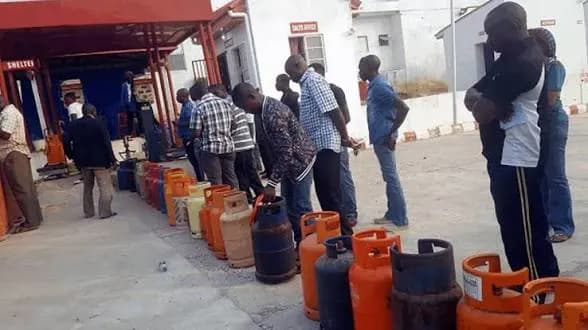
Nigeria's liquefied petroleum gas (LPG) market maintained an average stock sufficiency of 11 days in May 2026, according to a review of the latest factsheet released by the Nigerian Midstream and Downstream Petroleum Regulatory Authority (NMDPRA) conducted by Petroleumprice.ng, even as supply challenges continue to affect product availability across parts of the country.
The Petroleumprice.ng review of the NMDPRA data showed that LPG, commonly known as cooking gas, had the lowest stock cover among major petroleum products during the month. Petrol (PMS) recorded 16 days of sufficiency, diesel (AGO) 31 days, and aviation fuel (ATK) 94 days, compared to LPG's 11-day reserve level.
The report also revealed a mismatch between LPG supply and consumption. Average daily LPG supply stood at 4,100 metric tonnes per day, while daily consumption averaged 4,500 metric tonnes, indicating a supply shortfall of approximately 400 metric tonnes per day.
The deficit comes at a time when marketers and industry participants have reported tight product availability at several depots, contributing to supply concerns in parts of the domestic market.
Petroleumprice.ng's review further showed that LPG consumption remained above the authority's 2026 daily demand benchmark of 3.9 kilotonnes per day. Actual consumption averaged 4.5 kilotonnes per day during May, reflecting sustained demand growth for cooking gas across households and commercial users.
The report indicated that retail LPG prices ranged between ₦1,100/kg and ₦1,800/kg during the review period, highlighting continued price disparities across locations despite efforts to expand gas penetration nationwide.
Market observers note that the combination of rising consumption, supply deficits, and relatively low stock cover underscores the need for consistent cargo replenishment and improved distribution efficiency to support growing LPG demand.
The latest figures suggest that while Nigeria's cooking gas market continues to expand, supply growth has yet to fully match the pace of consumption, leaving the sector more exposed to disruptions than other major fuel markets.