

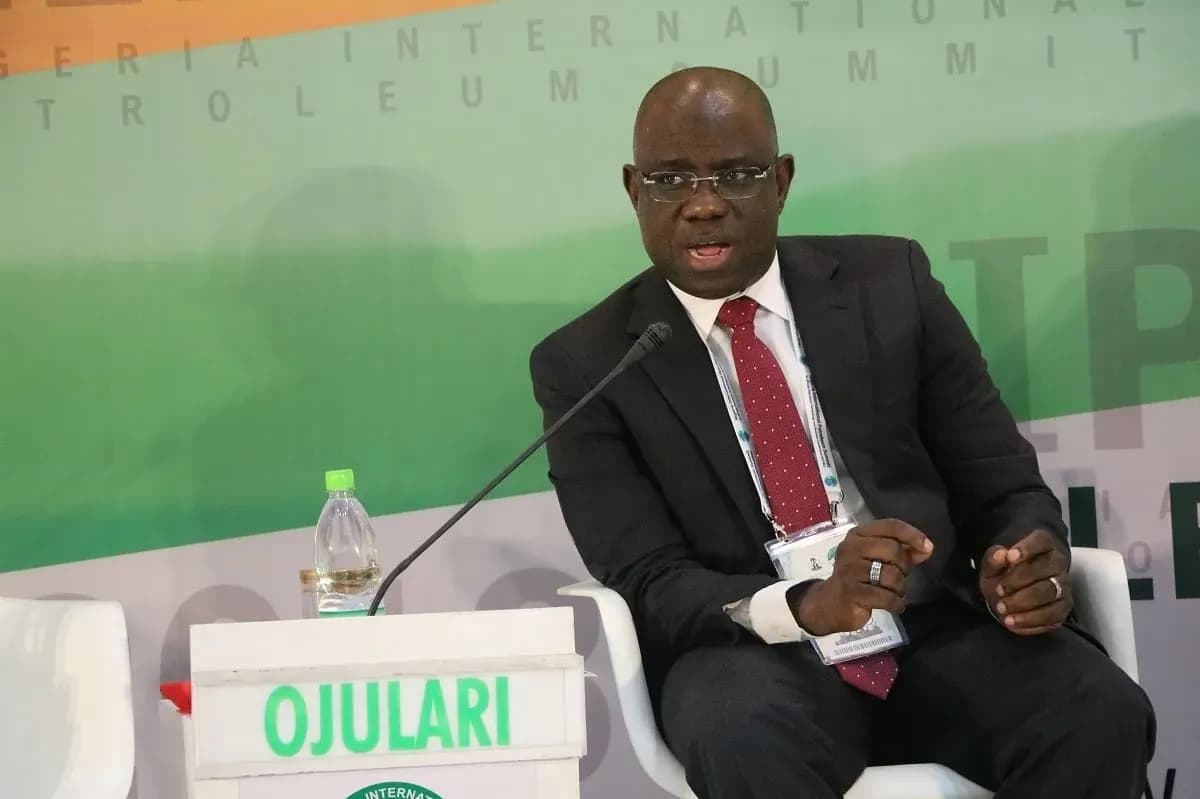
Nigeria’s long-troubled state-owned refineries drained public resources at an unsustainable level before NNPC halted their operations, the Group Chief Executive Officer of the Nigerian National Petroleum Company Limited, Bashir Bayo Ojulari, has revealed.
Ojulari disclosed this on Wednesday in Abuja during a fireside chat titled “Securing Nigeria’s Energy Future” at the Nigeria International Energy Summit 2026, offering one of the most candid assessments yet of the financial realities behind Nigeria’s refining failures.
Refineries bled value despite heavy spending
Ojulari said public frustration over the refineries was justified, given the billions of naira invested over the years and the persistent underperformance of the facilities.
According to him, an internal review by his management team showed that NNPCL was operating the refineries at a monumental loss, with no clear pathway to profitability.
“We were running at a monumental loss to Nigeria. We were simply wasting money,” Ojulari said.
He explained that NNPCL consistently supplied crude cargoes to the refineries every month, yet utilisation levels hovered between 50 and 55 per cent, while operating costs and contractor expenses continued to rise.
“When you look at the net outcome, we were just leaking value,” he added.
More concerning, Ojulari noted, was the absence of any credible recovery plan that could justify continued operations under such conditions.
Why NNPCL chose to shut down operations
Ojulari admitted that refining was not his area of expertise, having spent most of his career in the upstream sector. However, he said accountability required rapid learning and decisive action.
“You are accountable, so you must learn very quickly. Otherwise, there is no escape,” he said.
Once the scale of the losses became clear, the leadership took what Ojulari described as a difficult but necessary decision: to halt refinery operations immediately.
“We stopped the refineries to prevent further losses and carried out a quick reassessment. If things aligned properly, we planned to reopen and fix them,” he said.
He cited the Port Harcourt Refinery as a clear example of value destruction, noting that the crude processed there yielded mostly mid-grade products whose market value failed to justify the cost of the input crude.
“When we compared the value of the output to the input, the operation simply wasted resources,” he said.
Political pressure meets commercial reality
Ojulari acknowledged that shutting down the refineries was politically sensitive, given longstanding pressure on NNPC to keep them running to support domestic fuel supply.
“There were intense political pressures to keep producing,” he said. “But when you have been trained for over 35 years to focus on commerciality and profitability, you cannot ignore that reality.”
Nigeria’s four state-owned refineries—Port Harcourt (two plants), Warri and Kaduna—have operated far below capacity for decades, despite repeated turnaround maintenance projects costing billions of dollars. In many instances, the facilities ran at single-digit capacity or shut down entirely, forcing Africa’s largest oil producer to rely almost completely on fuel imports.
Ojulari’s remarks signal a clear shift under the Petroleum Industry Act, as NNPCL moves to operate as a commercially driven entity rather than a politically constrained institution.
Industry analysts say the admission marks a turning point in Nigeria’s refining narrative, as the focus shifts from sunk costs and sentiment to hard economics, efficiency and value preservation.