

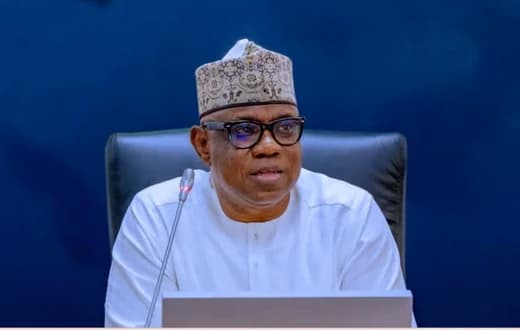
One year after Bayo Ojulari assumed office as Group Chief Executive Officer of Nigerian National Petroleum Company Limited, the state oil firm has recorded measurable shifts across production, project development, and financial performance, reflecting a strategic push to reposition Nigeria’s energy sector.
Ojulari, appointed on April 2, 2025 by Bola Ahmed Tinubu, became the second GCEO of the restructured NNPCL following the enactment of the Petroleum Industry Act. His tenure marks the 20th leadership transition since the corporation’s establishment in 1977.
Within his first year, one of the most notable changes has been in upstream production, particularly through the activities of NNPCL Exploration and Production Limited. Output from the subsidiary rose from an average range of 200,000–250,000 barrels per day to about 330,000 barrels per day by August 2025, with projections reaching approximately 355,000 barrels per day by year-end.
NNPCL has also recorded renewed momentum in deepwater investments. The approval of the Bonga Southwest-Aparo project marks the first major Final Investment Decision in Nigeria’s deepwater segment in over a decade. The project is expected to add about 200,000 barrels per day of crude oil and 140 million standard cubic feet of gas to national output.
Other projects, including Bonga North and Preowei, are progressing, with expectations that Nigeria’s oil production could exceed 2 million barrels per day in the medium term if current developments are sustained.
Financial performance has also strengthened. NNPCL posted a profit after tax of ₦5.4 trillion in its 2024 audited results, while early indications suggest the figure could rise to about ₦5.76 trillion for 2025. The improvement reflects enhanced operational efficiency and a more commercially driven approach.
Internally, the company has implemented governance and workforce reforms, including the introduction of a performance-based management system. Engagement with labour unions has also improved, contributing to relative industrial stability across the sector.
NNPCL is also advancing major gas infrastructure projects, including the Ajaokuta–Kaduna–Kano pipeline, the Escravos–Lagos Pipeline System, and the OB3 pipeline expansion, aimed at boosting domestic gas supply and supporting industrial growth.
Despite the progress, industry observers note that challenges remain, particularly in aligning public perception with ongoing reforms and ensuring sustained delivery of operational targets.
Overall, Ojulari’s first year reflects a period of transition marked by production growth, renewed investment activity, and improved financial outcomes, with further gains dependent on consistent execution and market conditions.