

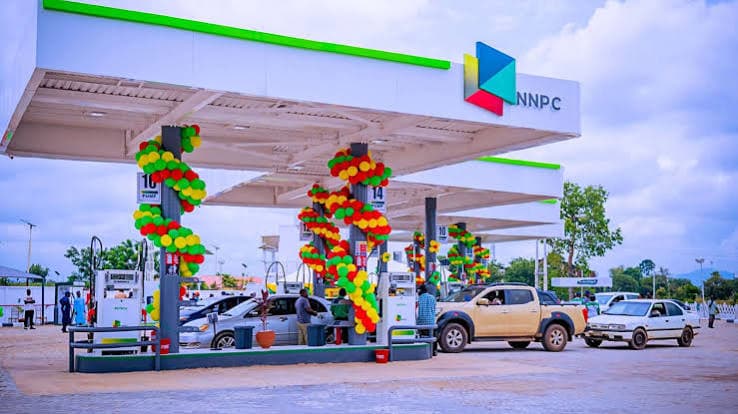
NNPCL retail outlets in Lagos and Ogun states are still selling petrol at regular prices despite the Federal Government’s ₦66-per-litre discount initiative, with franchise arrangements and disagreements over who bears the cost emerging as possible obstacles to implementation.
Price checks carried out by PetroleumPrice.ng at selected outlets found petrol selling at ₦1,360 per litre at a station in Igando, Lagos, ₦1,355 along the Isheri axis and ₦1,355 at the NNPCL station in Leme, Abeokuta.
The prices indicate that the discount has not been applied at the outlets checked, although the extent of non-compliance across the wider NNPCL retail network remains unclear.
The Federal Government announced the 30-day discount on October 8, prioritising public transport operators. NNPCL subsequently confirmed that its discount programme would continue through October 31, following its initial introduction on October 1 to mark Nigeria’s 66th Independence Anniversary.
Industry sources attributed the uneven implementation partly to the structure of NNPCL’s retail network, saying more than half of its stations are operated by franchisees or independent marketers using the company’s brand.
According to the sources, many of these operators purchase petrol from private depots rather than sourcing their supplies directly through NNPCL. They therefore face procurement costs that may make it difficult to offer the discount without absorbing part of the difference themselves.
The sources said some franchise operators were reluctant to bear the cost of the reduction, particularly as the government’s arrangement requires NNPCL to forgo its retail profit margin to provide the relief.
The situation raises questions about how the discount will be implemented across independently operated retail outlets, especially where operators argue that their supply costs leave limited room to reduce pump prices.
NNPCL has said the initiative applies to its retail outlets nationwide but does not establish a uniform national pump price or restore the former petrol subsidy.
The price checks suggest that the benefit may not yet be reaching customers at every NNPCL retail outlet. Clarification on franchisee participation and the treatment of products sourced from private depots could determine how widely the discount is applied during the programme.