

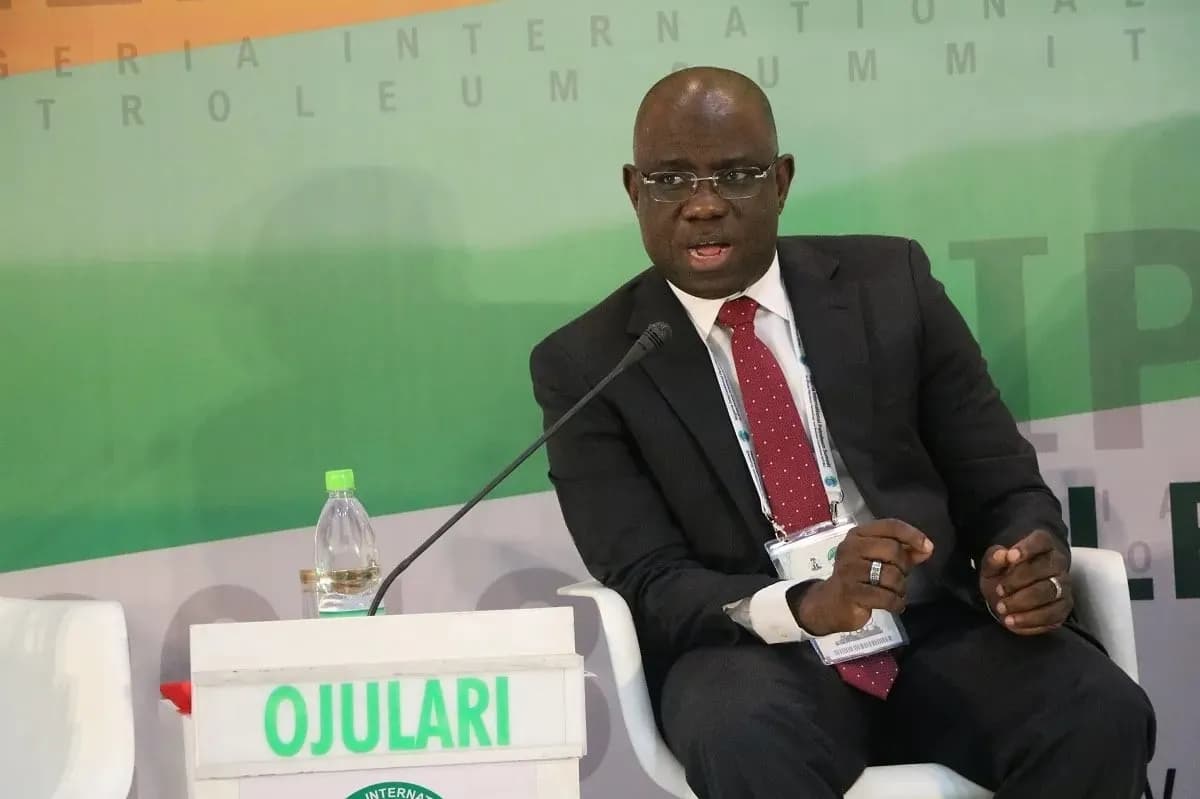
The Group Chief Executive Officer of the Nigerian National Petroleum Company Limited, Bashir Bayo Ojulari, has called for a unified gas pricing framework across Africa, warning that fragmented regulations and disjointed markets are slowing the continent’s energy growth.
Speaking at the 2026 International Energy Week in London, Ojulari said Africa must coordinate policy, pricing and investments to unlock its vast gas potential and strengthen energy security.
He described the Nigeria–Morocco Gas Pipeline as a strategic continental project capable of reshaping cross-border gas trade and accelerating industrialisation.
Nigeria–Morocco pipeline as integration corridor
Ojulari said accelerating the Nigeria–Morocco Gas Pipeline and expanding the West African Gas Pipeline should be top priorities for African energy leaders.
The Nigeria–Morocco Gas Pipeline is designed to transport Nigerian gas along the West African coastline to North Africa and Europe, linking multiple markets across the continent. The project is expected to boost electricity generation, expand gas access, and stimulate industrial growth in participating countries.
According to him, shared infrastructure is critical to unlocking economies of scale, improving supply reliability and deepening regional trade. Without coordinated execution, he warned, Africa risks leaving significant gas reserves underutilised.
Call for harmonised gas pricing framework
Beyond infrastructure, Ojulari stressed the need for harmonised gas pricing systems, transit rules and regulatory standards across African jurisdictions.
He said inconsistent fiscal regimes and regulatory fragmentation continue to discourage large-scale investments and delay cross-border projects. Aligning pricing structures and technical standards, he noted, would reduce uncertainty and improve project bankability.
Ojulari referenced reforms introduced under Nigeria’s Petroleum Industry Act as an example of creating clearer and more transparent regulatory systems that can attract long-term capital.
“Africa can attract and deploy capital more effectively when acting collectively rather than individually,” he said.
Joint investments to strengthen capital mobilisation
The NNPCL chief also advocated structured joint investment platforms among African National Oil Companies to mobilise financing for large gas infrastructure projects.
He identified coordinated investment frameworks, integrated gas market development, knowledge sharing and sustained regional diplomacy as essential pillars for Africa’s energy future.
Nigeria holds more than 200 trillion cubic feet of proven gas reserves — the largest in Africa — but utilisation levels remain below potential. The federal government’s “Decade of Gas” initiative aims to position gas as a transition fuel for industrialisation, power generation and economic growth.
Industry analysts say the success of mega-projects like the Nigeria–Morocco Gas Pipeline will depend on regulatory stability, diplomatic cooperation and credible financing mechanisms.
Ojulari maintained that without unified pricing and coordinated investments, Africa’s gas wealth may not translate into sustainable development.