
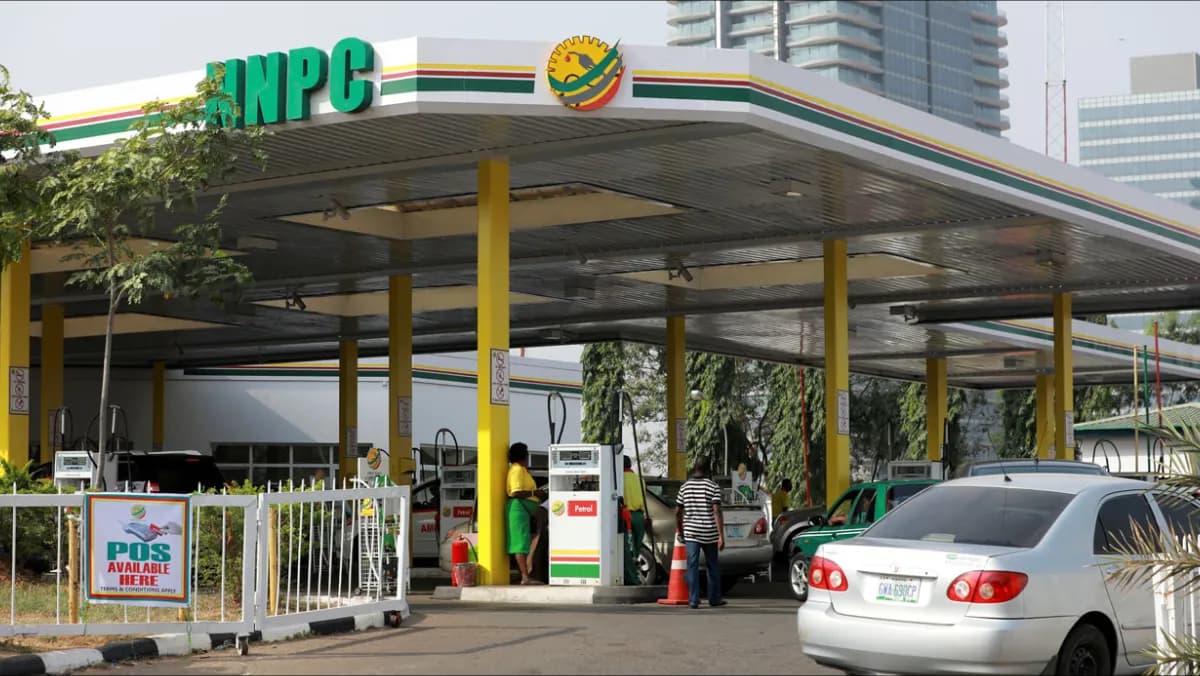
The Nigerian National Petroleum Company Limited (NNPCL) is grappling with a severe financial sustainability and liquidity crisis as 13 of its 20 subsidiaries continue to operate at a loss, pushing the company’s total indebtedness to N22 trillion.
In addition to this massive debt, NNPCL is facing a $6.8 billion debt to oil traders and an additional $5.4 billion in forward sales agreements and other loans used to finance oil exploration and power generation projects in Nigeria’s northern region.
Despite its disclosure of N3.2 trillion profit in 2023, NNPCL’s oil wells, now totalling 2,003, will burden the company with an estimated N466.7 billion in decommissioning costs over the coming years, as it dismantles and removes production facilities and pipelines. This situation presents a paradox: opportunities in the oil and gas sector on the one hand, and financial strain on the other.
Stakeholders, despite high expectations from the company’s transformation into a commercial entity following the long-awaited Petroleum Industry Act (PIA), have voiced concerns over the rising intercompany debt within NNPCL’s subsidiaries. They warn that this could severely impact the group’s liquidity and overall financial health.
“The rise in indebtedness between 2022 and 2023 suggests that these subsidiaries may be struggling to generate sufficient cash flow to meet financial obligations,” noted one industry observer. The company’s debt stood at N18.4 trillion in 2022, raising concerns that liquidity challenges at the subsidiary level could have broader consequences for NNPCL as a whole.
Earlier this month, NNPCL acknowledged its significant debt to petrol suppliers, adding further pressure on the company’s strained finances. Compounding the issue, the company has opted to tender private management of its refineries—particularly in Warri and Kaduna—rather than managing them directly, with debts for these assets exceeding N4.5 trillion.
Despite NNPCL viewing intercompany balances as strategic investments in refining, gas infrastructure, and trading, stakeholders are concerned that the company’s leverage ratio could worsen if these ventures fail to yield returns soon, making it more susceptible to market risks, particularly fluctuations in oil and gas prices.
NNPCL’s subsidiaries with notable debts as of December 31, 2023, include Port-Harcourt Refining Company Limited (N1.97 trillion), Kaduna Refining and Petrochemical Company Limited (N1.36 trillion), and Warri Refining and Petrochemical Company Limited (N1.17 trillion), among others. Additionally, related parties owe NNPC Ltd N14.34 trillion, further complicating the company’s financial landscape.
Industry stakeholders are calling for the shutdown of the company’s unprofitable ventures, especially as NNPCL plans to go public. Some subsidiaries, such as Petroleum Products Marketing Company Limited, NNPC HMO, and Antan Producing Limited, have demonstrated consistent profitability.
In December 2023, NNPCL entered into a forward sales agreement under Project Gazelle, securing a $3 billion loan from Afrieximbank, part of which ($2.25 billion) had been drawn by year’s end. NNPCL used this funding to prepay future taxes and royalty obligations. Similarly, NNPC Exploration & Production Limited (NEPL) holds a capital commitment of $352.88 million under its Eagle Exporting forward sales agreement.
NNPCL’s debt is further compounded by the planned $2 billion in crude oil-backed loans from international creditors and additional outstanding loans from various projects, bringing the company’s total debt to $12.6 billion.
These rising obligations, coupled with the N466.7 billion provision for decommissioning, represent significant financial burdens for the company. The decommissioning costs, dependent on future oil and gas prices and the economic viability of wells, are expected to increase over time.
The company’s oil exploration in Nigeria’s northern region also faces liquidity constraints. NNPC Energy Services Limited took a N53.33 billion loan for the Keana drilling campaign in Nasarawa and other seismic projects. The loan, effective from October 2023, accrues interest at 13.85% for the naira portion and 4.43% for the dollar portion, with interest payments already made but principal repayments yet to commence.
Mounting Concerns Over NNPCL’s Financial Management
Joseph Ambakederimo, convener of the South-South Reawakening Group (SSRG) and Chairman of the Board of Trustees for Community Development Committees of Niger Delta Oil and Gas Producing Areas (CDC), pointed to NNPCL’s growing debt as evidence of its failure to effectively manage the country’s oil and gas resources. Ambakederimo suggested that NNPCL’s role in Nigeria’s economic development was questionable, noting that its financial mismanagement was contributing to dollar shortages affecting the Central Bank’s reserves.
He called on President Bola Tinubu to order a comprehensive audit of NNPCL, claiming that the company’s perpetual state of transition was being exploited for political purposes. Comparing NNPCL to successful state oil companies like Saudi Aramco and Malaysia’s Petronas, Ambakederimo warned that without drastic leadership changes and strategic reforms, NNPCL would continue on a path of failure.
Similarly, Prof. Damilola Olawuyi, Director of the Institute for Oil, Gas, Energy, Environment, and Sustainable Development (OGEES Institute), highlighted the company’s struggle with financial transparency and logistical challenges. He noted that while NNPCL had announced several initiatives aimed at transforming the company, progress had been slow.
“While some of these plans are beginning to take shape, the overall pace has been far from encouraging,” Olawuyi remarked. He called for a more aggressive, results-driven approach, emphasising that the challenges posed by the COVID-19 pandemic, global divestments from the oil sector, and geopolitical issues like the Ukraine war should not obscure the need for urgent reforms at NNPCL.
In conclusion, industry experts like Dan Kunle, a business advisor in the oil and gas sector, argue that core investors must take over non-performing entities within NNPCL. Kunle asserted that without privatisation, NNPCL’s financial struggles would continue, and the expected economic gains would remain elusive. “The subsidiaries should be privatised,” Kunle said. “If they remain in NNPCL’s hands for another two years, it will be difficult to attract the investment needed to revive the sector.”