

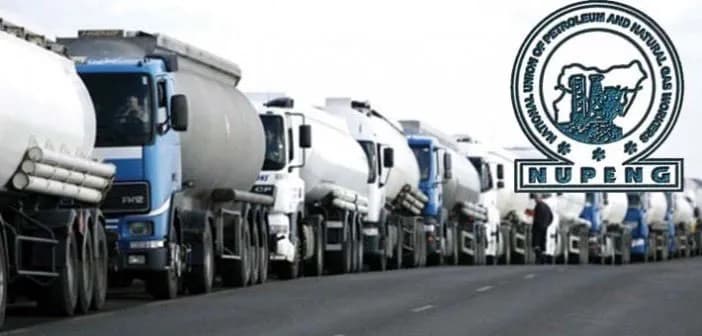
The Nigeria Union of Petroleum and Natural Gas Workers (NUPENG) has issued a blistering condemnation of what it calls the “primitive capitalist” agenda of Africa’s richest man, Alhaji Aliko Dangote, and his cousin, Alhaji Sayyu Aliu Dantata of MRS Energy.
In a strongly worded press statement dated 5 September 2025, the union accused the business moguls of orchestrating a monopolistic takeover of Nigeria’s downstream oil sector through the controversial importation of 10,000 Compressed Natural Gas (CNG) trucks for product distribution.
From Refining to Distribution Control
NUPENG said that during a 23 June meeting, Dantata representing Dangote openly declared their joint plan to dominate refining through the Dangote Refinery and control petroleum product distribution nationwide. The scheme, according to the union, extends beyond efficiency or logistics cost reduction; it represents an attempt to “monopolise distribution, crush competition, and enslave the sector.”
The union disclosed that the recruitment of drivers for the CNG trucks began on 29 August 2025 under conditions that prohibited membership in existing unions such as NUPENG or the National Association of Road Transport Owners (NARTO). Instead, workers were allegedly coerced into signing undertakings to join a newly created company-backed union.
Violation of Labour and Constitutional Rights
Industry watchers note that the development cuts to the heart of Nigeria’s labour framework. Section 40 of the 1999 Constitution guarantees freedom of association, while Nigeria is also a signatory to the International Labour Organisation’s Convention No. 87, ratified since 1960, which protects workers’ rights to organise without employer interference.
“Any policy that denies drivers the right to join trade unions is unconstitutional, unlawful, and a gross affront to global best practices,” NUPENG declared.
The union further invoked Section 32 of the Petroleum Industry Act (PIA), which empowers the Nigerian Midstream and Downstream Petroleum Regulatory Authority (NMDPRA) to curb abuse of dominant positions and promote competition in the sector.
Economic Sabotage or Philanthropy?
Dangote had earlier presented the importation of CNG trucks as a philanthropic gesture to cut logistics costs and aid nationwide fuel distribution. But NUPENG insists the move is far from benevolence.
“This is not philanthropy it is economic sabotage! This is not a gift it is a trap!” the statement read. “It is a death knell for workers, small and medium enterprises, and inclusive economic growth.”
Looming Industrial Unrest
With the deadline for full deployment of the CNG trucks approaching, NUPENG has vowed to resist what it terms “corporate greed and anti-union tyranny.” From 8 September, the Petroleum Tanker Drivers Branch must start seeking alternative livelihoods if Dangote and Dantata replace unionised drivers.
The union also called on the Nigerian Labour Congress (NLC), Trade Union Congress (TUC), and international labour federations to prepare for mass industrial action in solidarity.
Public Skepticism Over NUPENG’s Relevance
However, not all voices outside the sector share NUPENG’s position. On social platforms, sceptics have openly questioned the union’s relevance to the average Nigerian.
“Now that their source of livelihood is under serious threat, they are quoting laws up and down, shior!” wrote a commentator. “Can anybody tell me the relevance of the union in the first place apart from generating millions from their tables and units with tiny little tickets and stamps?”
While acknowledging that Dangote should not flout labour laws, the commentator argued that the union itself has long operated as a rent-collecting body, enriching its leadership without true accountability. “They take millions from trucks without accountability,” he added, describing NUPENG’s protest as one that appeared self-serving.
This sceptical perspective reflects a broader frustration among Nigerians, who see unions as powerful in negotiations but sometimes detached from the daily struggles of ordinary citizens.
Industry Implications
Analysts warn that a clash between NUPENG and Dangote could destabilise Nigeria’s already fragile downstream petroleum sector. The entry of thousands of CNG trucks may reshape logistics efficiency and align with Nigeria’s “Decade of Gas” policy, but the exclusion of trade unions risks igniting widespread protests, supply disruptions, and regulatory battles.
The public’s scepticism, however, also raises questions about the accountability of labour unions themselves. If NUPENG wants to rally nationwide solidarity, critics argue, it must prove that its cause goes beyond preserving dues and ticket revenues and truly reflects the welfare of Nigerian workers.
As the situation escalates, the federal government faces pressure to enforce competition laws, uphold workers’ rights, and strike a delicate balance between energy transition imperatives and social justice.
For now, one thing is clear: the battle lines between organised labour and Nigeria’s most powerful businessmen have been drawn, but the court of public opinion remains divided.