

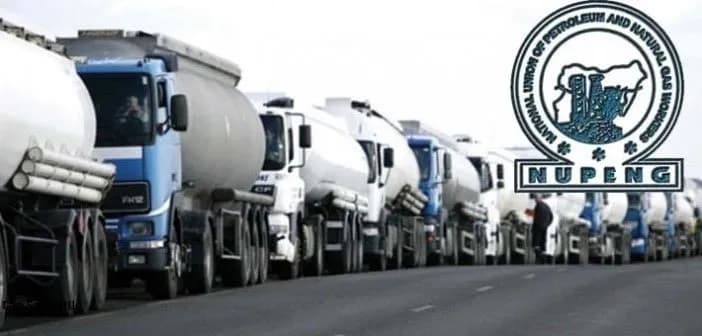
The ongoing strike by the National Union of Petroleum and Natural Gas Workers (NUPENG) has revived an old debate: does the union fight for its members’ welfare, or does it primarily protect the interests of its leaders?
For decades, NUPENG and its Petroleum Tanker Drivers (PTD) branch claimed to champion drivers’ rights. Yet many drivers argue that reality tells a different story. They face multiple charges at depots, sometimes paying as much as ₦70,000 just to load a truck. No records show how these funds improve their welfare. Instead, critics insist that the money enriches union executives.
A Union Losing Its Compass
The PTD was created to organize drivers and protect their interests. Over time, however, it drifted away from this purpose. Drivers say union leaders impose arbitrary charges at various checkpoints—ranging from tolls at Ijebu-Ode to fees at Dangote Refinery, as well as extra costs for parking, e-tickets, and safety checks. These expenses erode drivers’ earnings while offering little benefit in return.
In sharp contrast, Dangote Refinery provides security and infrastructure from Eleko Junction to its truck park at no cost. Despite decades of revenue collection, NUPENG has failed to establish empowerment programs, rehabilitation centers, or meaningful insurance schemes for its members. This imbalance strengthens the perception that the union values revenue collection over worker welfare.
The Dangote Factor
The current strike stems from Dangote Refinery’s alleged anti-union stance. Yet many observers argue that NUPENG’s resistance reflects not worker protection but fear of losing its revenue base. Dangote’s plan to deploy more than 10,000 CNG-powered trucks, backed by the federal government, could drastically reduce the union’s influence over downstream transport logistics.
For years, NUPENG ignored the insecurity and poor working conditions that drivers faced. Now, confronted with reforms that threaten its dominance, it has chosen confrontation. Strikes, however, risk worsening fuel scarcity, driving up pump prices, and deepening hardship for Nigerians already struggling with high costs.
A Case for Reform
The Petroleum Industry Act guarantees drivers the freedom to unionize—or reject union membership if they feel they have been abandoned. Increasingly, drivers are demanding reform, using hashtags such as #StopNUPENG, #NUPENGReform, #DriversStandAlone, and #MovementForDriversRevolution to amplify their voices.
The central question remains: can NUPENG reinvent itself as a genuine defender of workers’ rights, or will it remain an organization driven by self-interest? As Dangote and other private operators reshape Nigeria’s downstream sector, the union faces its toughest test yet.
At stake is not only drivers’ welfare but also the stability of the entire petroleum supply chain. Unless it reforms, NUPENG risks being remembered not as a protector of labour but as a relic of exploitation in Nigeria’s oil industry.