

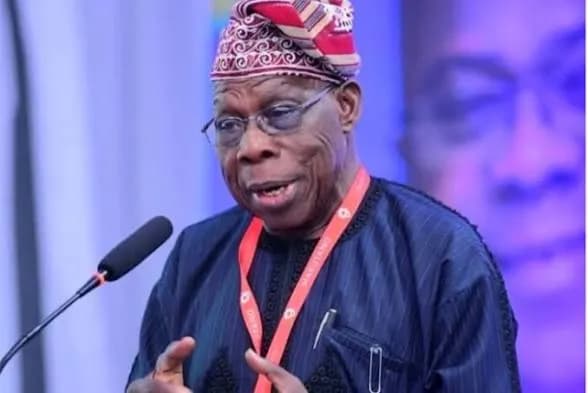
Former President Olusegun Obasanjo has again cast doubt on the future of Nigeria’s state-owned refineries, declaring that the facilities in Port Harcourt, Warri and Kaduna will never operate efficiently despite repeated rehabilitation efforts and fresh plans by the Nigerian National Petroleum Company Limited to bring in technical partners.
Speaking during an interview aired on Saturday, Obasanjo said Nigeria’s experience has shown that public-private partnerships remain the most viable model for large-scale industrial assets. He cited the success of Nigeria LNG Limited, where private sector participation has driven operational stability and profitability.
“The NNPC has refineries, and I said to people that it will never work,” Obasanjo said, arguing that government ownership and management have consistently failed to deliver commercially viable refining operations.
He revealed that while in office, he approached Shell to take an equity stake and manage the refineries, but the energy major declined. According to him, Shell cited limited downstream profitability, the relatively small scale of the plants, poor maintenance culture, and entrenched corruption as reasons for staying away.
Obasanjo said a breakthrough appeared possible when Aliko Dangote offered $750 million for a 51 per cent stake in two of the refineries. “I said, ‘Wow, God, you are really a God of miracles.’ I told Aliko to bring the money quickly. They brought the money, and they paid,” he recalled.
That transaction, however, was reversed by the late President Umaru Musa Yar'Adua after pressure from NNPC officials. Obasanjo said he warned at the time that the refineries would continue to deteriorate and could ultimately be worth little more than scrap.
He also criticised the scale of spending on the assets, noting that about $16 billion has reportedly been committed to refinery rehabilitation over the years just $4 billion short of what Dangote spent to build the 650,000 barrels-per-day Dangote Refinery, now Africa’s largest.
His comments come as NNPC intensifies efforts to secure technical partners for the three refineries, with Group Chief Executive Bayo Ojulari recently admitting that the plants remain far below international operating standards and are unable to compete commercially with modern private refineries