

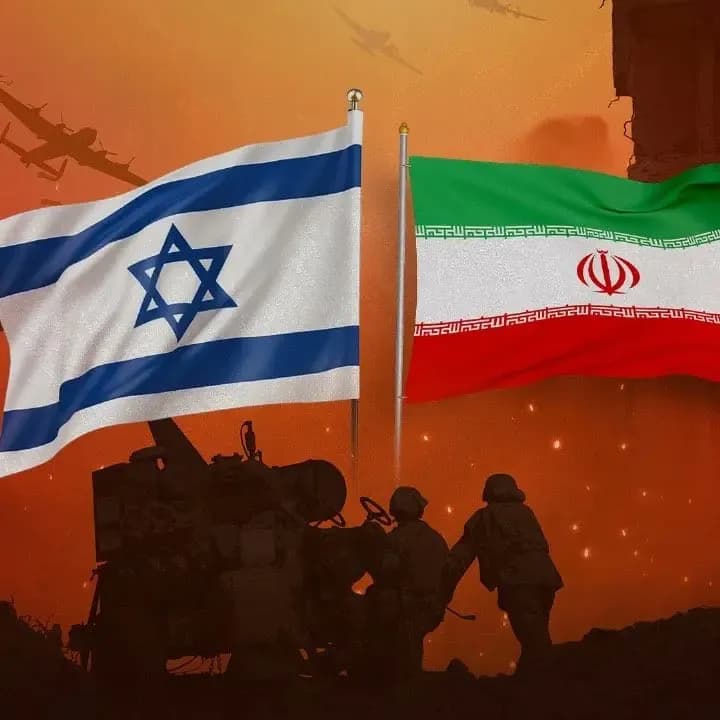
Explosions rocked central Tehran on Saturday as the conflict between Israel and Iran escalated dramatically, sending shockwaves through global energy markets. Israeli airstrikes hit strategic military and energy targets across Iran, including a major oil depot in southern Tehran. In response, crude oil prices surged over 7% on fears of supply disruptions.
Explosions Hit Central Tehran and Oil Infrastructure
Two missile-like projectiles struck central Tehran, setting off powerful explosions that activated the city’s air defenses. Iranian state media confirmed that all flights across the country were grounded until 2 a.m. local time.
In southern Tehran, a key oil depot at Shahran erupted in flames following an overnight Israeli airstrike. Although firefighters have since contained the blaze, satellite images reveal serious damage to the fuel storage facility, which serves as a critical backup for Iran’s energy reserves.
Oil Prices Jump as Markets React to Escalation
Global energy markets reacted swiftly. Traders priced in heightened geopolitical risk as fears grew over supply security in the Middle East:
- Brent Crude: $74.23 (+$4.87, +7.02%)
- WTI Crude: $72.98 (+$4.94, +7.26%)
- Murban Crude: $73.52 (+$4.27, +6.17%)
Analysts say if the conflict spreads to key oil-producing regions or threatens the Strait of Hormuz, through which nearly one-fifth of global oil flows, crude could spike past $90 in the coming days.
Israel Hits 170 Sites, Iran Vows Severe Response
Israel claims it has targeted over 170 Iranian locations, including military installations, fuel depots, and suspected nuclear-linked facilities. Officials say more strikes are imminent and have warned civilians near strategic sites to evacuate.
“We are striking at the heart of Iran’s military and nuclear program,” said an Israeli spokesperson. “More operations are underway.”
Iran responded with missile attacks on multiple Israeli cities, killing at least 13 people, including three children. Iranian President Masoud Pezeshkian vowed that further retaliation would be “more decisive and severe.”
The Iranian Revolutionary Guard confirmed the deaths of seven senior aerospace commanders. In total, over 20 top military figures are believed to have died since the conflict erupted.
Strategic Infrastructure Hit on Both Sides
Iran’s South Pars gas field, the world’s largest, has partially suspended operations as a precaution. Although refining and distribution continue, officials confirmed damage to the Shahran depot.
Meanwhile, Iran launched a rare direct strike on Israel’s Haifa oil refinery. The attack caused damage to downstream pipelines and temporarily halted several processing units. Israeli authorities confirmed no casualties.
Nuclear Diplomacy Collapses
The conflict has also shattered prospects for nuclear diplomacy. Talks between Iran and Western powers, scheduled for this week, have been indefinitely suspended. A senior European diplomat warned that the Israeli strikes have “killed any chance” of reviving the deal for now.
Crackdown and Spy Arrests Intensify
Iran reported the arrest of two individuals allegedly working with Israeli intelligence (Mossad). Authorities say they were caught preparing electronic surveillance equipment. Earlier, five others were detained over suspected collaboration.
Global Stakes Rising
With both sides escalating militarily and diplomatically, global markets and policymakers are bracing for a prolonged and unpredictable conflict. If vital infrastructure remains under threat, the economic ripple effects could soon extend far beyond oil markets, potentially destabilizing global trade routes and energy security.