

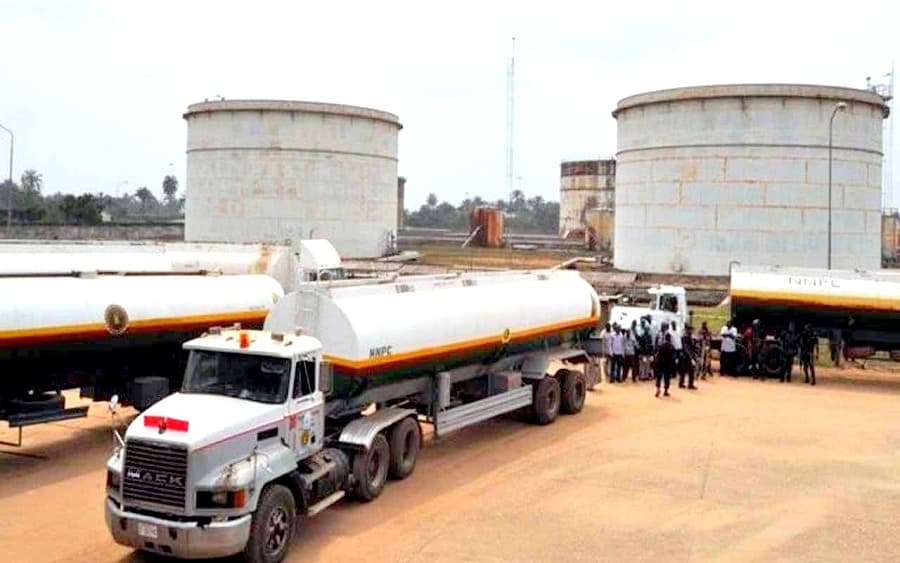
Oil marketers have urged the Federal Government to extend the Nigerian National Petroleum Company (NNPCL) Limited’s 30-day petrol discount programme to 60 days and open participation to independent operators, arguing that the current arrangement could limit the policy’s reach and benefits for consumers.
The marketers said the discount, which applies to petrol sold at designated NNPCL retail outlets, should accommodate independent filling station operators to improve nationwide access, particularly in communities where the national oil company has limited retail presence.
The Federal Government recently announced the temporary price intervention, with priority given to public transport operators. Finance Minister and Coordinating Minister of the Economy, Taiwo Oyedele, said the arrangement was not a subsidy but a plan to sell petrol at cost, funded through NNPCL’s retail margins rather than the Federal Government’s budget or the Federation Account.
Chinedu Ukadike, National Publicity Secretary of the Independent Petroleum Marketers Association of Nigeria (IPMAN), questioned the programme’s ability to reach consumers outside areas with sufficient NNPCL retail outlets. He called for independent marketers to be included, citing their extensive distribution network across the country.
“Independent oil marketers have over 90% coverage and presence in the nooks and crannies of this country. You are giving NNPCL that is situated only in the town. So how do the poor masses, whom you intend to ensure that this petroleum product will alleviate their sufferings, how would they now get it? But, its government policies, we are not against government policies, but let it be all-inclusive; let independent marketers be part of it,” Ukadike said.
He also called for the discount window to be doubled to 60 days, arguing that the movement of petroleum products across the country requires sufficient time, particularly where logistics and road conditions delay deliveries.
“And the 30 days should be extended to 60 days. Because of the circulation of petroleum products, most times it takes two weeks for a truck to leave Apapa and get to Gombe, Maiduguri, because of the bad road and all the rest of them and loading process,” he added.
Another independent marketer, Philp Bulus, described the intervention as timely but said its effectiveness would depend on the discount structure, the volume of petrol covered and whether the savings are passed on to consumers.
“As an independent oil marketer, I see the NNPCL 30-day discount window as a welcome intervention, especially at a time when the cost of petrol is putting pressure on households, transport operators and businesses. Any measure that can reduce the cost of petrol, even temporarily, is worth considering because fuel prices have a direct impact on transportation, food distribution and the general cost of living,” Bulus said.
Bulus warned that restricting discounted supplies to selected NNPCL outlets could place independent marketers under pressure to reduce their pump prices to remain competitive, even where they do not enjoy the same procurement terms. Such a situation, he said, could squeeze margins and increase operating pressure without guaranteeing equivalent benefits for consumers.
He called on the government and NNPCL to clarify the eligibility requirements, participation conditions and pricing mechanism, adding that independent marketers should have fair access to the programme. According to him, transparent implementation would allow operators to secure discounted products and pass the savings on to motorists.
The calls come amid continued volatility in the downstream petroleum market, with international crude oil prices facing upward pressure from the conflict involving the United States, Iran and Israel. The resulting uncertainty has added to concerns over fuel costs and the ability of temporary interventions to provide sustained relief.
Former Vice President Atiku Abubakar had also criticised the proposed 30-day discount, arguing that the measure would offer only temporary relief from high fuel, transport and food costs. He questioned what would happen after the programme expires and called for clarity on the savings motorists could expect and whether lower fuel costs for transport operators would translate into reduced fares.
For independent marketers, the central issue is whether the discount can be implemented through a framework that supports wider product access and delivers measurable savings at the pump. Extending the window and establishing transparent participation terms, they argue, would give the intervention a better chance of reaching consumers beyond NNPCL’s retail network.