

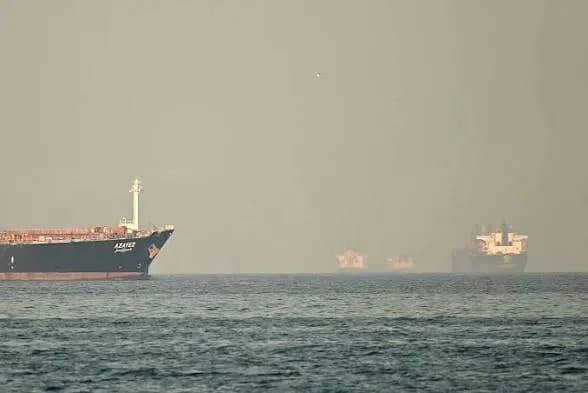
Global oil markets steadied on Thursday after Iran dismissed reports that it had shut down the strategic Strait of Hormuz, a key maritime corridor responsible for moving a significant share of the world’s crude oil.
Speculation about a possible closure of the narrow waterway had rattled energy markets earlier in the week, sending prices sharply higher and triggering fears of supply disruptions. But in a statement released by Iran’s diplomatic mission to the United Nations in New York, the country insisted the reports were unfounded and reaffirmed its commitment to freedom of navigation under international law.
Iran dismisses claims of shipping blockade
The Iranian mission said claims that Tehran had blocked access to the Strait were “baseless and absurd,” stressing that maritime traffic through the busy shipping route continues without restriction.
The clarification came as tensions continue to simmer in the wider conflict involving United States, Israel, and Iran, developments that have kept global energy markets on edge.
Oil prices reflected the uncertainty in recent trading sessions. On Thursday, Brent crude traded at $85 per barrel.
However, early trading on Friday 7:00 AM (WAT) showed a slight pullback. WTI crude traded at $80.34 per barrel, down 0.83 per cent, while Brent crude was priced at $84.93 per barrel, slipping 0.56 per cent as markets reacted to Iran’s clarification and easing concerns over a possible supply disruption.
Shipping slows as conflict rattles insurers
Although the route remains open, shipping activity has slowed noticeably since hostilities escalated in the region. Industry data showed that more than 150 vessels, including oil and liquefied natural gas tankers, were anchored in surrounding waters shortly after the conflict intensified.
Several marine insurance providers including Gard, Skuld, and NorthStandard also withdrew war-risk coverage for ships operating in Iranian and Gulf waters, citing rising security concerns.
Amid the growing tension, Donald Trump had earlier suggested that the United States Navy could escort commercial vessels through the Strait if necessary to protect global energy supplies.
Rising tensions ripple through energy markets
The geopolitical crisis deepened after reports emerged that an Iranian naval vessel, the IRIS Dena, was destroyed in an incident involving U.S. forces in the Indian Ocean near Sri Lanka. The explosion reportedly left dozens rescued but many sailors still missing.
Beyond shipping routes, the conflict has already disrupted key energy infrastructure in the Middle East. Saudi energy giant Saudi Aramco suspended operations at its Ras Tanura refinery after a drone attack, while QatarEnergy halted downstream production following strikes on LNG facilities.
The ripple effects have also been felt in Nigeria, where the Nigerian National Petroleum Company Limited recently adjusted petrol pump prices upward, while the Dangote Petroleum Refinery raised its ex-depot price amid rising global market uncertainty.