

Global oil prices are moving towards $110 per barrel as the widening U.S.-Iran conflict and the latest Houthi offensive in Yemen raise the risk of further disruption to crude supplies and the shipping routes that carry them to international markets.
As at the time of writing 07:10 pm (WAT), Brent crude was trading at $107.08 per barrel, up 5.8 per cent, while West Texas Intermediate (WTI) stood at $101.62, also up 5.8 per cent. At those levels, Brent is just $2.92 away from $110, while WTI needs another $8.38 to reach the same mark.
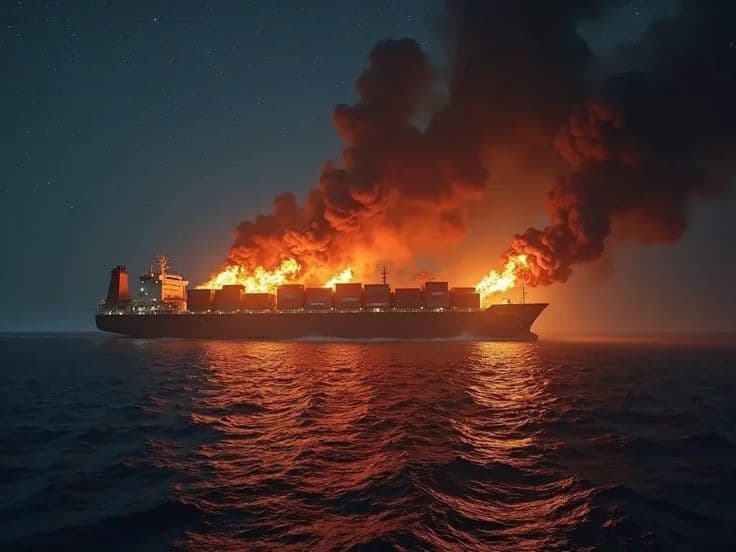
The latest increase comes as the conflict between the United States and Iran increasingly affects commercial shipping. Iran said it attacked 10 ships near the Strait of Hormuz after the United States struck five Iranian oil tankers, keeping pressure on a waterway that remains critical to the movement of crude and petroleum products from the Gulf.
The risk has now spread beyond Hormuz. Houthi forces have seized the Yemeni port of Mocha on the Red Sea, taking their operations closer to the Bab el-Mandeb Strait, another strategic passage for vessels moving between the Red Sea and the Gulf of Aden. The development has added a second major shipping risk to a market already dealing with restricted Gulf traffic.
For the oil market, the significance is not simply that vessels face attacks. Any sustained threat to Hormuz or Bab el-Mandeb can force ships to take longer routes, increase freight and insurance costs and delay the delivery of crude and refined products. Those additional costs can feed into physical oil prices even where production itself has not fallen by the same magnitude.
The Houthi escalation is also creating a direct risk around Saudi Arabia. Recent drone and missile attacks have targeted Saudi energy facilities, adding concern over the security of production and export infrastructure at a time when the kingdom is already dealing with disruptions to shipments through the Gulf.
The supply picture is becoming tighter at the same time. Reuters reported that OPEC production fell by about 640,000 barrels per day in August, while the organisation also lowered its 2026 global oil-demand growth forecast to 380,000 barrels per day. The combination of lower output and heightened geopolitical risk leaves less room for the market to absorb another major supply disruption.
The rally also has a direct bearing on Nigeria’s downstream market. Higher crude prices can raise the cost of imported petroleum products, and replacement, while higher freight, insurance and voyage costs can add further pressure to the landed cost of PMS and other products. For Nigerian importers and marketers, the direction of international crude and shipping costs will therefore remain important to product pricing.
The immediate price threshold is now clear. Brent needs only a $2.92 increase to reach $110 per barrel, while WTI requires $8.38, with both benchmarks already more than 30 per cent above their early-August lows.