

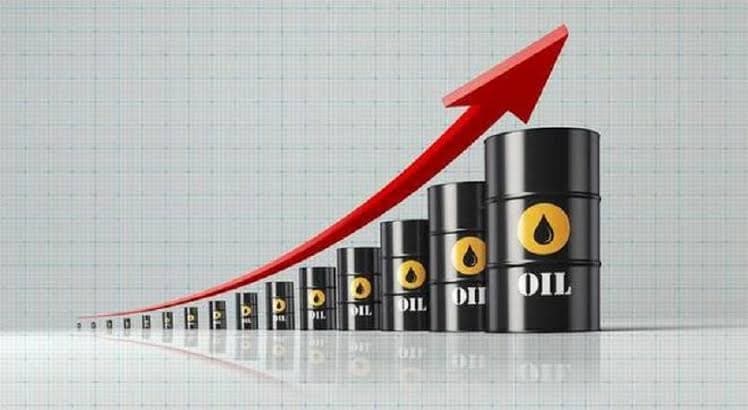
Global oil prices surged by more than 4% in early Monday trading after the United States and Iran exchanged fresh military strikes over the Strait of Hormuz, intensifying concerns over the security of one of the world's most critical oil shipping routes.
The renewed hostilities have heightened fears of potential supply disruptions through the Strait of Hormuz, a strategic chokepoint that handles roughly one-fifth of global seaborne crude oil trade. The latest escalation has injected fresh geopolitical risk into the energy market after hopes of a sustained ceasefire began to fade over the weekend.
As at the time of writing 03:05 (WAT), Brent crude was trading at $79.18 per barrel, up 4.17%, while U.S. West Texas Intermediate (WTI) crude climbed to $74.46 per barrel, representing a 4.27% increase.
According to Reuters, the market reacted after Iran expanded military operations against Gulf states following fresh U.S. strikes, raising concerns that energy shipments through the Strait of Hormuz could face further disruption. The exchange of attacks followed reports that Iran had declared the waterway closed after accusing a vessel of travelling through an unauthorised route.
Although U.S. President Donald Trump insisted the Strait of Hormuz remained open to commercial shipping, shipping intelligence data from Kpler showed that only six vessels transited the passage on Sunday, the lowest daily volume recorded in five weeks, highlighting growing caution among shipowners.
The latest military escalation has also cast fresh uncertainty over the interim agreement reached between Washington and Tehran last month, which had temporarily eased tensions and supported higher global oil supply. The International Energy Agency (IEA) reported that global oil supply increased by 4.1 million barrels per day in June following the agreement, although production remained 9.4 million barrels per day below pre-war levels.
Analysts said the latest attacks have significantly weakened expectations of a quick diplomatic resolution. ANZ analysts noted that "hopes of a relatively quick resolution to the recent skirmishes may be in doubt after tension escalated over the weekend."
Similarly, IG market analyst Tony Sycamore said the relatively measured reaction in crude prices suggested traders still viewed the latest confrontation as an escalation within a fragile truce rather than a complete collapse of the ceasefire, adding that "how accurate that view is remains to be seen."
With the Strait of Hormuz once again at the centre of geopolitical tensions, traders are expected to closely monitor developments this week, as any prolonged disruption to oil flows could push crude prices higher and trigger fresh volatility across global energy markets.