

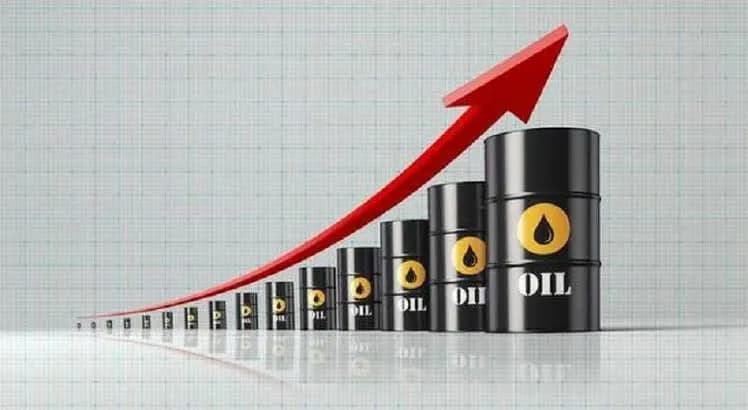
Global oil prices rebounded at the start of the week after renewed military strikes between the United States and Iran revived fears of fresh supply disruptions from the Middle East, reversing part of last week's sharp decline that followed the reopening of shipping through the Strait of Hormuz.
As at the time of writing 4:00 a.m. (WAT), Brent crude traded at $72.34 per barrel, up 0.49 per cent, while West Texas Intermediate (WTI) stood at $69.90 per barrel, gaining 0.97 per cent after briefly climbing above the $70 mark during early trading.
The recovery comes just days after both benchmarks recorded their steepest weekly decline since the outbreak of the US-Iran conflict, as easing tensions and the resumption of tanker movements through the Strait of Hormuz had prompted traders to scale back the geopolitical risk premium built into crude prices. It
However, renewed exchanges of military strikes over the weekend have once again unsettled energy markets. Reports indicate that diplomatic efforts aimed at ending hostilities have stalled, while fresh security concerns around the Strait of Hormuz—through which roughly one-fifth of the world's seaborne crude oil passes—have returned to the forefront of market sentiment.
The renewed uncertainty has led traders to reassess supply risks from the Gulf, a region that accounts for a significant share of global crude exports. Although shipping through the Strait has resumed, market participants remain cautious that any further escalation could disrupt tanker movements and tighten global oil supplies.
The rebound in crude prices could have implications for Nigeria's downstream petroleum market, where depot prices have been falling in recent days following a sharp correction in international oil prices. Last week, Dangote Refinery reduced its ex-gantry petrol price, prompting independent depot owners—particularly in Lagos—to slash prices further as marketers competed aggressively to clear inventories purchased when crude prices were significantly higher.
While the latest uptick in crude prices is relatively modest, analysts say sustained military escalation in the Middle East could slow or reverse the downward trend in refined petroleum product prices if higher feedstock costs persist.
For now, the market remains caught between improving physical oil supply and growing geopolitical uncertainty. Any progress in diplomatic negotiations could quickly ease prices again, while further military escalation would likely strengthen the geopolitical premium currently returning to the market.
Oil markets are expected to remain highly volatile this week as traders monitor developments in the US-Iran conflict, diplomatic negotiations and shipping conditions through the Strait of Hormuz. For Nigeria, the direction of international crude prices will continue to influence refinery pricing, depot competition and the pace of adjustments in petrol and diesel prices across the downstream sector.