

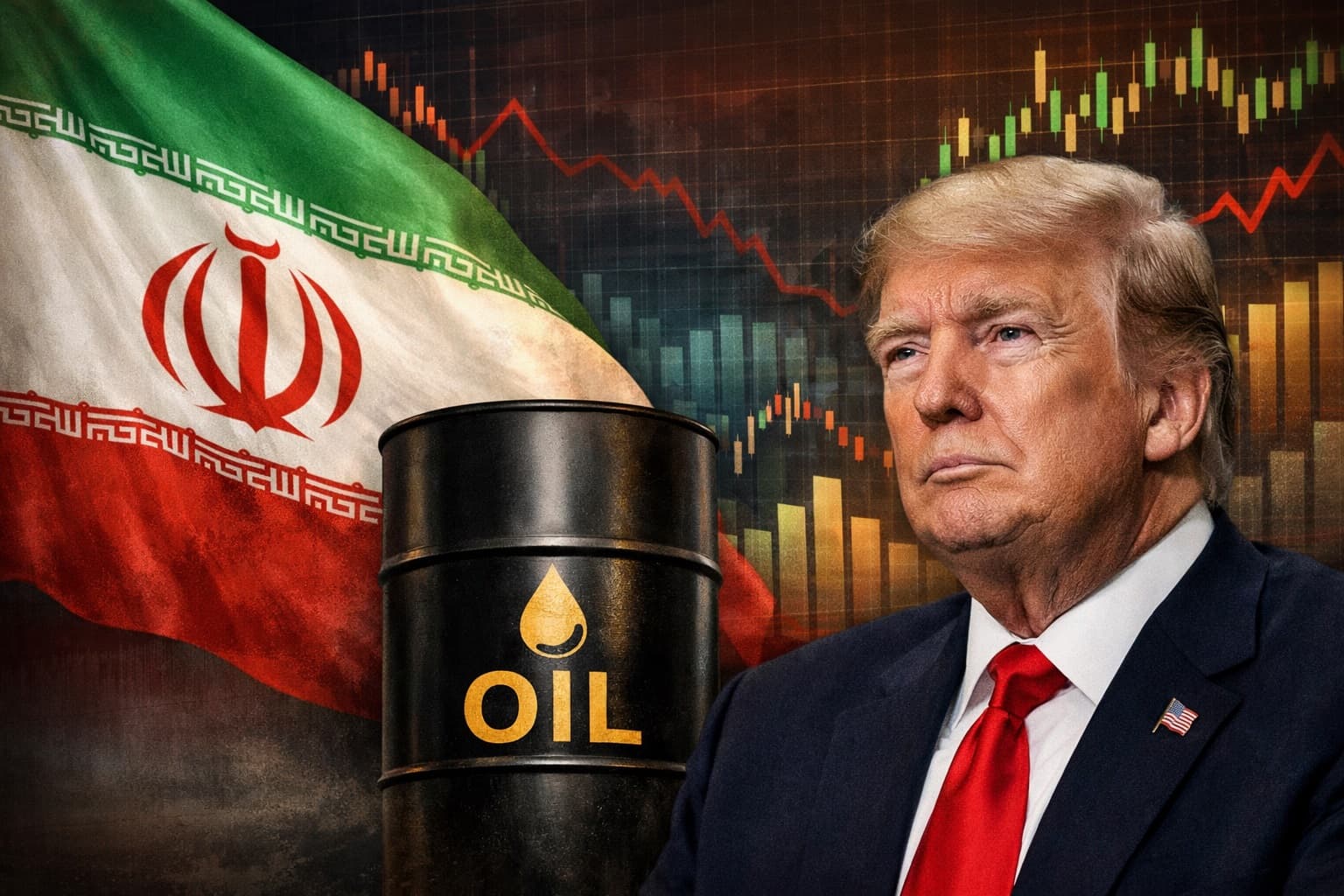
Oil prices climbed more than 2% on Thursday as renewed geopolitical tensions surrounding the U.S.-Iran conflict heightened concerns over potential disruptions to crude supplies and shipping routes in the Middle East.
As of 11:30 a.m. WAT, Brent crude was trading at $93.82 per barrel, up $2.20 or 2.40%, while West Texas Intermediate (WTI) stood at $86.65 per barrel, gaining $2.26 or 2.68%.
The latest advance came after U.S. President Donald Trump announced what he described as the “most crushing economic operation” against Iran and warned countries and entities providing economic support to Tehran of potentially severe consequences.
Trump announced in a post on Truth Social late Wednesday, saying Washington would seek to isolate Iran economically on an unprecedented scale.
He warned that any country allowing its financial institutions, businesses, airports or government agencies to provide what he described as a “lifeline” to Iran would face “tremendous Economic Consequences.”
The U.S. president specifically called for an end to activities including oil smuggling, financial swap arrangements, cash transfers, exchange houses, ship registries and the use of front companies to support Iran.
He also urged U.S. allies to join Washington's effort to isolate Iran, describing the campaign as an “ECONOMIC D-DAY.”
Trump did not identify any country specifically in his statement. However, China remains Iran's largest customer for sanctioned crude, accounting for more than 90% of Iran's sanctioned oil purchases in recent years.
The threat comes as China's independent refiners are expected to increase their purchases of Iranian crude in August after crude inventories in Shandong, a major hub for China's independent refiners, fell to their lowest level of the year following an estimated monthly drawdown described as the largest in a decade.
The prospect of tighter U.S. pressure on Iranian oil exports adds another layer of uncertainty to an already disrupted global oil market. Iran has also used its influence over the Strait of Hormuz during the conflict, while tanker movements through the strategic waterway have slowed sharply amid security concerns.
The conflict began on February 28, when the United States and Israel launched a major military operation against Iran. The strikes killed Iran's Supreme Leader, Ayatollah Ali Khamenei, along with senior military and security officials.
Iran subsequently responded with missile and drone attacks against Israel, U.S. military facilities, and several Gulf states, widening the conflict and placing regional energy infrastructure and shipping routes under increased pressure.
The Strait of Hormuz has emerged as one of the main pressure points. The waterway, located between Iran and Oman, is a critical route for global oil shipments, and disruptions to traffic through the chokepoint have increased concerns about the availability and movement of crude.
Washington and Tehran reached an interim agreement in June intended to halt military operations and establish a 60-day period for negotiations, including discussions over Iran's nuclear programme. The arrangement failed to produce a lasting settlement, and the diplomatic window expired without a broader agreement.
The latest escalation therefore comes against a backdrop of renewed fighting, stalled diplomacy and continuing uncertainty over the security of Middle Eastern oil supply routes.
Although Trump's latest announcement did not immediately produce an outsized jump in crude prices, oil markets have remained highly sensitive to developments that could affect Iranian exports or shipping through Hormuz.
The prolonged conflict has also kept energy prices elevated compared with levels before the war, with higher crude prices feeding into fuel and transportation costs in oil-importing economies, including Nigeria.
For Nigeria, sustained increases in international crude prices can have mixed effects. Higher oil prices can support government and foreign-exchange earnings, but elevated petroleum prices can also increase transportation and logistics costs, particularly when domestic fuel prices respond to changes in global crude and refined-product markets.
The latest move in crude prices underscores the continued influence of geopolitical developments on the oil market, particularly as the U.S.-Iran conflict remains unresolved and the risk of further disruption to regional supply persists.