

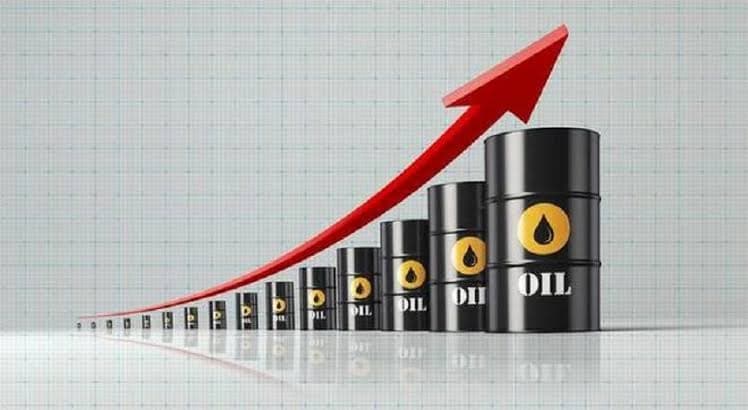
Crude oil prices remained above $100 per barrel on Friday as renewed attacks on tankers in the Strait of Hormuz threatened global supply flows, keeping Brent and West Texas Intermediate (WTI) on course for weekly gains despite a retreat in early trading. The market’s resilience reflects persistent concerns over shipping disruptions and the risk of further supply losses, with diplomatic efforts and emergency stock releases yet to ease uncertainty significantly.
As of 7:20 a.m. West Africa Time (WAT), Brent crude was trading at $105.30 per barrel, down 0.63 per cent, while WTI stood at $97.32 per barrel, down 0.66 per cent, according to Oilprice.com market data. Murban crude also declined by 0.87 per cent to $110 per barrel.
Despite the early losses, both major benchmarks remained above their levels from the previous Friday, reflecting the impact of escalating security risks in the Middle East on market sentiment. Continued attacks on tankers in the Strait of Hormuz have heightened concerns about the reliability of crude oil shipments through one of the world’s most important energy corridors.
According to Oilprice.com, Iranian strikes on tankers have contributed to a sharp reduction in oil flows through the strait. Data from commodity analytics firm Kpler showed that average daily flows fell to 11.62 million barrels in the week to October 13, compared with a baseline of 17.15 million barrels per day. The decline has intensified concerns about supply availability and reinforced the risk premium in international crude prices.
ING commodity analysts said uncertainty surrounding Middle Eastern supply and the sustainability of oil flows through the Strait of Hormuz had kept a significant risk premium in the market. The analysts noted that prices could surrender some of those gains if shipments recover, but a complete removal of the premium would require an agreement between the United States and Iran.
Efforts to ease the pressure on global oil markets have so far offered limited relief. The International Energy Agency announced a further release of 100 million barrels, representing the remaining deliveries from the 400-million-barrel emergency release agreed in March 2026. US President Donald Trump has also suggested lifting sanctions on some vessels associated with the shadow fleet in an attempt to ease tanker shortages and reduce elevated freight rates.
However, ING analysts questioned whether easing sanctions would significantly increase tanker availability, noting that many of the vessels were already operating despite existing restrictions. European Union sanctions and insurance constraints could also limit their usefulness in restoring shipping capacity.
For Nigeria, sustained crude prices above $100 per barrel could support export earnings and government revenue, depending on production volumes, export performance and fiscal arrangements. However, elevated global oil prices can also increase the cost of imported petroleum products and place additional pressure on domestic fuel prices, particularly when freight, insurance and exchange-rate movements move against local buyers.
The immediate outlook for crude prices will depend largely on developments around the Strait of Hormuz, the pace of recovery in oil shipments and diplomatic efforts to ease tensions between Washington and Tehran. with prices elevated the market remains supported by supply disruption risks, even as traders take some profits following recent gains.