

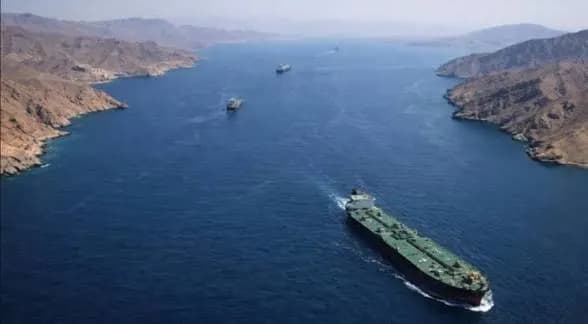
Crude oil prices drifted lower on Monday, reflecting a market caught between tense geopolitics and small signs of logistical relief in the Persian Gulf. As at the time of writing 1:50 PM (WAT), WTI traded at $110.4 per barrel, down 1%, while Brent crude edged slightly higher at $108.4 per barrel (+0.56%). Murban crude surged to $117.9 per barrel (+2.68%), signalling uneven pressures across benchmarks, and natural gas rose to $2.847 per MMBtu (+1.68%), highlighting tightness in global energy supply.
The moves follow OPEC’s announcement that it is ready to increase oil output by 206,000 barrels per day, though the additional supply remains conditional on the reopening of the Strait of Hormuz.
For now, the choke point remains partially blocked by the ongoing U.S.-Israeli military standoff with Iran. The combined production cuts from Saudi Arabia, Iraq, Kuwait, and the UAE exceeding 11 million barrels per day have tightened supply, keeping the market on edge.
While the OPEC plan signals readiness to act, analysts say it does not immediately relieve pressure. Prices remain elevated due to persistent geopolitical risk premiums, with recent Iranian strikes on Gulf infrastructure in the UAE, Bahrain, and Kuwait reinforcing uncertainty. Murban crude’s selective rally reflects scarcity in key regional grades, even as Brent and WTI show modest retracements.
Adding a glimmer of relief, two India-flagged LPG tankers, Green Asha and Green Sanvi, successfully navigated the Strait of Hormuz, resuming limited flows of critical fuel to India. This incremental reopening, while positive, remains insufficient to fully stabilise global markets, leaving the risk of further spikes in refined products high.
Market watchers note several forces shaping today’s prices:
Geopolitical Tension: The U.S.-Israel-Iran conflict keeps a premium on crude, with threats of continued Strait closure.
OPEC Output Cuts: March production fell to its lowest since June 2020 at 21.57 million barrels per day.
Selective Tanker Movements: Limited transit of Indian LPG vessels slightly eases supply but does not offset widespread bottlenecks.
Global Energy Demand: Tight LNG and LPG supply in markets like India pushes crude replacement costs higher.
Traders and refiners are now closely monitoring developments in Hormuz.
Any further easing of restrictions could temper prices, but for now, the market is balancing on uncertainty.
Analysts warn that the situation could keep crude elevated, with sporadic surges in benchmarks like Murban crude reflecting regional scarcity.
For downstream operators and marketers in Nigeria, the takeaway is clear: volatile supply lines and high-risk geopolitical dynamics will continue to shape pump prices, while modest openings in logistics only provide temporary relief.