

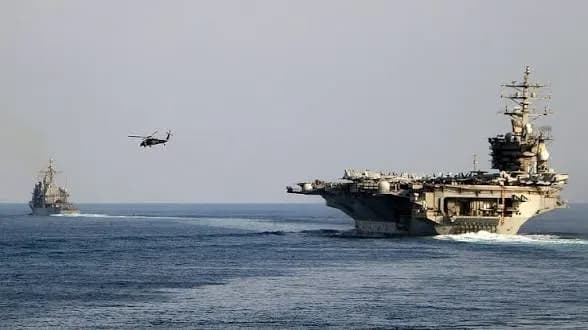
Oil prices edged lower on Tuesday despite rising geopolitical tensions following the enforcement of a United States naval blockade targeting Iranian oil flows through the Strait of Hormuz, a development that would typically trigger a price surge.
As at 07:46 (WAT), Brent crude traded at $94.97 per barrel, down 4.42 per cent, while U.S. West Texas Intermediate (WTI) fell more sharply to $91.65 per barrel, reflecting a 7.50 per cent decline. The drop signals that the market is, for now, absorbing the shock without a sustained price spike.
The blockade, introduced after failed negotiations between Washington and Tehran, is aimed at cutting Iran’s oil revenues. It comes amid ongoing military pressure, including weeks of air strikes and tightening sanctions on the country’s energy exports.
Ordinarily, a disruption around the Strait of Hormuz — one of the world’s most critical oil transit routes — would push prices higher. The waterway handles a significant share of global crude shipments, making any threat to its operations a major concern for energy markets.
However, traders appear cautious rather than reactive. Analysts say the current price dip reflects a mix of profit-taking, short-term market corrections, and uncertainty over how effectively the blockade will be enforced.
There are also questions around supply continuity. While the blockade introduces risk, it has not yet resulted in a clear and immediate drop in physical oil flows, which is keeping prices from spiking sharply.
Still, the downside may be temporary. Energy experts warn that any escalation — particularly if Iran retaliates or if shipping routes like the Bab el-Mandeb Strait are threatened — could quickly reverse the trend and send prices higher.
For now, the market is taking a wait-and-see approach, balancing geopolitical risk against actual supply impact. But with tensions rising in a region central to global oil flows, volatility remains firmly in play.