

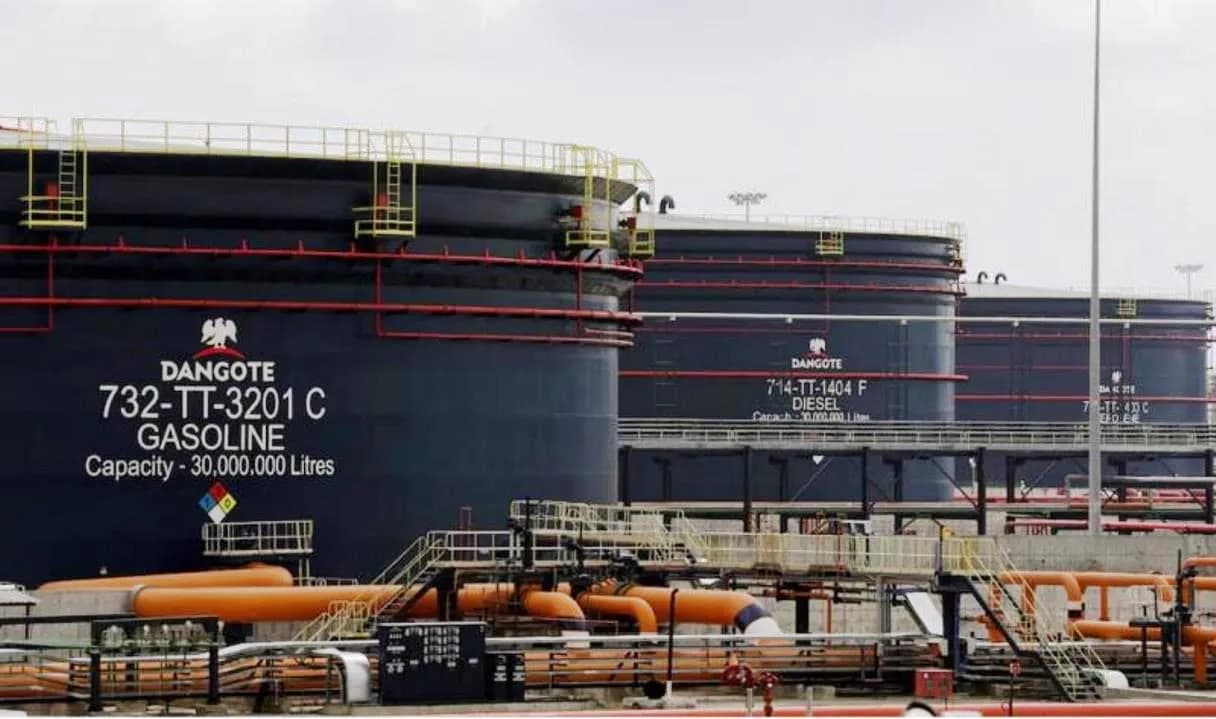
The Natural Oil and Gas Suppliers Association of Nigeria (NOGASA) has strongly criticised Dangote’s refinery newly announced plan to supply petroleum products directly to large consumers, bypassing the country’s traditional downstream distribution network. The association warns the move could trigger massive job losses, displace thousands of marketers, and destabilise Nigeria’s fuel distribution structure.
Dangote’s Game-Changing Move
According to the plan unveiled last week, Dangote Refinery intends to deploy 4,000 compressed natural gas (CNG)-powered trucks from August 15 to distribute petroleum products such as petrol (PMS), diesel (AGO), and aviation fuel (ATK) directly to major end-users. These include industries, telecom operators, transport companies, hotels, filling stations, and even government institutions.
The strategy is designed to reduce delivery costs, increase efficiency, and ensure product quality and quantity are not compromised in transit. The company says it seeks to improve national energy access by eliminating middlemen, warehousing delays, and pricing inconsistencies.
NOGASA Reacts: A Sector-Wide Threat
But NOGASA, representing thousands of petroleum suppliers, transporters, and depot operators nationwide, has pushed back aggressively. Speaking in Abuja, Benneth Korie, NOGASA’s national president, said the plan, if implemented as proposed, would upend Nigeria’s downstream petroleum logistics framework, bypassing licensed distributors and depots that form the backbone of the current fuel supply chain.
“If this happens, our members who have invested heavily in fuel trucks, retail stations, depots, and human resources will be rendered jobless,” Korie warned.
He stressed that this would not only marginalise independent marketers and suppliers but also cause ripple effects across the entire logistics and retail system, including fuel attendants, depot operators, truck drivers, and administrative workers.
A Looming Economic Fallout
The association projects that the implementation of Dangote’s direct-to-consumer supply model could immediately disrupt over 50,000 jobs linked to fuel transportation, sales, and depot operations. Many of these jobs, Korie said, are held by young Nigerians, small-scale entrepreneurs, and regional logistics contractors who form the informal core of the downstream sector.
Furthermore, NOGASA fears that centralising product distribution in the hands of a single private operator could introduce monopolistic tendencies into the sector, weakening competition and possibly distorting fuel pricing in the long run.
Historical Context: Nigeria’s Fragile Fuel Supply Chain
Nigeria’s downstream oil sector has historically relied on a multi-tier distribution network involving the Nigerian National Petroleum Company Limited (NNPC), major marketers, independent marketers, depots, and third-party transporters. The recent deregulation of PMS pricing further increased the role of private sector players like NOGASA.
In this ecosystem, suppliers serve as intermediaries between refineries or import terminals and retail outlets. Their role is not only logistical but also financial they often shoulder the risks of credit sales, price volatility, and regional transportation.
Dangote’s proposal effectively seeks to erase this intermediary layer, thereby threatening the economic role of entire supply chain segments that depend on traditional fuel movement.
NOGASA’s Response Strategy
Korie announced that NOGASA will hold a national stakeholders’ meeting on July 31 in Abuja, where members will deliberate on possible responses, including lobbying regulators, seeking legal redress, and possibly staging industrial action if necessary.
He also called on Dangote to reconsider and adopt a more inclusive model that allows certified suppliers and distributors to participate in the supply chain while still achieving efficiency goals.
“Let Dangote sell to the marketers and allow them to distribute to end-users as they have done over the years,” he said. “This will sustain jobs, allow fair market access, and ensure that the entire ecosystem survives.”
Industry Implications: Efficiency vs. Market Stability
While some analysts welcome Dangote’s push for direct delivery as a means of reducing price distortions and boosting end-user efficiency, others warn that abrupt centralisation could hurt an already volatile sector.
- Operational Advantage: Direct supply would reduce demurrage costs, product loss, and delivery delays.
- Market Risk: Bypassing the marketer chain could drive small players out of business, undermining market plurality and decentralised access.
- Regulatory Gaps: Nigeria’s regulatory architecture, still adjusting to full deregulation, may struggle to adapt to rapid supply chain restructuring.
Industry observers suggest a phased rollout, possibly through a hub-and-spoke model, where Dangote Refinery supplies to bulk depots, while accredited suppliers handle last-mile delivery under regulated terms.
Dangote Refinery’s direct delivery strategy presents a clear challenge to Nigeria’s traditional fuel marketing structure. While it offers efficiency and cost-reduction promises, it also raises pressing questions about job security, market access, and supply chain equity. As stakeholders prepare for confrontation or compromise, the future of Nigeria’s downstream sector will hinge on how well innovation is balanced with inclusiveness.