

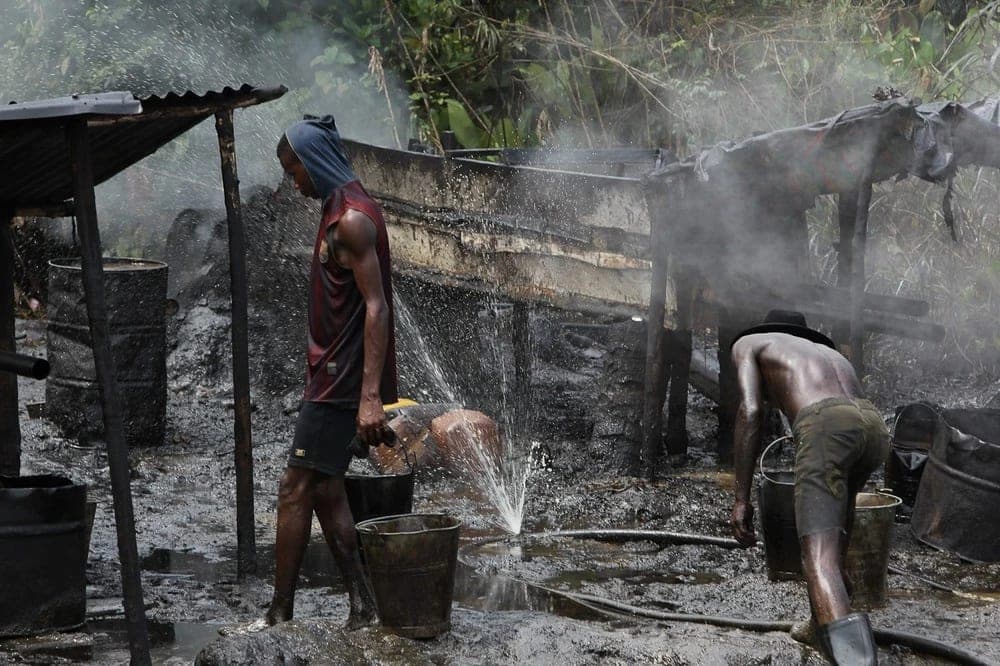
Nigeria’s long-running oil theft crisis is taking a dangerous new turn, as criminal networks abandon remote cre eks and embed operations within civilian communities. What was once largely hidden in the mangroves of the Niger Delta is now surfacing in markets and roadside settlements.
The recent exposure of illegal bunkering activities at Owaza Mami Market in Ukwa West LGA of Abia State highlights this shift. On January 24, 2026, a joint intelligence-led operation by Pipeline Infrastructure Nigeria Limited (PINL) and security agencies uncovered a hidden crude oil storage and refining hub operating near the Port Harcourt–Aba Expressway.
Investigators said what appeared to be a normal roadside market was allegedly linked to illegal supply lines connected to the Trans-Niger Pipeline. Warehouses stocked with stolen crude and refined products were reportedly discovered, alongside makeshift refining equipment.
Criminal Networks Go Urban
Security officials say oil theft groups are deliberately relocating closer to highways and populated centres to cut transport costs and access buyers faster. By blending into legitimate commercial spaces, they reduce suspicion and complicate enforcement.
Similar patterns have been reported in Rivers State, Imo State and Delta State, where illegal refining sites are increasingly found within built-up areas rather than isolated forest camps.
Economic Losses, Rising Risks
Beyond the billions of dollars Nigeria loses annually to oil theft, experts warn that urban-based operations heighten environmental and security risks. Artisanal refineries often dump toxic waste into soil and waterways, endangering livelihoods and public health.
Security sources also revealed that many illegal hubs are equipped with escape routes and local intelligence support, making crackdowns more difficult. Analysts insist that without sustained prosecutions and community-level economic alternatives, dismantled networks may simply resurface elsewhere.