

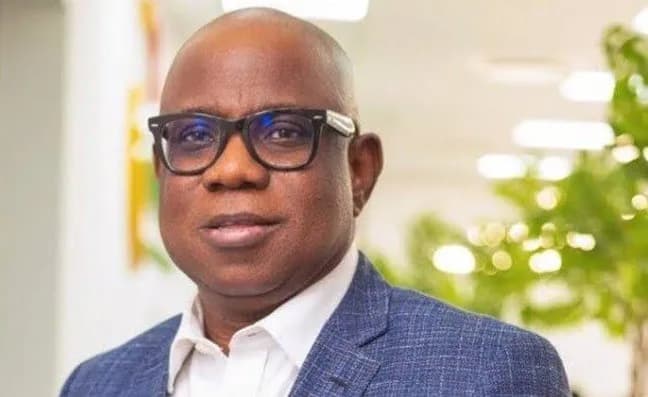
Bayo Bashir Ojulari, the new Group Chief Executive Officer (GCEO) of the Nigerian National Petroleum Company Limited (NNPCL), faces one of the toughest jobs in Nigeria’s energy industry. Beyond running the country’s largest state-owned enterprise, he must also change the narrative of a sector where failed government-owned refineries have long symbolized national decline.
For decades, Nigeria’s four refineries in Port Harcourt, Warri, and Kaduna have stood as reminders of inefficiency. Despite repeated rehabilitation efforts, none has returned to steady operation. As a result, Nigeria still depends heavily on imported fuel, while critics mock NNPCL as a “toothless bulldog” presiding over idle but critical national assets.
Ojulari now carries the burden of rewriting this story. His pledge that NNPCL refineries will operate under his leadership marks a sharp shift from his earlier hesitation about whether to sell them off entirely.
A Fresh Mandate Under the PIA
Speaking at the 2025 PENGASSAN Energy and Labour Summit (PEALS) in Abuja, Ojulari laid out his vision during a keynote titled “Building a Resilient Oil and Gas Sector in Nigeria: Advancing HSE, ESG, Investors and Incremental Production.”
He highlighted the Petroleum Industry Act (PIA) as a game-changer, giving NNPCL a new corporate mandate focused on efficiency, competitiveness, and value creation. His strategy includes restructuring joint ventures, monetising dormant assets, and investing in vital infrastructure.
Importantly, he stressed that future success will not be measured by crude output alone. Instead, NNPCL must also deliver strong Environmental, Social, and Governance (ESG) performance—now a critical benchmark for investors and local communities.
Ojulari’s message was direct: the era of inefficiency is over. To thrive, NNPCL must win investor trust, achieve operational excellence, and unlock the long-stalled potential of its refineries.
Politics, Power, and Pushback
Ojulari’s position, however, clashes with influential figures who insist the refineries should be sold. Former President Olusegun Obasanjo, former Vice President Atiku Abubakar, and top business leaders—including Africa’s richest man, Aliko Dangote—argue that government ownership is wasteful.
Dangote, whose 650,000 bpd refinery already dominates the sector, is widely believed to prefer a competitive landscape with fewer state-backed rivals.
Still, Ojulari anchors his argument in national security and sovereignty. Critics of privatization warn that leaving Nigeria’s refining backbone fully in private hands could expose the country to monopolistic pricing in a sector central to economic stability.
The Real Challenge
Despite his bold words, Ojulari’s toughest battle will be execution. Nigerians expect refineries that work, produce competitively, and secure fuel supply without constant price shocks. Delivering this will demand political courage, technical skill, and transparent leadership.
Stakeholder support will also prove crucial. Industry players such as the Petroleum Products Retail Outlets Owners Association of Nigeria (PETROAN), the Independent Petroleum Marketers Association of Nigeria (IPMAN), and the Major Oil Marketers Association of Nigeria (MOMAN) must back NNPCL’s revival plan. Without their networks, even a functioning refinery risks limited market impact.
Waiting for Results
Ojulari has promised to revive Nigeria’s long-dormant refineries. Yet, promises alone cannot erase decades of failure. Political interference, entrenched inefficiencies, and deep-seated resistance remain formidable obstacles.
Nigerians are watching. If Ojulari delivers where others failed, he could not only transform NNPCL but also rewrite the future of Nigeria’s oil and gas industry.