

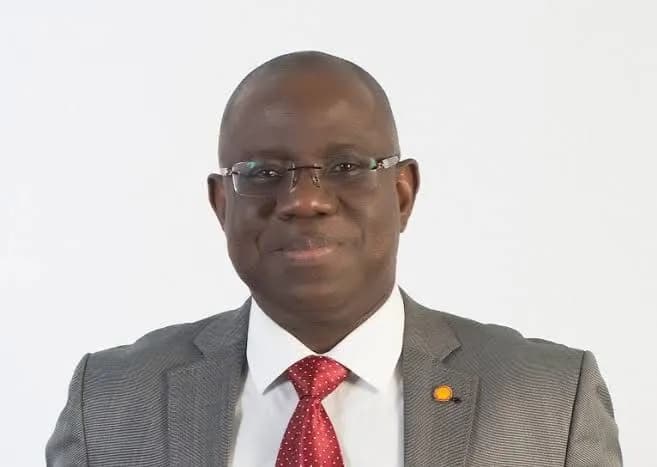
As Bashir Bayo Ojulari marks his first 100 days as Group Chief Executive Officer (GCEO) of the Nigerian National Petroleum Company Limited (NNPCL), a critical review reveals a leadership marked by bold reforms and notable shortcomings. Appointed by President Bola Ahmed Tinubu in April 2025 to commercialise Nigeria’s state oil company, Ojulari’s early performance has generated mixed industry reactions.
While the GCEO has delivered significant wins in operational reliability, transparency, and infrastructure, lingering challenges persist in refinery rehabilitation, crude production, pricing stability, and allegations of financial impropriety currently under Senate scrutiny.
Hits: Strategic Advances in Operations and Reforms
1. Full Pipeline Availability and Production Gains
Ojulari’s team achieved 100% pipeline availability, a milestone that curbed sabotage losses and supported improved crude evacuation. Enhanced partnerships with upstream players also nudged oil and gas production upward.
2. Timely Cash Call Payments
NNPCL cleared joint venture cash calls promptly during the review period, easing operational bottlenecks and rebuilding trust with international oil companies (IOCs). This consistency in cash flow has unlocked new field development and investment conversations.
3. Cost Efficiency and Governance Discipline
The company adopted a “no value loss” mandate, cutting wasteful expenditure and plugging cost leakages. Ojulari’s approach has been marked by tough decisions around legacy inefficiencies and underperforming operations.
4. Return to Financial Transparency
For the first time since 2021, NNPCL resumed monthly publication of financial and operational reports. In June, it posted a ₦905 billion profit after tax, albeit a decline from ₦1.054 trillion in May—signalling resilience but also market sensitivity.
5. Infrastructure Breakthrough – AKK Pipeline
NNPCL completed the River Niger crossing segment of the Ajaokuta–Kaduna–Kano (AKK) gas pipeline, a pivotal step toward unlocking gas for domestic industrial use and export potential.
6. Clean Energy Push – CNG Integration
As part of its gas transition strategy, NNPCL donated 35 compressed natural gas (CNG) buses to the Presidential CNG Initiative. The intervention supports affordable transport and reflects Ojulari’s push to diversify Nigeria’s fuel mix.
Misses: Five Major Gaps Undermining Progress
1. Refinery Rehabilitation in Uncertainty
Despite public assurances, the state-owned refineries in Port Harcourt, Warri, and Kaduna remain non-operational. Ojulari acknowledged that repairs are “becoming more complicated,” and the prospect of privatisation remains open but unclear. The absence of a decisive policy has prolonged Nigeria’s dependency on imports.
2. Crude Oil Underproduction and Supply Gaps
Nigeria’s crude output remains below 1.7 million barrels per day, far short of its OPEC+ quota of over 1.8mbpd. NNPCL’s inability to ramp up output is attributed to ageing infrastructure, underinvestment, and pipeline losses. This underproduction continues to limit foreign exchange earnings and refinery feedstock availability—particularly at the Dangote Refinery, which is still struggling to access sufficient domestic crude.
3. Pricing Instability in the Downstream Market
Petrol, diesel, and jet fuel prices remain volatile across depots and regions. The downstream market still lacks full liberalisation, and NNPCL has not articulated a clear strategy for stabilising ex-depot pricing amid private sector-led distribution. Depot prices vary wildly, and Dangote’s entry has so far failed to reduce retail costs sustainably.
4. Allegations of Financial Impropriety and Senate Probe
In June 2025, the Senate Committee on Public Accounts summoned NNPCL to explain discrepancies in its ₦2.3 trillion subsidy claims and withheld financial records from 2022–2023. Lawmakers alleged that the company failed to remit full proceeds from crude sales and queried unapproved expenditures on pipeline surveillance contracts.
The probe, still ongoing, threatens to dent the administration’s transparency gains if left unaddressed.
5. Overseas Retreat Criticised Amid Local Constraints
Ojulari attended a high-level East Africa Energy Transition and Strategy Retreat in Nairobi, Kenya, in May 2025. While the event focused on energy policy alignment across African NOCs, critics questioned the necessity of the trip amid mounting operational issues at home. Observers argued that NNPCL should prioritise domestic reform execution over global optics, particularly when its refineries and pricing structures remain unresolved.
Industry Perspective: Strong Intentions, Incomplete Execution
Ojulari’s early tenure shows a clear intent to commercialise NNPCL in line with the Petroleum Industry Act (PIA). He has made strides in infrastructure, stakeholder confidence, and financial disclosure. However, structural gaps in refining, production, pricing, and corporate governance risk eroding these early gains.
The industry awaits critical decisions in the coming months—particularly around refinery restructuring, market pricing, and legal responses to the Senate probe. How Ojulari navigates these issues will ultimately define whether his leadership represents mere motion or measurable progress.