

West African petroleum regulators have identified divergent fuel specifications, inadequate port facilities and limited testing capacity as barriers to building a more integrated regional petroleum market.
The concerns emerged on Monday during a panel on regulatory convergence at the 20th OTL Africa Downstream Energy Week in Lagos, where regulators from Nigeria, Ghana and The Gambia discussed measures to ease cross-border trade.
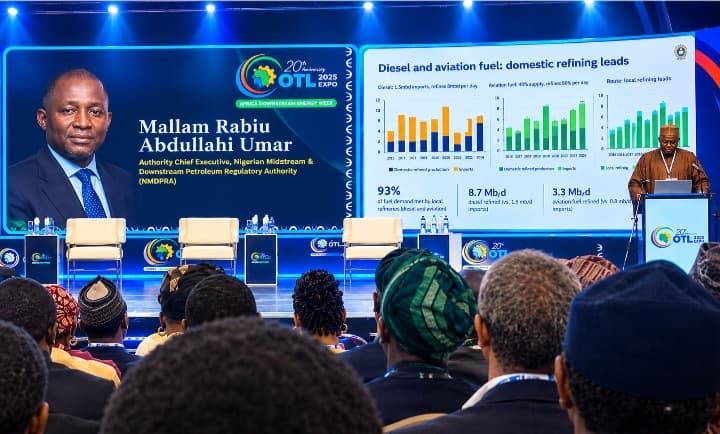
Rabiu Umar, Authority Chief Executive of the Nigerian Midstream and Downstream Petroleum Regulatory Authority (NMDPRA), said differences in national fuel requirements remained a challenge for regional market integration.
He pointed to the wide gap between diesel specifications of 50 parts per million (ppm) and 1,500 ppm, arguing that countries needed compatible product standards to improve market access and competition.
Umar also proposed a West African reference price for petroleum products, alongside common specifications and aligned production rules, to encourage trade between African suppliers.
For Ghana, infrastructure remains a separate constraint.
Godwin Tameklo, Chief Executive Officer of the country’s National Petroleum Authority, explained that limitations in port and storage capacity could prevent facilities from handling cargoes delivered by larger vessels, creating the need for smaller shipments or alternative logistics.
He said regional integration would require countries to tackle these physical constraints alongside regulatory differences, adding that agreed reforms needed clear timelines for implementation.
Musa Njie, Director of Water, Petroleum and Electricity at The Gambia’s Public Utilities Regulatory Authority, drew attention to the country’s limited capacity to test petroleum products locally.
He called for stronger laboratory infrastructure and national quality assurance systems, stressing that common standards must also protect public health and the environment.
Njie further emphasised the need to connect regional agreements with national regulatory processes to ensure that harmonisation efforts translate into enforceable standards.
The discussions placed fuel quality alignment, infrastructure investment and regulatory enforcement at the centre of efforts to expand petroleum trade across West Africa.