

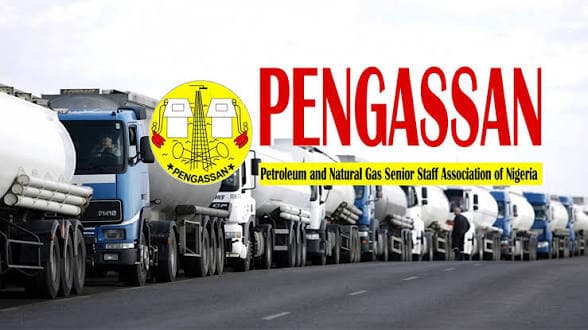
The Petroleum and Natural Gas Senior Staff Association of Nigeria (PENGASSAN) has warned that repeated changes to the Petroleum Industry Act (PIA) could undermine regulatory certainty and weaken investor confidence in Nigeria’s oil and gas sector.
PENGASSAN President, Festus Osifo, raised the concern in Abuja during the fifth Labour and Energy Summit, where he argued that the capital-intensive nature of the petroleum industry requires stability and predictability in the laws governing investments.
Osifo said the concern has become more significant amid renewed discussions around fuel subsidy, noting that changes to the petroleum sector’s legal framework could create uncertainty for investors, operators, workers and host communities.
The PIA was enacted in 2021 after years of efforts to overhaul Nigeria’s petroleum sector. It introduced changes to the legal, fiscal and regulatory structure of the industry and provided the framework for the transformation of the Nigerian National Petroleum Corporation into NNPC Limited.
According to Osifo, the framework has undergone significant changes only a few years into its implementation, including the removal of some fiscal provisions and their transfer to the Nigeria Revenue Act. He also criticised the use of an executive order by the Federal Government to alter provisions of the law.
He said the changes risk weakening the confidence the PIA was intended to create.
“Host communities need confidence. Governments need sustainable revenues. Nigerians need an industry that translates our enormous hydrocarbon resources into economic prosperity,” Osifo said.
He maintained that achieving those objectives requires a regulatory environment that is predictable, transparent, efficient and fair.
The labour leader said the issue is not necessarily the existence of multiple regulatory institutions, but whether those institutions are delivering their responsibilities efficiently.
Under the PIA framework, the Nigerian Upstream Petroleum Regulatory Commission oversees upstream activities, while the Nigerian Midstream and Downstream Petroleum Regulatory Authority is responsible for midstream and downstream operations. Other federal and state institutions also have responsibilities that intersect with oil and gas activities.
Osifo argued that overlapping mandates should not result in operators facing repetitive approvals, multiple inspections or conflicting directives.
He questioned whether Nigeria’s approval processes are efficient enough to attract investment and whether operators can make long-term commercial decisions with sufficient certainty about the country’s fiscal and regulatory direction.
He also called for greater support for indigenous operators while maintaining acceptable operational and safety standards.
For PENGASSAN, the regulatory debate also has a direct labour dimension. Osifo said workers should not become casualties when petroleum assets change ownership through acquisitions and divestments.
“Licensing and assets may change hands, but workers are not commodities to be discarded at will,” he said, stressing the need to protect pensions, collective bargaining agreements and other established conditions of employment.
He further raised concerns over the increasing use of expatriate personnel in the industry, saying international expertise remains important but should not be used to replace qualified Nigerians where local capacity already exists.
Osifo said the Nigerian Content Framework provides for succession planning, understudies and deliberate efforts to develop local expertise.
He called for stricter enforcement of those requirements, arguing that expatriate positions should ultimately result in greater Nigerian capacity through measurable knowledge transfer.
He urged regulators to work with operators and labour representatives to ensure expatriate approvals are justified, monitored and linked to clear knowledge-transfer objectives.
The PENGASSAN president also identified lengthy approval procedures as another challenge facing the industry, noting that investors can move capital to jurisdictions where regulatory processes are clearer and more efficient.
He said unnecessary delays could affect new developments, final investment decisions and projects capable of increasing oil and gas production.
At the same time, he cautioned against sacrificing regulatory oversight in the pursuit of faster approvals.
“What we require is not weak regulations. What we need is smarter regulations,” Osifo said, calling for rules that recognise commercial realities, embrace technology and eliminate unnecessary duplication.
He also stressed that regulations must be consistently enforced, particularly in areas such as health and safety, environmental protection, local content, labour practices and operational integrity.
“The life of a Nigerian worker must never become the price we pay for increased production,” he said.
Beyond regulatory stability, PENGASSAN called for policies capable of strengthening domestic energy supply and reducing the country’s dependence on imported petroleum products.
Osifo said the government should encourage domestic refining, gas processing and the expansion of liquefied petroleum gas, compressed natural gas and liquefied natural gas infrastructure.
He noted that Nigeria’s gas resources could support electricity generation, petrochemicals, fertiliser production, transportation and wider industrial development.
However, he argued that having resources underground would provide limited economic value unless sufficient investment was made to process them and make them available for productive use.
PENGASSAN’s position therefore links regulatory stability with broader questions around investment, local content, worker protection and domestic energy development. For the association, the objective is not to reduce regulatory oversight, but to establish a system that provides certainty for investors while maintaining standards and protecting Nigerian workers and the wider economy.