

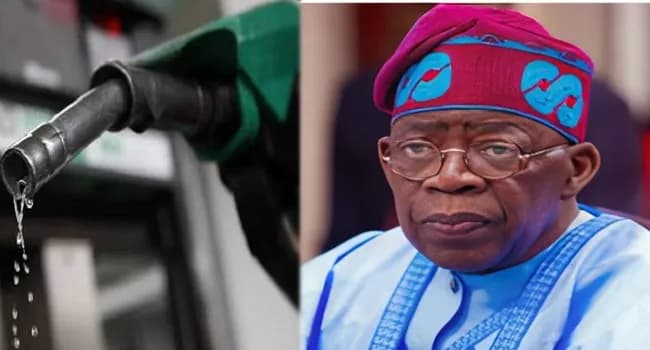
Two years after President Bola Tinubu removed fuel subsidies in May 2023, Nigeria has saved over ₦7 trillion. However, millions still face deepening hardship. Small businesses, already grappling with unstable electricity and policy uncertainty, now struggle with soaring costs. Many have shut down or scaled back, worsening unemployment across the country.
Rising Revenue, But No Relief for the People
Subsidy removal raised government earnings significantly. FAAC disbursements climbed to ₦15.26 trillion in 2024, up from ₦10.14 trillion in 2023 and ₦8.21 trillion in 2022. Despite this, state-level interventions have been minimal.
Many states have failed to channel the extra funds into meaningful development. Analysts blame poor internal revenue systems, over-reliance on FAAC, and weak fiscal discipline. Experts suggest digitizing tax collection, boosting compliance, and cutting waste to fix the situation.
Meanwhile, inflation continues to erode household spending. The World Bank’s May 2025 Nigeria Development Update warned that rebased inflation data hides the full extent of price pressures. It advised sustained monetary tightening to keep inflation in check.
The conditional cash transfer scheme, funded by an $800 million World Bank loan, was designed to cushion subsidy effects. Minister of Humanitarian Affairs, Prof. Nentawe Yilwatda, claimed that six million Nigerians have benefited. However, critics argue that the programme’s impact remains hard to see on the ground.
Regulatory Failures and Market Distortions Push Prices Higher
Stakeholders point to weak oversight as a major problem. The Nigerian Midstream and Downstream Petroleum Regulatory Authority (NMDPRA) and the Federal Competition and Consumer Protection Commission (FCCPC) have failed to stop unfair practices and protect consumers.
PETROAN President, Dr. Billy Gillis-Harry, said the government removed subsidies without a clear roadmap. His members buy from Dangote and private depots but cannot access petrol from NNPC refineries. “There’s no pricing consistency, no infrastructure support, and forex is still a challenge,” he said.
Despite spending $2.9 billion on refinery repairs, over 60% of Nigeria’s daily 50 million-litre petrol demand still comes from imports. Energy economist Ademola Adigun said deregulation is incomplete. Marketers receiving crude in naira enjoy unfair advantages, shutting out smaller players. He claimed that over 5,000 petrol stations have closed due to pricing pressures.
Dr. Muda Yusuf, head of CPPE, described energy costs as “crippling.” He urged lower interest rates to help manufacturers and service providers stay afloat. Although fuel prices dropped slightly, he noted that transport costs remain high because operators pass rising logistics bills to consumers.
CNG Rollout Stalls Amid Poor Infrastructure and Government Inaction
The push for Compressed Natural Gas (CNG) as a fuel alternative has lost momentum. Officials claim over 100,000 motorists have switched to CNG, but users complain of limited stations, supply issues, and expensive conversion kits.
Only 56 CNG stations exist, concentrated in four states, compared to 150,000 petrol outlets nationwide. Taiwo Shittu, MD of Lanre Shittu Motors, said a ₦600,000 diesel trip could cost ₦72,000 with CNG. But drivers lack access to refueling points and conversion services.
Tobi Ajayi, CEO of Nord Motors, noted that an executive order directed government agencies to buy CNG vehicles, but implementation has stalled. He called for supportive policies, better tariffs, and credit access for local vehicle assemblers.
Meanwhile, NMDPRA has started paying ₦100 billion owed to independent marketers as subsidy claims. IPMAN President, Abubakar Shettima, confirmed the slow disbursement but welcomed it as a lifeline. He said independent marketers now get about 80% of their supply from Dangote, with the rest coming from NNPC and private depots.
Experts Warn: Without Inclusive Reforms, Public Support May Collapse
Experts agree the government must do more than just remove subsidies—it must reform the entire economic structure. Prof. Wunmi Iledare said subsidy removal has saved trillions, reduced borrowing, and attracted investors. Yet, prices have tripled, food costs have spiked, and poverty has worsened. “Without consistent palliatives, public trust is eroding,” he warned.
Prof. Adeola Adenikinju, President of the Nigerian Economic Society, said fuel subsidy removal freed up ₦5 trillion yearly. It helped pay salaries and reduced smuggling, but the government failed to protect vulnerable Nigerians. He urged investment in mass transport and affordable energy solutions.
Olufemi Idowu, Senior Advisor at Kreston Pedabo, acknowledged improved federal projects like the Calabar coastal road and Dangote Refinery. Still, most citizens feel no difference. He pointed to rising inequality and underfunded healthcare, and the power sectors.
Joseph Ambakederimo, CDC chairman for Niger Delta oil-producing areas, said revenues have grown at all levels, but local communities remain neglected. He urged state governments to invest in agriculture and basic infrastructure. On refineries, he said: “If the government can’t run them, it should sell them.”
Drivers like Charles Okadigbo in Abuja say they wake as early as 4 a.m. to find CNG. Many, like Ibrahim Officer, drive cars that can’t be converted and can’t afford the upgrade. The Presidential CNG Initiative, launched with NURTW, promised a 40% fare cut, but poor supply and slow implementation have stalled progress.
Conclusion: Without Urgent Action, Gains May Slip Away
The removal of petrol subsidies has strengthened Nigeria’s fiscal position. However, unless the government backs this with clear reforms, investments, and transparent regulation, hardship will continue to overshadow progress.
As Prof. Iledare aptly put it, “The real work of building an inclusive and productive economy is just beginning.”