
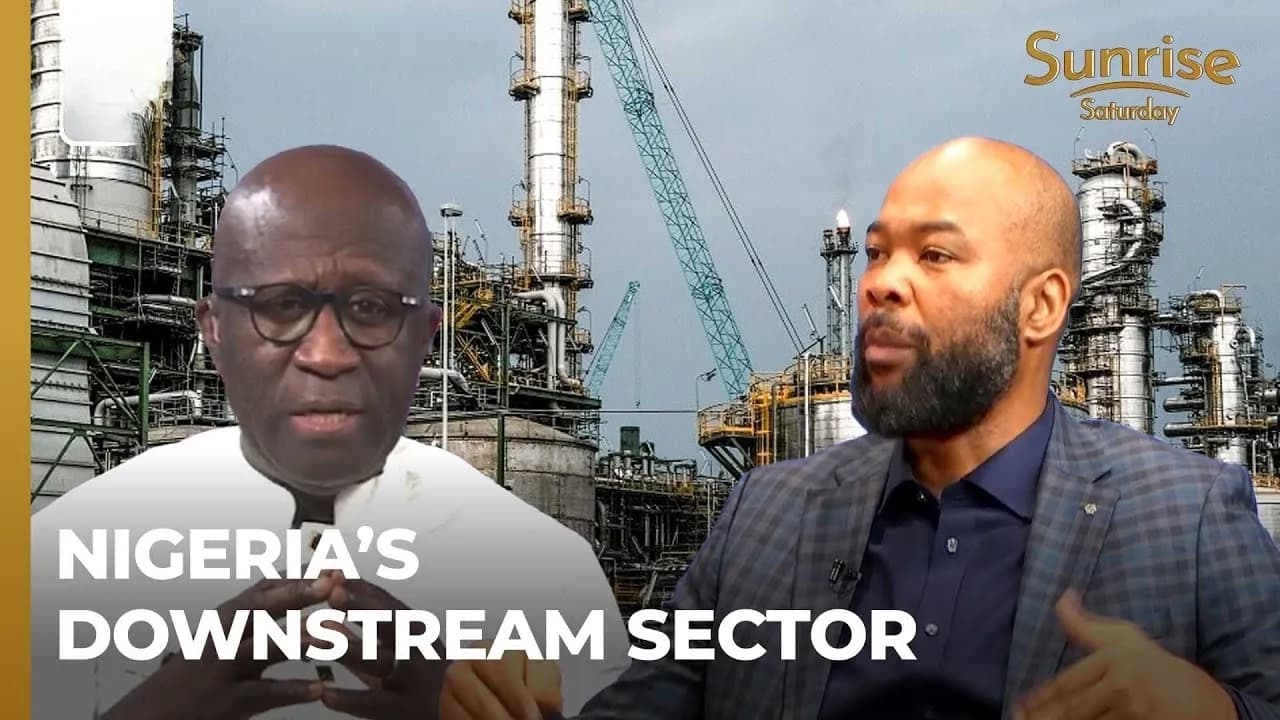
Dr. Emeka Akabogu, an authority in energy and maritime affairs, alongside Professor Billy Okoye, former CEO of the NNPC Crude Oil Marketing Division, shed light on Nigeria’s downstream petroleum sector, the role of deregulation, and its effects on Nigerians.
During an engaging discussion on Sunrise, a Channels TV breakfast show, on Saturday, November 2, they offered valuable insights and perspectives.
Dr. Akabogu explained, “Deregulation means that the market is no longer government-controlled in terms of price setting.” Previously, prices were regulated by the Petroleum Products Pricing Regulatory Agency (PPPRA), but now, as he put it, “you sell as you buy, and the market determines the price.” He added that although NNPC sets its own fuel prices, it does not dictate prices for the entire market. This point was echoed by Professor Okoye, who clarified, “NNPC sets prices for its own outlets, just like any other marketer.”
However, the perception lingers that the NNPC still holds sway over fuel prices. Professor Okoye acknowledged, “NNPC has the largest network of filling stations, so its price often influences others.” He compared this influence to a “market leader effect” and reassured that “it’s natural in a competitive market.” Okoye encouraged Nigerians to view NNPC’s role as a major player rather than a price regulator, stating that deregulation allows each business to set its price independently.
The Potential for Market Transformation
Both experts shared optimism about the long-term benefits of deregulation, with Professor Okoye drawing an analogy to Nigeria’s telecommunications sector: “Remember when SIM cards cost up to 25,000 naira? Today, they’re practically free.” He envisioned a similar outcome in the petroleum sector: “Once the market stabilises, and competition rises, we’ll see prices come down as we did with telecoms.”
Dr. Akabogu elaborated on this by pointing out the ripple effects of deregulation, which allows for “free entry and exit” of players in the market. According to him, this framework could lead to major efficiency improvements as the industry adapts to new commercial relationships. He noted, “If Dangote offers a great price, NNPC might find it commercially beneficial to source from them,” reflecting a market in which relationships are based purely on competitive advantage.
Current Challenges and Path to Refining Independence
Professor Okoye emphasised the importance of building a local refining industry, stating that Nigeria needs “massive support for refineries,” both private and public, to become self-sufficient. He noted, “If we refine locally, we’ll become exporters of petroleum products rather than just crude oil.” However, he also acknowledged that Nigeria faces obstacles, including aging refineries and funding challenges. “We’re moving towards solutions,” he added, expressing hope that refurbishing refineries and establishing modular refineries will reduce dependence on imported fuel.
Dr. Akabogu also touched on issues with the Dangote Refinery, which faces higher costs due to its reliance on imported components. He remarked, “It’s a new refinery with substantial financing, so prices could initially be high.” Dr. Akabogu pointed out that while Dangote has the advantage of local production, imported products from marketers such as the Independent Petroleum Marketers Association of Nigeria (IPMAN) sometimes come at a lower cost due to differing operational structures.
A Call for Transparency and Consumer-Focused Solutions
Dr. Akabogu and Professor Okoye agreed that transparency is crucial. Dr. Akabogu said, “We need clearer pricing structures for both NNPC and Dangote to allow consumers to make informed choices.” He further explained that deregulation often brings price fluctuation, but with government oversight on transparency, consumers can still benefit.
Looking ahead, Professor Okoye expressed optimism that with deregulation fully in place, Nigeria’s downstream sector would eventually resemble the telecom sector, becoming a source of jobs and economic growth: “I am optimistic that deregulation will lead to a diversified and robust oil sector where Nigerians can enjoy competitive prices and consistent supply.”
Dr. Akabogu concluded with advice to industry players: “Diversify your offerings beyond gasoline. Becoming more efficient and customer-focused will benefit not only businesses but also Nigerians who depend on energy.” He noted that with efficient energy use and innovative business strategies, the sector can achieve stability and profitability, even within a fluctuating market.