

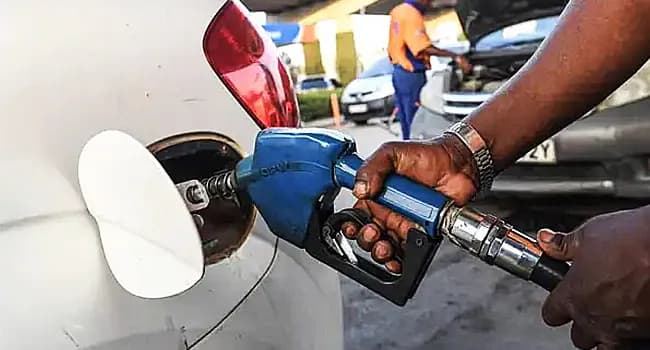
The cost of petrol in Nigeria continues to climb, as new figures from the National Bureau of Statistics (NBS) show average pump prices surged by 33.02 per cent year-on-year, hitting ₦1,024.99 per litre in July 2025, compared to ₦770.54 in July 2024.
The data, contained in the NBS Premium Motor Spirit (PMS) Price Watch report, underscores the sustained pressure on consumers despite marginal relief month-on-month. Between June and July 2025, the average price actually dipped by 1.22 per cent, moving from ₦1,037.66 to ₦1,024.99.
State and Regional Disparities
Breaking down the numbers, Jigawa recorded the steepest average retail price at ₦1,107.52 per litre, followed closely by Lagos (₦1,100.29) and Sokoto (₦1,100.00). On the flip side, Zamfara posted the lowest average price at ₦884.63, while Yobe and Kogi followed with ₦950.60 and ₦986.67, respectively.
At the zonal level, the Northwest emerged as the most expensive region with an average of ₦1,035.85 per litre, while the Northeast offered the lowest at ₦1,017.65. This spread highlights the uneven distribution of supply and cost across Nigeria’s downstream market, often influenced by logistics, transportation bottlenecks, and depot access.
Market Dynamics
Industry analysts attribute the sustained rise in petrol prices to a mix of global and domestic factors. On the international front, crude oil benchmarks have trended upward, raising ex-refinery costs. Domestically, foreign exchange volatility, rising distribution costs, and limited refining capacity continue to exert pressure on retail pump prices.
Although the marginal monthly decline suggests a temporary softening of prices, experts warn that volatility in global oil markets and persistent dollar scarcity could reverse the trend in the near term. With the downstream sector now fully deregulated, market forces largely dictate pump prices, leaving consumers exposed to sudden spikes whenever crude or forex markets tighten.
Consumer Impact and Outlook
The NBS data comes at a time when households and businesses are already grappling with higher energy costs. The jump to over ₦1,000 per litre signals stronger inflationary pressure, especially on transportation and logistics-dependent sectors. Unless Nigeria’s refining capacity expands significantly with Dangote Refinery and modular refineries ramping up operations the burden of imported petrol and forex-linked costs will continue to weigh on end-users.
For now, Nigerians may face a prolonged cycle of high pump prices, as the interplay of crude prices, forex constraints, and supply chain inefficiencies shapes the outlook for the downstream market.