

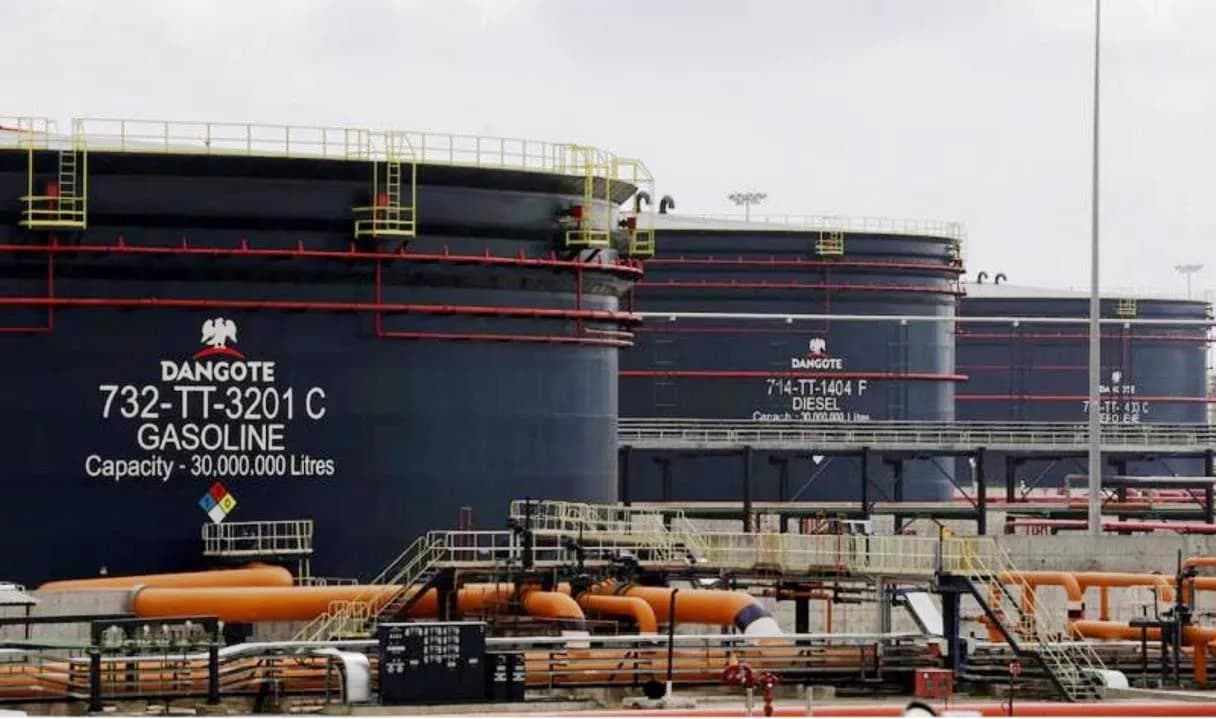
Petrol prices has spiked after Dangote Refinery halted its ₦10 per litre rebate for oil marketers. The termination triggered swift price hikes across depots and reshaped Nigeria’s downstream fuel market.
Dangote Uses Rebates to Beat Rivals
On May 10, 2025, Dangote Refinery launched a ₦10 per litre rebate. The scheme cut effective petrol prices from ₦835 to ₦825 for marketers. Instead of announcing a price cut, Dangote refunded ₦10 per litre after loading, enabling marketers to sell PMS between ₦827 and ₦830 per litre.
Marketers embraced the tactic to undercut rivals and increase retail competitiveness. “The rebate boosted our pricing power without changing the official rate,” one source close to the refinery said.
Dangote Closes Rebate Window
The refinery limited the rebate to petrol loaded on or before May 15, 2025. From May 16, the price reverted to ₦835, erasing the short-lived discount. Dangote likely designed the move to clear inventory, stimulate short-term uptake, and challenge higher-priced importers.
Competitors scrambled to respond. Pinnacle and MRS Tincan matched ₦827 per litre. NIPCO trimmed its rate to ₦837, reflecting mounting pressure from Dangote’s aggressive pricing.
Depot Prices React Instantly
Depot prices shifted quickly:
May 13, 2025:
- Dangote Refinery: ₦827/litre
- Nipco: ₦837/litre
- Sahara: ₦837/litre
- MRS Tincan: ₦827/litre
May 14, 2025:
- Dangote Refinery: ₦835/litre
- Nipco: ₦850/litre
- Sahara: ₦840/litre
- MRS Tincan: ₦838/litre
NIPCO recorded the sharpest hike at 1.55%. Marketers passed rising costs to consumers, worsening inflationary pressures.
Dangote Refines Price Strategy
In February 2025, Dangote slashed its ex-depot price from ₦890 to ₦825 and refunded ₦65 per litre, absorbing a ₦16 billion loss. PETROAN praised the move as a critical market intervention.
The recent ₦10 rebate mirrored that playbook. Though brief, it reinforced Dangote’s control of over 50% of Nigeria’s PMS supply. The strategy combined competitive discounts, rebate schemes, and quick shifts to outpace import-based rivals.
Global Crude Dips, Local Prices Rise
Despite falling global crude prices, local petrol rates rose. On May 14:
- Brent fell 0.39% to $66.37
- WTI Crude dropped 0.36% to $63.44/barrel
- Murban declined 1.20% to $66.06
- Natural gas dropped 4.11% to $3.497/MMBtu
These dips signalled weaker demand and increased supply. Yet, Dangote’s rebate removal drove local costs upward, revealing Nigeria’s sensitivity to domestic pricing models.
Marketers Demand Consistency
While marketers welcomed temporary relief, many criticised Dangote’s unpredictable petrol pricing. They argued the absence of formal communication caused planning disruptions and strained logistics.
Dangote countered, saying it continues to supply sufficient volumes to meet local and export demands. The refinery dismissed DAPPMAN’s claims of supply gaps as politically charged and baseless.
Consumers Brace for Higher Fuel Costs
With the rebate gone and prices rising, consumers face costlier petrol. Analysts warn that inconsistent petrol pricing could heighten volatility and deepen Dangote’s dominance, potentially marginalising smaller depots.