

The tension within Nigeria’s downstream oil and gas sector deepened yesterday as the Association of Distributors and Transporters of Petroleum Products (ADITOP) openly accused the Nigerian Union of Petroleum and Natural Gas Workers (NUPENG) of extortion and economic sabotage. In a strongly worded statement issued in Abuja, ADITOP distanced itself from the planned nationwide strike by NUPENG, pledging instead to sustain product distribution while throwing its full weight behind the Dangote Refinery.
ADITOP’s Claims Against NUPENG
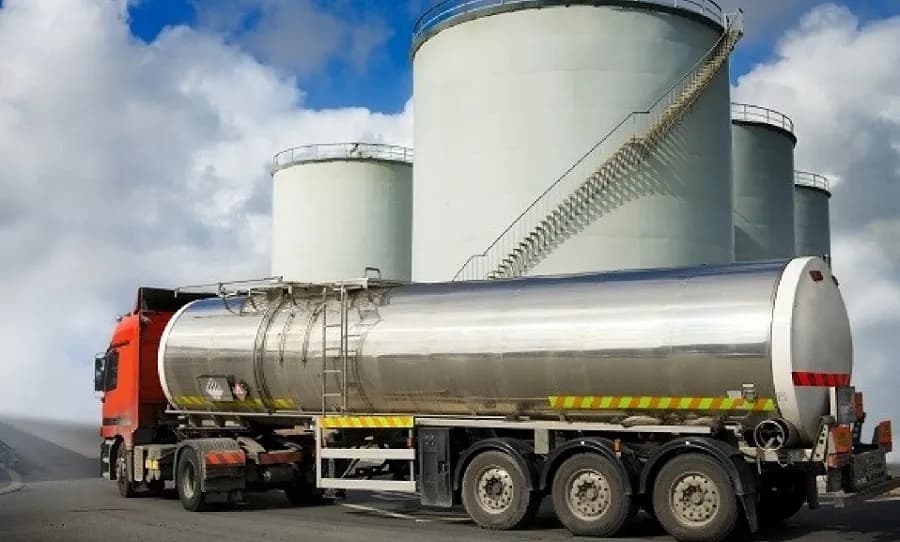
ADITOP, which says it owns and operates over 90% of petroleum tankers and vessels that move products across Nigeria, accused NUPENG and its affiliate, the Petroleum Tanker Drivers (PTD), of running what it described as an “illegal levy regime.” According to the association, tanker owners and marketers are compelled to pay ₦1 per litre on every product lifted from depots, in addition to a ₦80,000 to ₦100,000 charge per truck.
“These acts amount to outright extortion and sabotage of the economy,” ADITOP declared, stressing that such practices inflate pump prices and worsen hardship for ordinary Nigerians.
The group alleged that tanker owners largely run PTD, even though it is technically a drivers’ union, and operate as both employers and supposed employees a structure it labelled unconstitutional and illegal.
Industry Fallout: Refineries and Depots in Decline
In a scathing assessment, ADITOP blamed NUPENG’s decades-long dominance for the collapse of Nigeria’s four state-owned refineries and the paralysis of Nigerian National Petroleum Company Limited (NNPCL) depots nationwide.
“For 30 years, NUPENG has made stability in the supply chain almost impossible. Its frequent threats, strike actions, and imposition of levies crippled investments, disorganised distribution networks, and stifled the emergence of alternative unions,” the statement read.
The association reminded the government and the public that it had repeatedly petitioned security agencies, including the Department of State Services (DSS) and the Inspector General of Police, to highlight the alleged extortion.
Dangote Gets Strong Backing
Against this backdrop, ADITOP pledged “unequivocal support” to Alhaji Aliko Dangote and his 650,000 barrels-per-day refinery. It described the facility as a game-changer in sanitising the downstream sector, stabilising supply, and reducing Nigeria’s reliance on imports.
“Dangote has built the largest single-train refinery in the world, invested heavily in infrastructure, stabilised fuel prices, and created thousands of jobs. He should be encouraged by government, not distracted by union antics,” ADITOP emphasised.
The association noted that NUPENG’s accusations of monopoly against Dangote were ironic, given what it called the union’s “fatalistic monopoly” over supply chain operations for decades.
The Constitutional Angle
ADITOP invoked Nigeria’s 1999 Constitution, stressing that workers have the right to freedom of association and cannot be compelled to join unions against their will. It argued that NUPENG had overstepped its legal limits by collecting levies rather than member dues as permitted in its constitution.
“This is not only unconstitutional but also anti-competitive. Every Nigerian worker and operator deserves the right to choose which union to belong to without harassment,” ADITOP stated.
Call for Government Action
The association urged the federal government to resist what it called “union blackmail” and instead strengthen reforms in the downstream oil and gas sector. It promised Nigerians that its members would continue to transport and distribute petroleum products without fear, regardless of NUPENG’s planned strike.
“This is a battle between progress and retrogression. We recall how past subsidy and tariff strikes ended—with ordinary Nigerians paying the price while union executives enriched themselves. That cycle must stop,” the statement added.
The Bigger Picture
With fuel supply remaining a sensitive lifeline for Nigeria’s economy, ADITOP’s bold positioning reflects the shifting power balance in the downstream sector. As Dangote Refinery begins to reshape the supply landscape, traditional union power blocs face increasing scrutiny.
The coming weeks will test whether NUPENG can still mobilise nationwide disruption or if the government and private operators like Dangote and ADITOP can sustain product flows in defiance of industrial action.
For now, the battle lines are clear: ADITOP and Dangote on one side, NUPENG and its affiliates on the other. And in between lies the Nigerian public, weary of fuel crises but hopeful for lasting stability.