

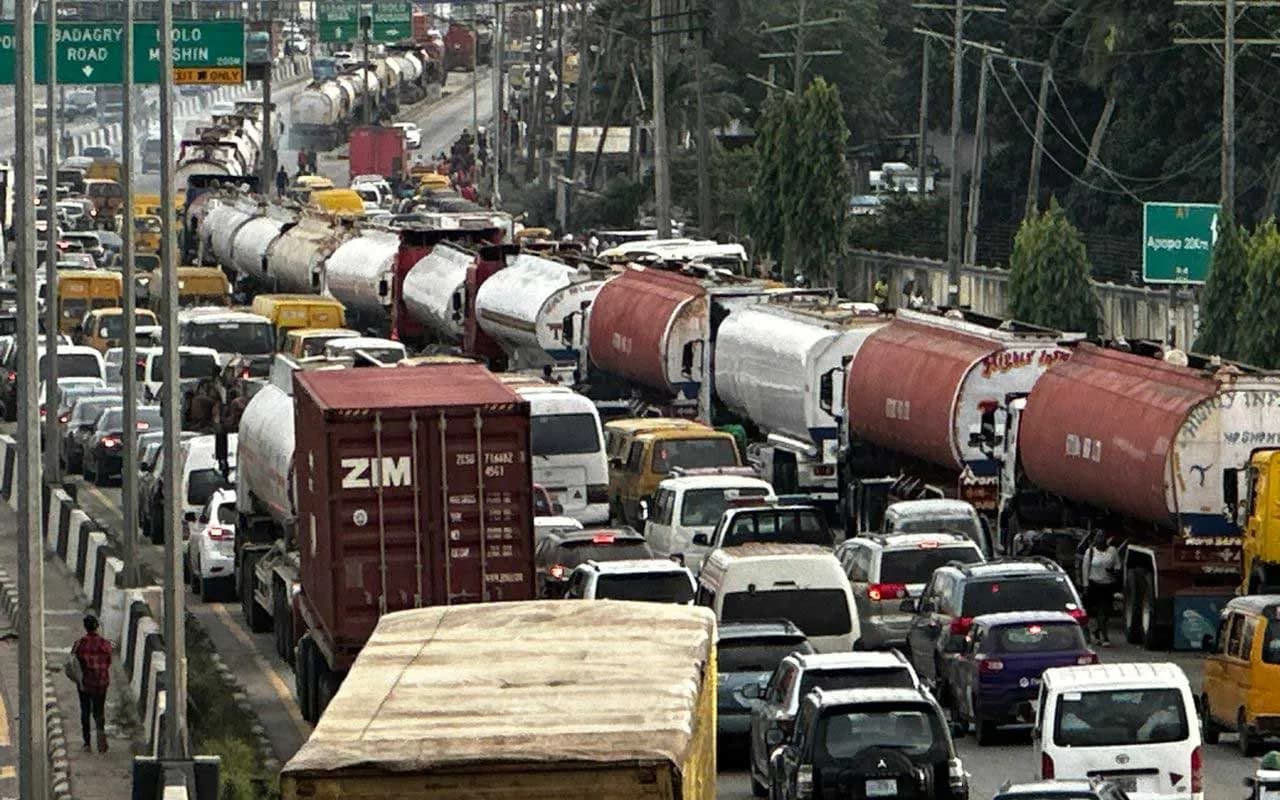
Petroleum tanker drivers in Nigeria are under intense scrutiny for their perceived insensitivity as the nation faces yet another fuel distribution crisis. Lengthy queues have re-emerged at filling stations across major cities, with Lagos, Abuja, and Port Harcourt experiencing significant fuel shortages. This has led to widespread public frustration as the drivers’ actions and demands appear to compound an already dire economic situation.
The current crisis has been exacerbated by a standoff between the Petroleum Tanker Drivers (PTD) branch of the Nigerian Union of Petroleum and Natural Gas Workers (NUPENG) and the Federal Government. The drivers are demanding better working conditions, particularly improvements in road infrastructure and security for drivers on dangerous routes. However, their decision to reduce activity, causing supply delays, has drawn ire from the public, who are already facing high costs following the removal of fuel subsidies earlier this year.
Fuel scarcity has led to a surge in transport fares, with some commuters paying double the normal rates. Additionally, small businesses that rely on petrol to power generators have been hit hard, with some forced to shut down operations due to lack of fuel.
The Nigerian National Petroleum Corporation Limited (NNPC Ltd.) has acknowledged the disruption in fuel supply and assured citizens that efforts are being made to restore normalcy. The NNPC has been working with the Department of Petroleum Resources (DPR) to manage the distribution of petrol from depots to filling stations, but challenges persist. The corporation has called on tanker drivers to exercise restraint, citing the need for cooperation during such a critical period.
The Nigerian Midstream and Downstream Petroleum Regulatory Authority (NMDPRA) has also intervened, meeting with representatives from NUPENG and the PTD to resolve ongoing disputes. The regulatory body has urged both parties to prioritise national interest and ensure that petroleum products reach consumers without unnecessary delays.
Many Nigerians have taken to social media to express their frustration, accusing tanker drivers of neglecting the wider impact of their actions on the economy. “How can the tanker drivers hold the entire country to ransom because of their demands? They need to be more sensitive to the plight of ordinary Nigerians who are suffering due to these shortages,” said a Lagos resident.
The fuel shortages have become a recurring issue in Nigeria, with the public often left bearing the brunt of industrial disputes between the government and various unions. The rising cost of living, inflation, and increasing petrol prices have heightened public anger, with many urging the government to take swift action to resolve the crisis.
NUPENG, which represents the interests of petroleum workers, has been in discussions with the Federal Ministry of Labour and Employment, as well as the Federal Ministry of Works and Housing, to address the concerns raised by tanker drivers. The union has stated that it is advocating for better conditions for its members, particularly in terms of road safety and infrastructure. According to NUPENG, many tanker drivers face life-threatening risks due to poor road conditions and frequent attacks by armed robbers along major highways. Despite these legitimate concerns, many believe that the timing of the PTD’s actions is ill-judged, given the country’s fragile economic state. The Nigerian Labour Congress (NLC), which has been vocal about other economic policies, including the recent fuel subsidy removal, has called for a swift resolution to the crisis. They are urging both the government and the union to find a middle ground without further disruption to fuel distribution.
As negotiations continue, there is hope that an agreement will be reached to avoid a prolonged fuel crisis. The NNPC and other stakeholders have ramped up efforts to ensure petrol availability in the short term, but a long-term solution is needed to prevent similar disruptions in the future. Meanwhile, the public remains wary of further price hikes and the potential for even longer queues at filling stations.
The situation underscores the need for comprehensive reform in Nigeria’s oil and gas sector, including investments in infrastructure and security for drivers, while also ensuring that fuel remains accessible to ordinary citizens at a reasonable cost.