

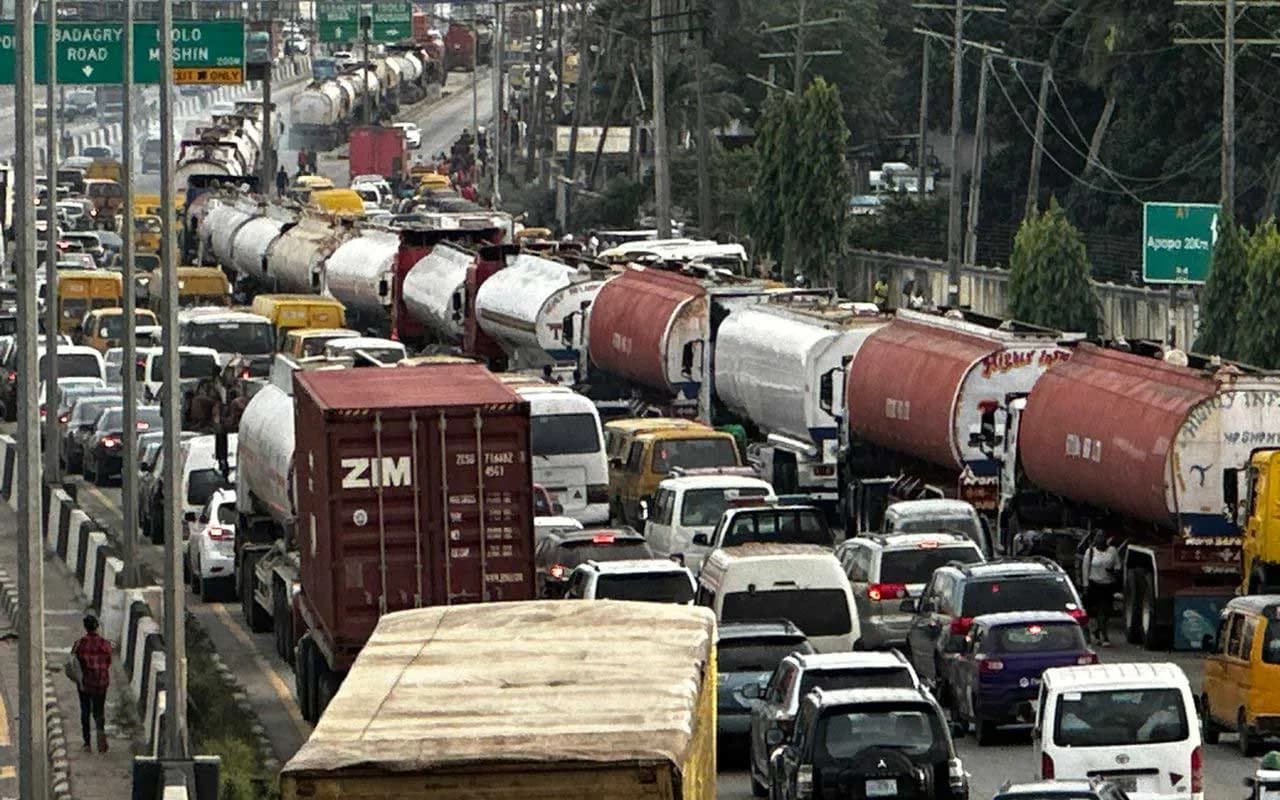
Nigeria’s petroleum tanker drivers, the unsung heroes of the nation’s fuel distribution network, continue to bear the brunt of dire working conditions, posing significant risks to themselves, the environment, and the economy.
A joint investigation by our correspondents and industry experts reveals alarming issues about the drivers’ welfare, highlighting the urgent need for reform.
Long hours, low pay
Tanker drivers typically work 12-hour shifts, often without adequate rest or compensation for overtime. Salaries range from ₦50,000 to ₦100,000 (approximately £100-£200) per month, a meager sum considering the risks involved.
“We drive for hours, sometimes without food or water,” said Abdulrasaq Oladimeji, a tanker driver. “Our families suffer, and our health deteriorates due to exhaustion.”
Poor road conditions
Nigeria’s dilapidated roads exacerbate the challenges faced by tanker drivers. Potholes and lack of maintenance increase travel time, fuel consumption, and vehicle wear.
“The roads are death traps,” said Oladimeji. “We’re lucky to return home alive each day.”
Health risks
Prolonged exposure to petroleum products poses serious health risks. Drivers often develop respiratory problems, skin conditions, and other ailments.
“We’re constantly inhaling toxic fumes,” said another driver, who wished to remain anonymous. “Our health is sacrificed for the nation’s fuel needs.”
Expert insight
Energy Analyst, Dr. Adeola Adenikinju, warns that neglecting drivers’ welfare may jeopardise Nigeria’s economic growth.
“The oil sector’s stability relies on these drivers,” Dr. Adenikinju said. “Improving their working conditions is crucial for Nigeria’s energy security.”

A stakeholder in the Nigerian Union of Petroleum and Natural Gas Workers (NUPENG), Comrade Ibrahim Olayiwola, echoed this sentiment.
“Drivers are the backbone of Nigeria’s oil industry,” Olayiwola said. “Their poor working conditions pose significant risks to themselves and the environment.”
Call for reforms
Industry stakeholders urge the government and oil companies to:
- Enhance driver compensation and benefits.
- Improve road infrastructure.
- Provide adequate training and safety equipment.
“Adequate welfare for tanker drivers is non-negotiable,” said Olayiwola. “We demand immediate action to address these issues.”
Nigeria’s petroleum tanker drivers deserve better. Their welfare is intricately linked to the nation’s economic stability. As the government and oil companies ponder reforms, the lives of these unsung heroes hang in the balance.