

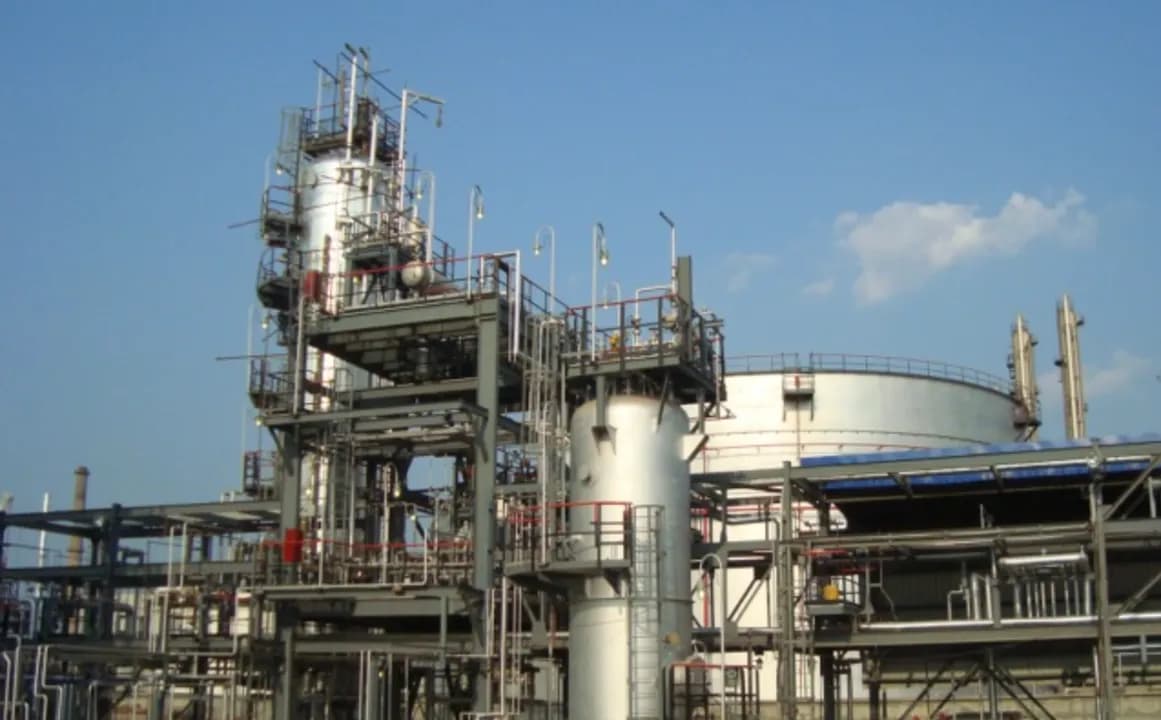
The Port Harcourt Refinery, a key component of Nigeria’s oil and gas industry, has been successfully revitalised after years of inactivity. This achievement marks a significant step toward addressing the nation’s energy challenges and enhancing domestic refining capacity.
A Comprehensive Overhaul
The refinery, originally established in 1965, has undergone extensive rehabilitation funded by a $1.5 billion loan facilitated by international partners. The overhaul included modernising infrastructure, such as a 300-kilometre pipeline network and replacing components that had been in use for nearly three decades. These updates have elevated the facility to modern operational standards, according to Managing Director Ibrahim Onoja.
Currently operating at 70% of its installed capacity, the refinery processes 60,000 barrels per day (bpd) of crude oil. Plans are underway to ramp up production to 90% in the near future. The facility now produces a range of essential petroleum products, including kerosene, diesel, liquefied petroleum gas (LPG), and gasoline.
Government and Stakeholder Support
President Bola Tinubu has hailed the refinery’s revival as a pivotal achievement. Acknowledging the foundational efforts of former President Muhammadu Buhari, Tinubu emphasised the importance of the project in reducing Nigeria’s reliance on fuel imports. He also directed the Nigerian National Petroleum Company Limited (NNPCL) to expedite the rehabilitation of additional refineries in Warri and Kaduna, aiming to further boost domestic refining capacity.
Mele Kyari, Group Chief Executive Officer of NNPCL, described the facility’s restart as a monumental step toward energy independence and economic growth. By reducing the need for imported petroleum products, the project is expected to save foreign exchange and stabilise fuel prices.
Challenges and Opportunities
Despite the progress, sceptics have raised concerns about the costs and timelines associated with the rehabilitation efforts. Critics argue that past inefficiencies and delays have undermined similar projects. However, stakeholders believe that improved management practices and a focus on sustainability will ensure the long-term success of this revitalisation.
The refinery’s resurgence is also seen as a competitive boost for Nigeria’s downstream oil sector. Alongside the privately-owned Dangote Refinery, the Port Harcourt facility is poised to increase fuel availability, enhance competition, and potentially lower prices in the deregulated market.
Looking Ahead
The revitalisation of the Port Harcourt Refinery is a significant milestone in Nigeria’s quest for energy sufficiency. As the facility moves toward full operational capacity, it serves as a beacon of progress for the nation’s oil and gas industry. With continued investments and strategic management, this achievement could mark the beginning of a transformative era for Nigeria’s energy sector.