

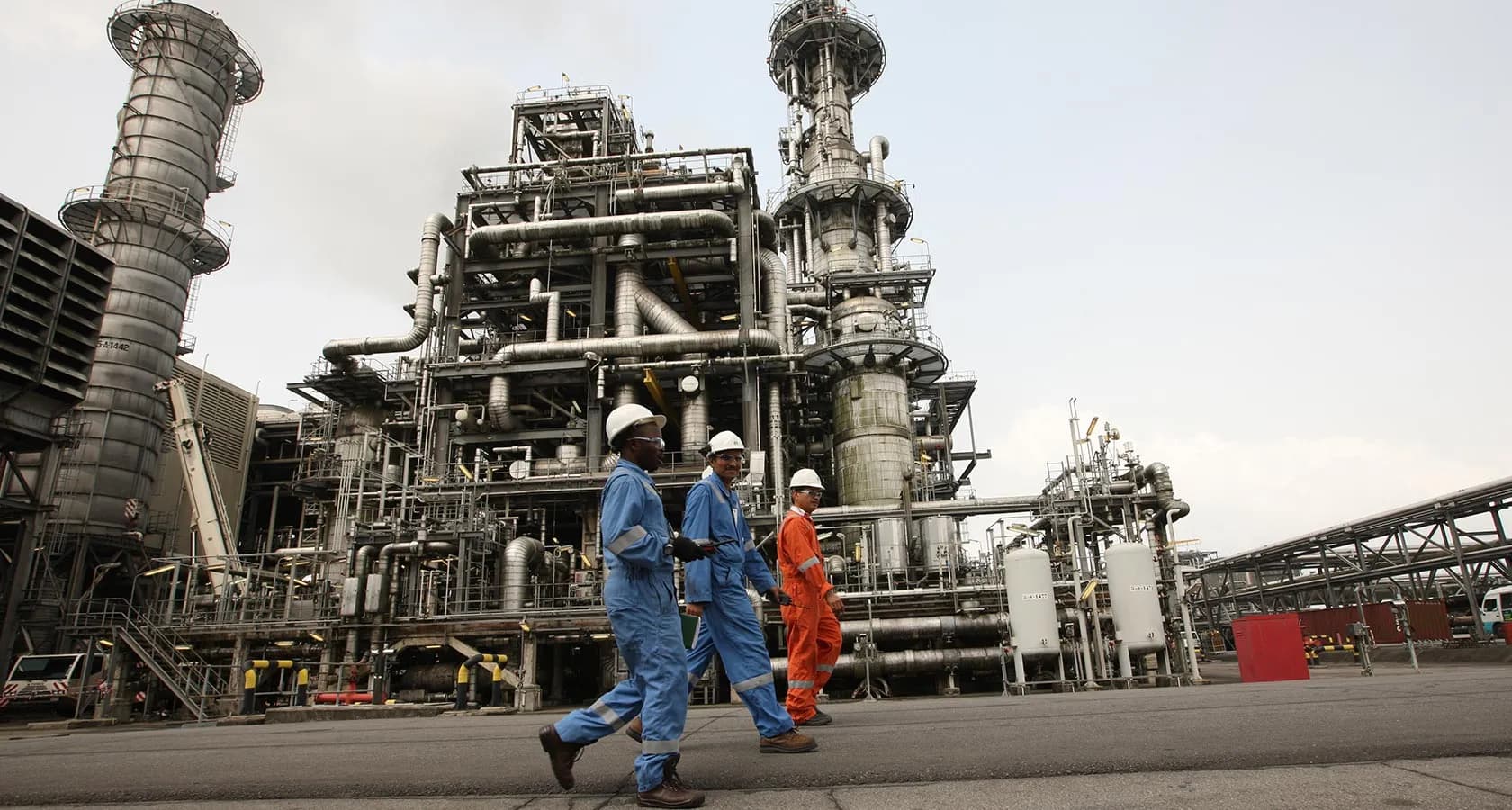
As the e long-awaited revival of the Port Harcourt Refinery finally become a reality, with the facility currently operating at up to 90% capacity, according to some reports. This marks a significant milestone for Nigeria’s energy sector, yet controversy over petrol blending and pricing continues to cloud public perception.
Operational Status and Capacity Expansion
According to Tony Mwugwe, National President of the Chemical Engineers’ Association, the refinery’s Area 5 is actively producing a range of petroleum products, including LPG, kerosene, light and heavy gas oils, and naphtha. The facility is operating at 60-70% capacity, with a plan to ramp up to 90% in the near future.
Notably, production has not halted, despite scaling down operations to facilitate technical upgrades. As Mr Mwugwe clarified, this scaling down is part of a global standard practice aimed at sustaining optimal production levels. “You upgrade while producing,” he explained.
The Blending Debate
A significant point of contention has been the process of petrol blending. Critics argue that blending signifies subpar production, but experts have dismissed this as a misconception. Majid Dahiru, a newspaper columnist and industry analyst, emphasised that blending is a standard procedure in refining. He noted that even modern refineries rely on blending to produce petrol (Premium Motor Spirit, PMS). The difference lies in quantity, not quality.
Older refineries like Port Harcourt lack fluid catalytic cracking units, which are essential for mass production of PMS. However, the blending process used at the facility meets global standards. “Blending is quantitative, not qualitative,” Dahiru reiterated.
Impact on Pricing
While the refinery’s revival is a promising development, experts caution against expecting immediate reductions in fuel prices. Dahiru highlighted that pricing is driven by international crude oil rates and foreign exchange fluctuations. With Nigeria’s oil sector fully deregulated under the Petroleum Industry Act (PIA), even the Nigerian National Petroleum Company (NNPC) must purchase crude oil at commercial rates. This means local prices will continue to reflect global market dynamics.
Additionally, the absence of government subsidies further cements the reality that domestic prices will not significantly decrease unless global oil prices fall or the Naira strengthens. Dahiru urged Nigerians to manage expectations, stating, “The real benefit lies in increased availability and potential dividends to the government, not in lower prices at the pump”.
Transparency and Public Trust
Public trust in NNPC remains a challenge. For years, missed timelines for refinery operations have fuelled scepticism. However, the quiet but steady progress leading to the refinery’s current operational status has been seen as a step in the right direction. Sustaining production and delivering dividends to the government could help restore confidence. Dahiru suggested that NNPC’s transparency in meeting promises will be critical in rebuilding trust.
Future Outlook
The next phase involves bringing additional refineries online, including a second facility in Port Harcourt and others in Kaduna and Warri. The government’s commitment to revitalising the sector could position Nigeria as a net exporter of refined products within the African continent.
In the meantime, stakeholders continue to call for greater competition in the market to ensure fair pricing. While the journey to full capacity and market stability may be gradual, the Port Harcourt Refinery’s return is undeniably a significant leap forward for Nigeria’s energy independence.