

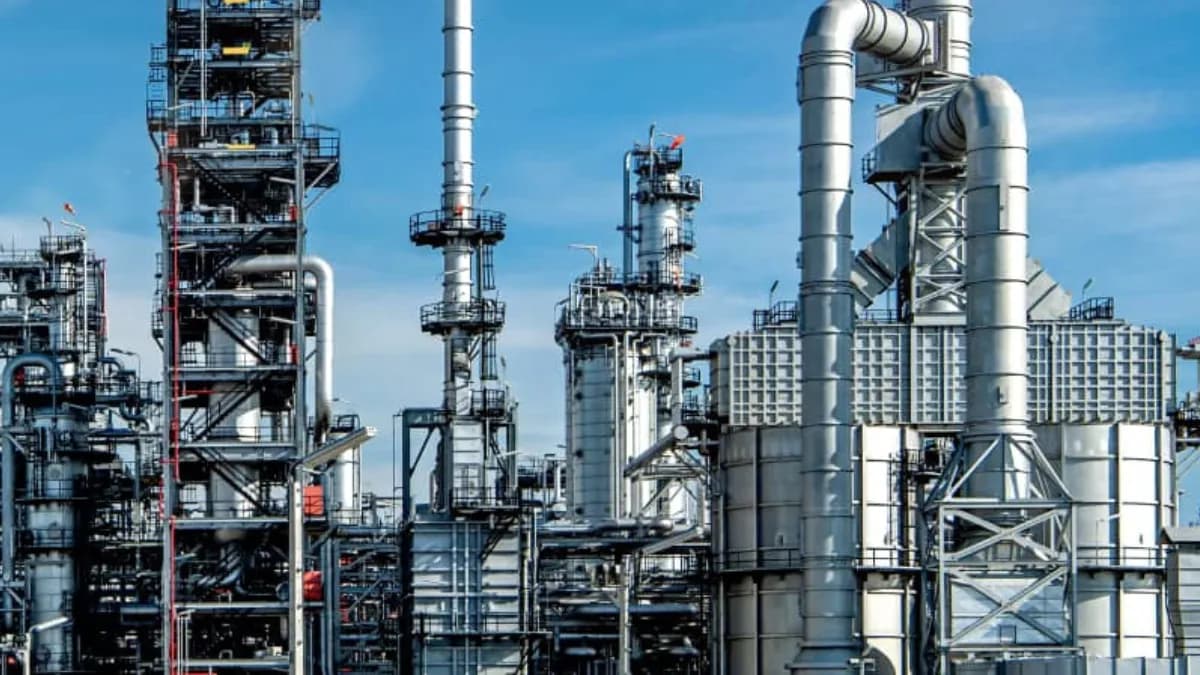
The pressure on the Federal Government to privatise Nigeria’s state-owned refineries has intensified, as key industry groups, analysts, and manufacturers labelled the facilities as “economic drainpipes” amidst over $3 billion in failed turnaround maintenance projects.
The Manufacturers Association of Nigeria (MAN), the Crude Oil Refiners Association of Nigeria (CORAN), and leading voices from the downstream and finance sectors have called for the outright sale or part-privatisation of the Port Harcourt, Warri, and Kaduna refineries, describing them as non-performing assets burning public funds without results.
$3 Billion Burnt, Zero Output
Despite heavy capital injections—$1.5bn for Port Harcourt, $897m for Warri, and $586m for Kaduna the refineries remain idle. Data shows the government also spent ₦100bn in 2021 alone and over $396m between 2013 and 2017 for Turn Around Maintenance (TAM), yet the refineries have not produced a single drop of refined fuel in years.
Ajayi-Kadiri, DG of MAN, told a national audience on Wednesday:
“Those four refineries are a drain on Nigeria’s economy. It is not fair to continue spending public money on them. The government should sell them off and allow private sector expertise to take charge.”
He added that privatisation would boost transparency, reduce corruption, and foster competition with the Dangote Refinery, which is already operating at a commercial scale.
Modular Refineries Deserve Support
Eche Idoko, Publicity Secretary of CORAN, said the government should stop funding dead assets and instead use the proceeds from their sale to support modular refineries and invest in commercially viable operations.
“These refineries are liabilities. They keep draining funds through overheads. Sell them as scrap and invest in modular refineries with real output,” he said.
Idoko stressed that modular refiners, with the right funding, could bridge Nigeria’s processing gap faster than the failed mega-refinery model of the past.
PPP or Full Sale? Experts Weigh Options
Chapel Hill Denham’s Director of Research, Ibrahim Tajudeen, advised that either full divestment or Public-Private Partnerships (PPP) should be explored.
“Even if the government won’t sell all, it can sell partial equity to serious players. Private capital brings efficiency and discipline,” he noted.
Political Interference Killing Performance
Clement Isong, CEO of MEMAN, argued that government ownership invites interference and inefficiency. He cited the inability of NNPC to make bold decisions like staff restructuring because of labour union pressures and its perceived social responsibilities.
“A private player like Dangote makes decisions based on business logic. You can’t threaten him. The same can’t be said for NNPC,” Isong said.
He called for professional refinery managers to take over the state assets, with or without government equity, to compete fairly in the evolving fuel distribution ecosystem.
Time to Cut Losses, Economists Warn
Former Zenith Bank Chief Economist, Marcel Okeke, echoed the sentiment that continuing to fund non-productive refineries was unjustifiable.
“They’ve become a permanent liability. Let them go as-is. Let those who know how to run refineries buy and revive them,” he said.
Shutdowns Continue as EFCC Probes $7bn Spend
While Warri refinery resumed operations weeks later, the spotlight quickly shifted. At the same time, the EFCC intensified its investigation into over $7 billion allegedly spent on refinery maintenance since 2010. So far, several top refinery executives have already been relieved of their duties as the probe deepens.
Legacy of Missed Opportunities
Former President Olusegun Obasanjo recently disclosed that Aliko Dangote once led a consortium ready to acquire Nigeria’s refineries for $750 million. However, a later administration reversed the sale. Obasanjo criticised the decision, blaming it for ongoing mismanagement and skyrocketing rehabilitation costs. He said:
“They’ve planted 100 heaps of yam, and are harvesting 100 heaps of lies.”
Outlook: Nigeria’s Refining Future Lies in Private Hands
As the Dangote Refinery reshapes the market and modular operators continue to move swiftly, operators, financiers, and analysts agree on one thing: Nigeria’s refining future lies in private hands. The longer the government delays its exit, the more it loses—and the farther the country drifts from achieving energy independence.