

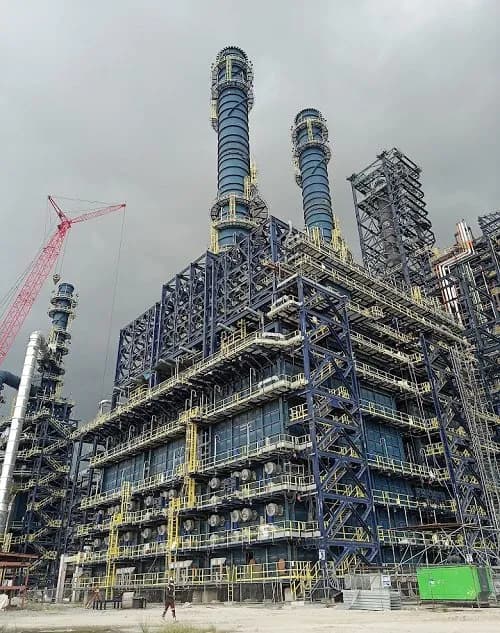
The first week of 2025 brought significant advancements in Nigeria’s oil refining landscape, with developments spanning the Warri Refinery, Dangote Refinery, and Port Harcourt Refinery. These changes mark a critical step in reshaping the country’s downstream petroleum sector.
Warri Refinery Resumes Operations
On 30 December 2024, the Nigerian National Petroleum Company Limited (NNPCL) announced the long-anticipated reopening of the Warri Refinery after nearly ten years of dormancy. The refinery is operating at 60% capacity, processing approximately 75,000 barrels of crude oil per day. This move is expected to enhance Nigeria’s domestic fuel production, reducing its reliance on imported petroleum products.
However, experts have raised concerns regarding the refinery’s ability to produce petrol, as current reports suggest it is primarily producing other refined products like diesel. NNPCL has assured stakeholders that ongoing upgrades will address these issues.
Dangote Refinery Secures Bulk Purchase Agreements
The Dangote Refinery, Africa’s largest oil refinery with a 650,000 barrels-per-day capacity, continues to make significant progress. On 31 December 2024, Dangote Refinery announced bulk purchase agreements with leading downstream companies, including Ardova Plc and Heyden Petroleum. These deals ensure the steady supply of petroleum products and are expected to stabilise Nigeria’s fuel market.
Additionally, the refinery has successfully expanded its production line to include diesel and aviation fuel, with its first petrol export to Cameroon being a notable milestone in December 2024.
Port Harcourt Refinery: Slow Progress
The Port Harcourt Refinery, which resumed operations in November 2024 after extensive rehabilitation, remains a focal point of discussion. Reports indicate that the refinery has faced operational challenges, leading to a temporary shutdown. The NNPCL and the contractors handling the rehabilitation project have yet to provide clear updates on its status.
The refinery’s upgrade was part of a $1.5 billion project aimed at restoring it to optimal capacity. Stakeholders are urging swift action to resolve the issues and bring the facility back online, emphasising its importance to Nigeria’s energy security.
Implications for Nigeria’s Downstream Sector
The revival of these refineries promises to transform Nigeria’s downstream petroleum industry. With increased refining capacity from Warri, Port Harcourt, and Dangote refineries, the country is poised to reduce fuel imports, conserve foreign exchange, and improve energy availability.
The healthy competition between local refiners is also expected to lead to price reductions for consumers. For instance, Dangote Refinery and NNPCL have already implemented significant price cuts in their ex-depot prices, a move that has been widely lauded by stakeholders.
Challenges Ahead
Despite these promising developments, challenges persist. Ensuring a consistent crude oil supply, overcoming operational hurdles, and finalising rehabilitation projects are critical to sustaining momentum. The Federal Government’s crude-for-naira policy is expected to alleviate some pressure, but its long-term effects remain to be seen.
Looking Forward
As 2025 unfolds, all eyes will remain on the successful operation of these refineries. Their performance will be instrumental in achieving Nigeria’s goal of self-sufficiency in petroleum products and stabilising the domestic energy market.
The refiners’ commitment to enhancing local production and fostering competition signals a brighter future for Nigeria’s downstream sector.