

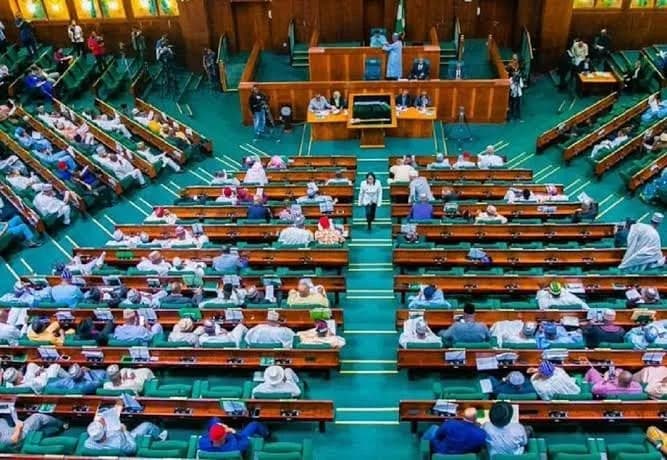
The House of Representatives has launched a formal investigation into the unremitted 5% user charge on petrol and diesel sales funds legally earmarked for the Federal Roads Maintenance Agency (FERMA) to finance Nigeria’s road infrastructure. The charge, introduced in 2007, remains largely uncollected 17 years later.
On March 19, 2025, lawmakers passed a resolution empowering an Ad-Hoc Committee to uncover how much money FERMA and fuel marketers failed to remit, determine the extent of legal violations, and identify those responsible for non-compliance with the Federal Roads Maintenance Agency (Amendment) Act, 2007.
Lawmakers Question FERMA’s 17-Year Inaction
The Act mandates a 5% surcharge on all petrol and diesel sales at the pump, 40% of which is meant for FERMA, and 60% for State Roads Maintenance Agencies (SRMAs). Section 14(2) of the law also compels FERMA to publish periodic disbursement reports.
Despite this, FERMA has not produced any public records indicating it enforced or received the charge since the law came into force. A review by PetroleumPrice.ng of publicly available records shows no clear indication that FERMA has received revenue from the 5% fuel levy, as mandated by law.
Civil society organizations have raised an alarm over this prolonged inaction. They argue that FERMA’s failure to implement the law may have significantly undermined road maintenance efforts nationwide.
Although the National Assembly has not disclosed the financial gap, independent analysts estimate that the uncollected 5% road levy could range between ₦5 trillion and ₦7 trillion from 2007 to 2024. This estimate draws from national fuel consumption volumes, average historical pump prices, and the statutory 5% rate outlined in the law. Advocacy groups say consistent collection and reinvestment could have dramatically improved Nigeria’s highway network over the past decade and a half.
Marketers, Agencies Summoned for Full Disclosure
On May 19, 2025, the Ad-Hoc Committee, chaired by Hon. Francis E. Waive, issued official invitations to major downstream marketers and relevant regulators. The lawmakers demanded comprehensive financial records and compliance documentation covering the period from 2015 to 2024.
Specifically, the committee requested:
- Petrol and diesel sales invoices
- Computation and breakdown of the 5% user charge
- Bank statements, remittance receipts, and reconciliation schedules
- Audited financial statements and internal audit reports
- Regulatory certificates, licenses, and evidence of tax compliance
Companies must deliver the records in both hard and digital formats and appear for an investigative hearing on June 2, 2025, at the National Assembly Complex in Abuja. Each submission must include a sworn affidavit affirming the authenticity of the documents.
Marketers Warn of Fuel Price Spike If Enforced Now
Although the surcharge is legally valid, marketers argue that the former fuel subsidy regime did not allow them to implement the charge before May 29, 2023, when full deregulation began. Before then, the Petroleum Products Pricing Regulatory Agency (PPPRA) fixed pump prices, leaving marketers without pricing flexibility.
Since deregulation, however, marketers technically have the latitude to add the 5% to pump prices as stipulated by law. Industry stakeholders caution that enforcing the charge now could lead to pump price increases of up to ₦45 per litre, particularly in major cities like Abuja. Many fear such a move could worsen inflation and public backlash.
FERMA Faces Pressure to Justify Its Silence
As public attention grows, watchdog groups are questioning why FERMA failed to pursue the levy it was mandated to collect. Critics say the agency lacked transparency, accountability, and enforcement resolve. They have called on lawmakers to hold FERMA accountable for 17 years of dormancy.
“The law gave FERMA the tools, but it failed to act. That failure has cost Nigeria real infrastructure gains,” one policy analyst noted.
Groups are also demanding that the agency publish a complete financial audit of expected and actual receipts under the user charge since 2007, along with evidence of how any collected funds were used.
Countdown to a Landmark Public Hearing
As the June 2 hearing approaches, operators across the downstream sector are preparing to defend their records. Lawmakers have promised a rigorous review process, warning that evasive or incomplete submissions will not be tolerated.
The investigation has opened one of the most significant transparency reviews in Nigeria’s petroleum and public works sectors in recent memory. It poses difficult questions for FERMA, fuel marketers, and the regulatory agencies tasked with enforcing compliance.
By initiating this probe, the House has signaled that the 5% user charge can no longer remain a paper policy. If implemented correctly, going forward and retroactively accounted for, the levy could play a crucial role in revamping Nigeria’s ailing road network.