

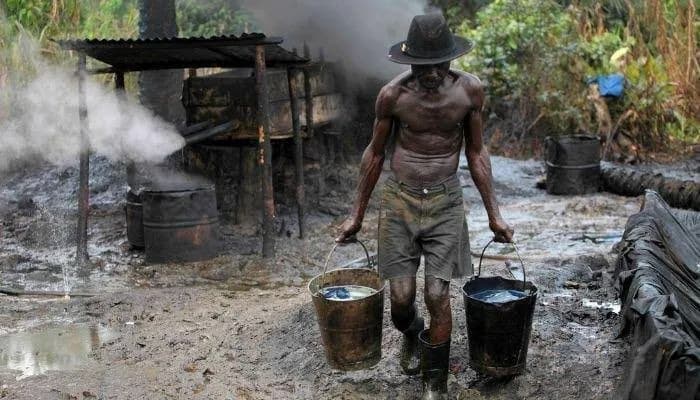
Nigeria, Africa’s largest oil producer, faces significant economic sabotage in its oil sector, where systemic corruption and inefficiencies compromise national revenues and energy security. Despite vast crude reserves, Nigeria paradoxically imports refined products, often sourced from foreign refineries where Nigerians hold stakes, exacerbating the country’s economic challenges.
Crude Oil Exports and Reimports: The Costly Cycle
Nigeria exports millions of barrels of crude oil annually but lacks sufficient domestic refining capacity due to poorly maintained state-owned refineries. This has created a dependency on foreign refineries, especially in countries like Ghana and Ivory Coast. These refineries process Nigerian crude and sell it back as finished petroleum products, often at inflated prices. Between 2020 and 2021 alone, foreign refineries processed crude oil worth ₦2.39 trillion for Nigeria, as no crude was delivered to local refineries for domestic processing during that period.
This cycle drives up costs due to shipping, foreign exchange volatility, and terminal fees, all of which are ultimately passed on to Nigerian consumers.
Bunkering and Illegal Oil Trade
Oil theft and illegal bunkering remain pervasive in Nigeria, with an estimated 400,000 barrels of crude oil stolen daily, costing the nation billions of dollars annually. Some of this stolen crude is smuggled internationally, refined in illegal facilities, and reintroduced into the global market. This operation involves a nexus of highly placed government officials, military personnel, and international oil companies (IOCs), who provide the logistical and financial backing needed for these illegal activities.
Domestic Refining Challenges
- Underutilised State Refineries: Nigeria’s four major refineries operate at minimal capacity, with outdated infrastructure and recurring maintenance delays. For instance, the Port Harcourt Refinery’s rehabilitation, initiated in 2021, has yet to restore full operational capacity.
- Limited Modular Refineries: While modular refineries like Waltersmith and Dangote aim to bridge the gap, their output is insufficient to meet national demand. For example, Dangote’s 650,000 barrels-per-day refinery struggles to secure consistent crude feedstock, further complicating efforts to stabilise domestic supply.
Economic and Environmental Impacts
The systemic inefficiencies in Nigeria’s oil sector significantly impact the economy:
- Revenue Losses: Oil theft and suboptimal refinery operations cost Nigeria billions annually in lost revenues and foreign exchange.
- Environmental Degradation: Illegal bunkering and oil spills devastate the Niger Delta, harming ecosystems and livelihoods.
- Fuel Scarcity: Despite being an oil-rich nation, Nigerians face regular fuel shortages and high prices due to reliance on imports.
Solutions and Way Forward
To address these challenges, experts recommend:
- Strengthening Security: Implement advanced monitoring technologies to prevent oil theft and pipeline vandalism.
- Boosting Local Refining Capacity: Encourage private-sector participation in modular and full-scale refineries, reducing reliance on imports.
- Transparency and Accountability: Enforce strict regulatory oversight to dismantle corrupt networks within the oil and gas sector.
- Economic Reforms: Invest in downstream infrastructure and implement policies to attract foreign and local investment in refining and distribution.
Conclusion
Nigeria’s oil industry, a cornerstone of its economy, is marred by systemic challenges that undermine its potential. Addressing sabotage, inefficiencies, and corruption is critical to ensuring sustainable economic growth and energy security. Collaborative efforts among stakeholders, including the government, private sector, and international partners, are essential for transforming the sector and realising its full potential.