

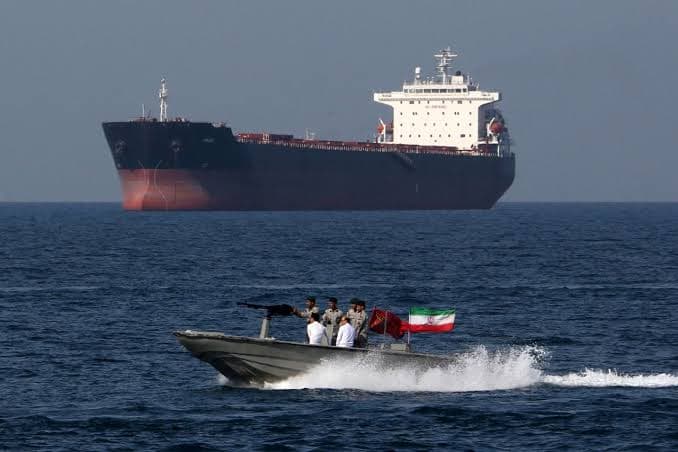
Saudi Arabia has begun redirecting some of its crude oil tanker movements away from the Bab el-Mandeb Strait, with at least six empty tankers taking a longer route around Africa following renewed security concerns in the Red Sea.
According to vessel-tracking data monitored by Bloomberg, the tankers changed course in the Arabian Sea instead of proceeding through the Bab el-Mandeb chokepoint, a route typically used by vessels loading crude from the Middle East for Europe and other destinations.
The change follows recent Houthi threats against Saudi shipping and attacks on commercial tankers operating in the Red Sea, prompting adjustments to Saudi Arabia's crude export logistics.
The vessels are currently indicating destinations including Gibraltar, Durban, and Algoa Bay, which serve as major refuelling hubs before continuing their voyages.
Routing around southern Africa is expected to extend the journey of a Very Large Crude Carrier (VLCC) by at least two weeks compared with the conventional route through the Bab el-Mandeb Strait and the Suez Canal.
Saudi Arabia has also continued using Egypt's export infrastructure to move crude while avoiding the affected shipping corridor.
Under the arrangement, crude is transported from Yanbu on Saudi Arabia's Red Sea coast to Ain Sukhna in Egypt before being transferred through the SUMED pipeline to Sidi Kerir on the Mediterranean coast for export.
Bloomberg's vessel-tracking data showed that at least eight empty VLCCs are currently signalling Sidi Kerir as their destination and are expected to arrive over the next two to three weeks to load Saudi crude.
The revised shipping pattern follows the Houthis' announcement of a blockade targeting Saudi shipments through the southern Red Sea and Bab el-Mandeb Strait, a development that has increased security concerns along one of the world's key maritime trade routes.
The situation has also led some Saudi and international shipping operators to divert loaded crude carriers through alternative routes, including the Suez Canal and longer voyages around Africa, to reduce exposure to potential attacks in the Red Sea.
The latest vessel movements highlight the continued impact of regional security developments on global crude transportation, with shipping operators adjusting routes to maintain exports while navigating elevated risks in the Red Sea corridor.