

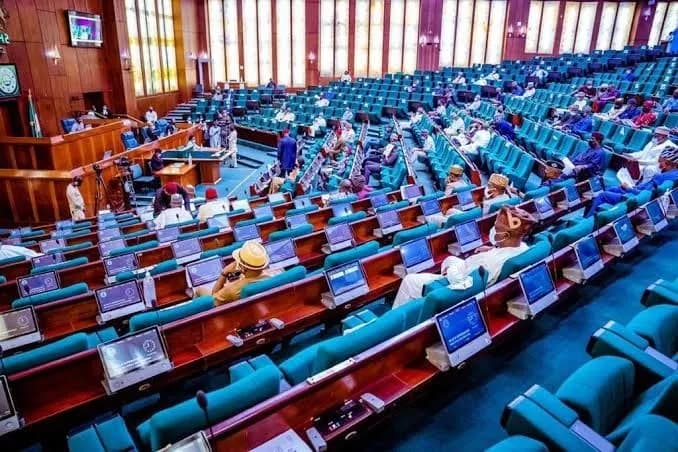
Nigeria’s oil and gas reform agenda edged closer to a defining moment on Thursday as the Senate opened the screening of President Bola Ahmed Tinubu’s nominees to lead the nation’s petroleum regulatory institutions. In the quiet but consequential chambers of the National Assembly, the exercise signalled more than a routine confirmation process; it reflected a broader attempt to reset governance, restore investor confidence and seal long-standing revenue leakages in Africa’s largest energy economy.
President Tinubu nominated Oritsemeyiwa Amanorisewo Eyesan to head the Nigerian Upstream Petroleum Regulatory Commission (NUPRC) and Saidu Mohammed to lead the Nigerian Midstream and Downstream Petroleum Regulatory Authority (NMDPRA). Both nominees appeared before the joint Senate Committee on Petroleum Resources (Upstream, Downstream and Gas), where they laid out reform-driven visions anchored on technology, discipline and strict enforcement of the Petroleum Industry Act (PIA).
A Digital Reset for the Upstream Sector
Eyesan, who is set to oversee upstream regulation, warned lawmakers that Nigeria continues to lose significant value due to outdated, manual regulatory processes in a sector now driven by real-time data and advanced analytics. She argued that without digitisation, transparency and effective asset monitoring, regulators would struggle to understand production realities, let alone maximise national benefits.
Drawing from nearly 33 years at the Nigerian National Petroleum Company Limited (NNPCL), where she retired as Executive Vice President, Upstream, Eyesan said credible data management and system integration would remain central to plugging leakages and improving accountability. She described the PIA as a “powerful regulatory tool” capable of repositioning Nigeria’s upstream industry if deployed with discipline and political will.
Her career footprint includes resolving legacy disputes with international oil companies, supporting multi-billion-dollar deep offshore investments and contributing to an increase in crude oil production from about 1.3 million barrels per day to 1.8 million barrels per day during her tenure. For Eyesan, collaboration between regulators, operators and policymakers remains the lever for unlocking stalled investments amid a global energy transition that increasingly favours gas and low-carbon assets.
Restoring Discipline in the Midstream and Downstream
Mohammed, the NMDPRA nominee, focused his submission on restoring order across Nigeria’s gas and petroleum supply chains. He stressed that weak contract enforcement remains a major cause of gas shortages, especially in the power sector, insisting that gas must be treated strictly as a commercial commodity, not a discretionary public good.
According to him, enforceable contracts, adherence to quality standards and the full implementation of the Gas Network Code would stabilise supply, protect investments and improve energy security. He also cautioned against neglecting domestic refining and processing capacity, warning that an overreliance on exports could undermine local industry, much like Nigeria’s once-thriving textile sector.
Mohammed pledged to revive pipeline transportation of petroleum products, attract large-scale investments into gas processing infrastructure and strengthen regulatory quality assurance through in-house laboratories. A chemical engineering graduate of Ahmadu Bello University, Zaria, he brings decades of experience, having served as Managing Director of the Nigerian Gas Company and Kaduna Refining and Petrochemical Company, as well as Group Executive Director and COO, Gas and Power, at NNPCL.
A Critical Moment for Energy Governance
Chairman of the Senate Committee on Petroleum Resources (Downstream), Senator Sumaila Kawu, described the screening as timely, noting that energy efficiency and increased production remain central to Nigeria’s economic recovery. He added that engagements with the nominees would continue into January to deepen legislative–regulatory alignment.
Once confirmed, the nominees will replace the pioneer chief executives of the agencies Gbenga Komolafe of the NUPRC and Farouk Ahmed of the NMDPRA appointed in 2021 following the enactment of the PIA. Their confirmation would mark a new phase in the Tinubu administration’s effort to recalibrate Nigeria’s oil and gas governance framework, strengthen institutional credibility and position the sector for sustainable growth in a rapidly evolving global energy market.