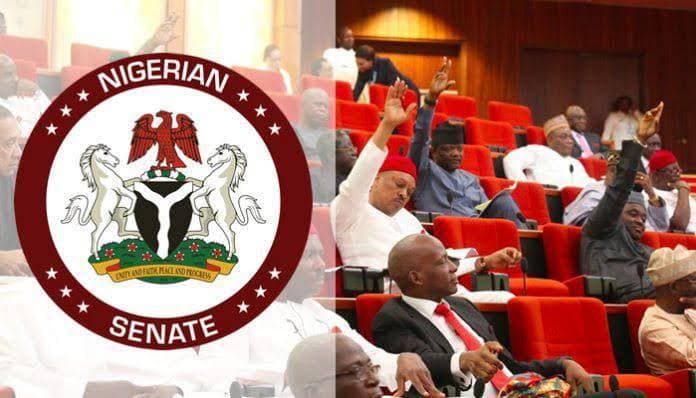
The Nigerian Senate has launched an investigation into the supply of liquefied petroleum gas (LPG) to the domestic market, questioning export activities and industry arrangements amid concerns that inadequate local availability is worsening the cost of cooking gas.
The Senate Committee on Gas Resources warned that persistent supply constraints could undermine efforts to make LPG more affordable and deepen the financial pressure on households already struggling with rising living costs.
The committee chairman, Senator Jarigbe Jarigbe, who represents Cross River North, raised the concerns on Wednesday during an investigative session with stakeholders in the gas industry at the National Assembly in Abuja.
He said lawmakers were seeking to establish the reasons behind the shortage and identify measures to ensure that more locally produced cooking gas reaches Nigerian consumers at affordable prices.
“We are already working for Nigerians here, for our people, and that’s why we want to get to the root of it,” Jarigbe said.
The senator anchored the committee’s position on Presidential Executive Order 9, signed by President Bola Tinubu on February 13, 2026, which he said was intended to promote domestic LPG supply and reduce the burden of high cooking gas prices on Nigerians.
“LPG has to be supplied to the domestic market for the good of the common man as intended with Executive Order 9 issued by President Tinubu to ameliorate the sufferings of the masses on the price of gas,” he said.
Jarigbe also challenged industry operators’ explanation that differences in the propane and butane composition of locally produced LPG made the product more suitable for export markets.
He argued that blending could be considered to adjust the composition of the gas and increase the volume available for domestic consumption.
Figures presented by the Nigeria Customs Service showed that 223.699 metric tonnes of LPG were exported between 2024 and 2025, providing the committee with further information for its investigation into export activities.
The Deputy Comptroller-General of Customs in charge of Tariff and Trade, Caroline Kemen Niagwan, told lawmakers that exports amounted to 190.8 metric tonnes in 2024, while 32.8 metric tonnes were recorded in 2025.
She, however, said the Service had no record of LPG exports from Escravos in 2026.
Niagwan explained that exporters must obtain clearance certificates from the Federal Ministry of Industry, Trade and Investment before completing the required declarations through the Customs Service’s automated platform.
“For the 2026 export of LPG at Escravos, our system showed no records of export because, for you to make an export, there must be an export clearance certificate sent to us by the Federal Ministry of Industry, Trade and Investment, which we send to the commands, and the exporter must make a declaration on our system, which is automated,” she said.
She further disclosed that approved export volumes included 400 metric tonnes allocated to the Nigerian National Petroleum Company Limited (NNPCL) and 386.4 metric tonnes for Chevron.
Providing details of efforts to increase local availability, the Nigerian Upstream Petroleum Regulatory Commission (NUPRC) said it had engaged Chevron on the possibility of redirecting part of the LPG produced at its Escravos facility to the Nigerian market.
A commission representative, Enorense Amadasu, told the committee that the facility was initially developed to support exports under a joint venture arrangement between the Nigerian government and Chevron.
He added that Chevron had issued a public invitation in 2024, encouraging Nigerian LPG off-takers to explore arrangements for sourcing the product from the facility for domestic supply.
The disclosure comes as lawmakers seek to establish whether existing production, export arrangements and regulatory measures adequately support local demand.
Senator Aniekan Bassey, representing Akwa Ibom North-East, said the investigation offered lawmakers an opportunity to improve transparency, accountability and regulatory oversight across the oil and gas industry.
The Senate Committee on Gas Resources is expected to reconvene with relevant industry stakeholders next Tuesday as it continues examining domestic LPG supply, export activities and revenue remittances.