

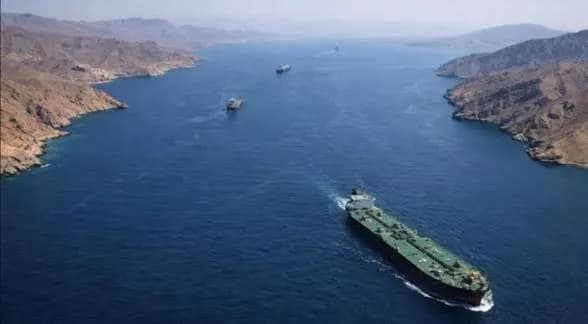
Oil prices rose again on Thursday as the crisis around the Strait of Hormuz intensified, tightening global supply and keeping traders firmly on edge.
As at the time of writing 07:00 AM (WAT), Brent crude traded at $103.20 per barrel, up 1.26%, while WTI stood at $94.28, gaining 1.42%. The rally reflects one thing clearly the market is now pricing in real physical disruption, not just geopolitical noise.
Shipping through the Strait of Hormuz has slowed to a crawl after Iran fired on vessels attempting passage, forcing most operators to stay off the route. With traffic almost paralysed, one of the world’s most critical oil corridors is effectively operating under strain.
Iran has hardened its position, insisting the Strait of Hormuz will remain shut as long as the United States maintains its naval blockade, despite ongoing ceasefire talks.
The standoff escalated after Tehran confirmed the seizure of two commercial vessels attempting to pass through the strait. In response, the US Central Command said it had redirected 31 vessels, ordering them to turn back or return to port under its enforcement operations.
Iran’s parliament speaker, Mohammad Bagher Ghalibaf, stated:
“A complete ceasefire only has meaning if it is not violated through a naval blockade.” “Reopening the Strait of Hormuz is not possible amid a blatant violation of the ceasefire.”
Although President Donald Trump has extended the ceasefire window to allow Pakistan-led talks to continue, the blockade remains active, keeping the waterway effectively closed.
The impact has already shown in prices, with Brent briefly touching $105 before easing slightly, while WTI also strengthened. Traders are now pricing in a prolonged disruption rather than a temporary shock.
For Nigeria, the implication is direct. Higher crude prices will continue to push landing costs up, and that pressure will flow into depot prices and pump prices if the situation drags on without resolution.