

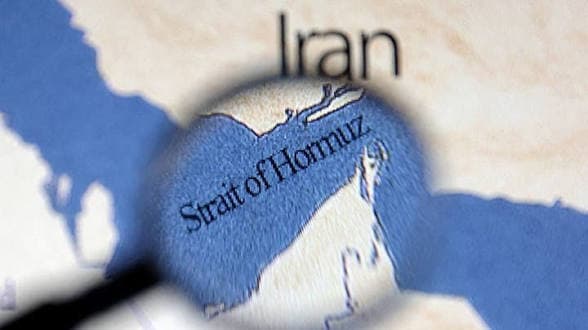
The prolonged disruption of the Strait of Hormuz has created a difficult contradiction for Nigeria. Higher international oil prices can strengthen government revenue at a time when crude production is recovering, but the same global supply shock can expose consumers and businesses to higher energy and transportation costs.
The impact is not entirely one-sided. Crude prices have retreated significantly from their crisis highs, while the domestic downstream market has also recorded a recent price reduction. Dangote Petroleum Refinery cut its petrol ex-depot price by ₦50, from ₦1,215 to ₦1,165 per litre, and reduced diesel from ₦1,650 to ₦1,570 per litre, with the new prices taking effect on August 6, 2026.
That adjustment provides some relief to the downstream market. But it does not remove the broader economic question raised by the Hormuz disruption: if global crude prices remain elevated, who ultimately benefits from the additional value of Nigeria's oil?
A Plus for the Federal Government
The immediate fiscal advantage is clear. Nigeria's 2026 oil-price benchmark was revised upward to $64.85 per barrel, meaning sustained crude prices above that level create the possibility of additional revenue relative to the budget assumption.
Brent crude had surged above $120 per barrel during the height of the Iran-related supply disruption before retreating. At the close of the previous trading week, Brent stood at $83.55 per barrel, up 1.29 per cent, while WTI settled at $78.18, up 1.15 per cent.
At $83.55, Brent was still $18.70 above Nigeria's $64.85 benchmark.
The potential gain is particularly significant because Nigeria's oil production has also improved. The Nigerian Upstream Petroleum Regulatory Commission reported that crude oil and condensate production averaged 1,735,398 barrels per day in June, representing the country's fourth consecutive month of production growth and its highest level in more than six years. Crude oil alone averaged about 1.56 million bpd, taking Nigeria above its OPEC crude production quota.
The combination of stronger production and an oil price above the budget benchmark gives the Federal Government a more favourable revenue environment than it would have faced with weaker prices or production.
However, higher crude prices should not automatically be treated as a windfall. Government revenue depends on the quantity of crude actually produced and exported, fiscal arrangements, crude losses, operational costs and other deductions within the petroleum sector.
Nigeria also needs to distinguish between a temporary geopolitical price spike and a sustainable improvement in oil revenue. The Hormuz crisis can push prices higher, but a subsequent easing of tensions can send them lower just as quickly.
For now, however, the government is positioned on the more favourable side of the shock: Nigeria is producing more crude while the international benchmark remains above the price assumption used for the 2026 budget.
A Pain for Consumers
The consumer side is considerably more complicated.
Nigeria's downstream market remains exposed to international crude prices, exchange-rate movements, refining costs, logistics and the supply-demand balance. The removal of the petrol subsidy has also made domestic pricing more responsive to market conditions.
The recent Dangote Refinery adjustment demonstrates that prices can move in both directions.
The refinery's PMS price had reached ₦1,275 per litre before the latest review brought it down to ₦1,165.
Diesel fell from ₦1,800 to ₦1,570 per litre.
The latest reduction represents cuts of approximately 8.6% for petrol and 12.8% for diesel.
That is important because it provides some immediate relief to marketers and other downstream participants. It also shows that higher international crude prices do not mechanically translate into higher domestic fuel prices every time. Refinery pricing decisions also reflect prevailing market conditions, product availability, competition and other commercial considerations.
But the longer-term price trajectory remains important.
Earlier in the year, Dangote Refinery's petrol price moved from ₦799 per litre in January before later adjustments pushed the price considerably higher. The subsequent increase illustrates the extent to which domestic fuel prices have remained exposed to changes in the wider petroleum market.
The latest cut therefore needs to be viewed in context. It is a reversal of part of the recent increase, not evidence that the structural pressures affecting the downstream market have disappeared.
For consumers, the consequences extend beyond the price displayed at a filling station.
Petrol and diesel are essential inputs for transportation, logistics, agriculture, manufacturing and power generation. An increase in their prices can raise the cost of moving food and other goods, operating vehicles and running fuel-dependent businesses. Those costs can eventually be passed on to households.
This matters against the backdrop of Nigeria's still-elevated inflation rate. Headline inflation stood at 15.91 per cent in June 2026, marginally below 15.93 per cent in May, according to the National Bureau of Statistics. The moderation is encouraging, but it does not mean that households have returned to the price environment that existed before the recent inflationary shocks.
The latest Dangote price reduction therefore arrives at a useful time for consumers. If other market participants follow the reduction and competition keeps downstream prices contained, the adjustment could help limit some of the pressure on transportation and operating costs.
The concern would arise if the international oil market turns upward again.
The Strait of Hormuz remains central to that risk. The waterway is one of the world's most important energy corridors, and disruption has reduced shipping flows, raised war-risk insurance costs and complicated the movement of crude and refined products.
Iran has said restrictions on the strait will remain in place unless the United States meets a series of demands. Continued uncertainty over the waterway means that another escalation could quickly revive concerns about global supply and push crude prices higher.
If that happens, Nigeria could once again find itself in the unusual position of earning more from crude exports while consumers face renewed pressure from the downstream market.
Turning the Oil Gain Into Consumer Relief
This is where government policy becomes important.
Nigeria should not necessarily respond to every international oil-price increase by restoring a broad petrol subsidy. The experience of the previous subsidy regime demonstrated the significant fiscal burden such interventions can create.
But the alternative should not be complete exposure of consumers to every external energy shock.
If Nigeria receives additional revenue because crude prices remain above the $64.85 per barrel budget benchmark, the government should consider targeted ways of using that fiscal advantage to reduce the impact of higher energy costs on households and productive businesses.
Such support could include targeted public transport interventions, assistance for vulnerable households, measures to improve energy access and investments that reduce the cost of moving goods across the country.
The government should also strengthen fiscal buffers during periods of elevated oil prices. A geopolitical crisis should not become the basis for permanent spending commitments because the same oil prices that rise sharply during a conflict can fall just as quickly when the conflict eases.
There is also a strong case for greater transparency. Nigerians should be able to see how additional revenue generated from higher crude prices is being accounted for and whether any of the gains are being directed towards measures that improve living conditions.
The recent production figures make this even more important. With total crude and condensate production reaching 1.735 million bpd in June, Nigeria has an opportunity to improve its fiscal position through both higher production and favourable prices.
The objective should be to turn that improvement into a broader economic benefit rather than allowing the gain to remain concentrated at the government revenue level.
The latest Dangote price reduction offers a reminder that the relationship between global crude prices and domestic fuel prices is not automatic. Despite the geopolitical pressure on the international market, petrol and diesel prices have just been reduced domestically.
That relief should be sustained where market conditions permit.
Ultimately, the Hormuz crisis is a test of what Nigeria does with the advantages created by its dependence on oil. Higher crude prices can provide the Federal Government with additional revenue, especially when production is recovering. But Nigerians should not be left to bear the full cost when the same global shock increases energy and transportation pressures.
The immediate task for policymakers is therefore not simply to celebrate higher oil earnings. It is to ensure that periods of stronger oil revenue create enough fiscal space to protect consumers, strengthen the economy and reduce Nigeria's vulnerability to the next external energy shock.
For now, the latest Dangote adjustment gives consumers some breathing room. But if the Hormuz crisis deepens and crude prices begin another sustained climb, the real measure of Nigeria's gain will be whether the government can convert higher oil revenue into meaningful economic relief for the people.