

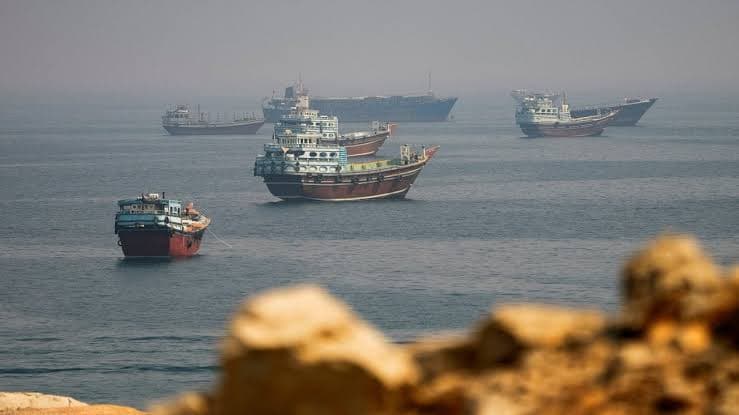
The disruption of shipping through the Strait of Hormuz has redirected a growing number of vessels around the southern tip of Africa, but the surge in traffic has yet to deliver the expected economic boost to South Africa’s ports.
Shipping traffic around the Cape of Good Hope has roughly doubled since the conflict began in February, as major operators avoid the disrupted Middle East route. However, most of the vessels are passing through South African waters without stopping at ports for bunkering, repairs, cargo handling or other maritime services.
The limited port calls mean South Africa is capturing only a fraction of the potential economic activity generated by the rerouting, despite the sharp increase in vessels using the longer Cape route.
One of the main reasons is the additional cost of the diversion itself. The Cape route can add about 5,000 miles to a voyage, extending some journeys by as much as 14 days and increasing fuel costs by more than $1 million per trip compared with conventional Middle East and Suez routes.
With shipping companies already absorbing higher fuel and security costs, many operators have little incentive to make additional port calls that could extend voyages further.
South Africa’s port infrastructure presents another constraint.
The country’s major maritime gateways continue to face challenges linked to ageing equipment, operational inefficiencies and logistics bottlenecks. The 2025 Container Port Performance Index, produced by the World Bank and S&P Global Market Intelligence, ranked Cape Town 400th out of 400 ports, while Durban was ranked 398th.
The World Bank has attributed poor performance at Cape Town to factors including weather disruptions, equipment failures and low berth utilisation, which can leave vessels waiting outside productive berths for substantial periods.
South Africa’s state-owned logistics operator, Transnet, has also faced equipment shortages, ageing cranes, constrained container capacity and inadequate rail connections.
Weak rail links have shifted more freight onto roads, contributing to congestion around Durban and other major logistics centres.
The country's ports also face structural challenges associated with their dependence on imports. Large volumes of inbound containers can take longer to move through terminals and storage areas than cargo handled by major export-oriented ports, where logistics systems can be organised around established outbound flows.
Durban, however, has recorded improvements. It was identified as the world’s most improved container port in the latest assessment, with the proportion of productive vessel time at berth rising to 76 percent and anchorage queues falling from a peak of 20 vessels to zero.
Despite the increase in maritime traffic, the economic burden on Southern African countries is also growing.
More vessels passing along regional coastlines increase demands for maritime surveillance, search-and-rescue capacity and emergency response. Higher tanker traffic also raises exposure to piracy, other maritime security threats and the potential environmental consequences of a major fuel or crude oil spill.
The shipping disruption is also affecting regional fuel markets.
Southern African fuel importers are facing higher costs while competing with Asian buyers for West African supplies. Increased tanker demand and longer voyages have pushed freight costs higher, making replacement cargoes more expensive for regional consumers.
The shipping disruption comes at a time when major oil, gas and LNG developments are expanding across Southern Africa, creating both new investment opportunities and additional exposure to maritime risks.
In Mozambique, the $20 billion Mozambique LNG project, led by TotalEnergies, resumed construction in January 2026 after a prolonged force majeure period. The project is designed to produce 13.1 million tonnes of LNG annually.
ExxonMobil’s Rovuma LNG project, also in Mozambique, is estimated at about $30 billion and is designed to produce up to 18.6 million tonnes of LNG annually.
Tanzania is pursuing the proposed $42 billion Lindi LNG project, involving Shell and Equinor, to commercialise part of the country’s more than 47 trillion cubic feet of offshore gas resources.
Another major infrastructure proposal is the planned $3.5 billion Dangote Southern Africa Corridor Pipeline, which is intended to connect Namibia, Botswana and South Africa and shift part of bulk fuel distribution away from road transportation.
These projects could generate substantial export earnings, infrastructure investment and economic activity across the region. At the same time, they are increasing the value of energy infrastructure located along a coastline facing higher shipping and security risks.
Mozambique’s experience illustrates the exposure. The insurgency in Cabo Delgado previously forced TotalEnergies to suspend its LNG development for years.
The increase in tanker traffic around Southern Africa adds another layer of risk as regional energy projects advance, particularly for countries seeking to expand their role in global oil and gas supply chains.
For South Africa, the immediate challenge is converting increased vessel traffic into actual maritime business.
The Cape route has become more important to global shipping because of the disruption around Hormuz, but higher traffic alone does not guarantee higher port revenues. Without improvements in port efficiency, infrastructure, logistics and maritime services, vessels can continue to pass the region without making the stops that generate significant economic value.
The result is a growing gap between traffic growth and economic capture: Southern Africa is becoming more important to global shipping routes, while much of the commercial value created by the rerouting continues to flow elsewhere.